
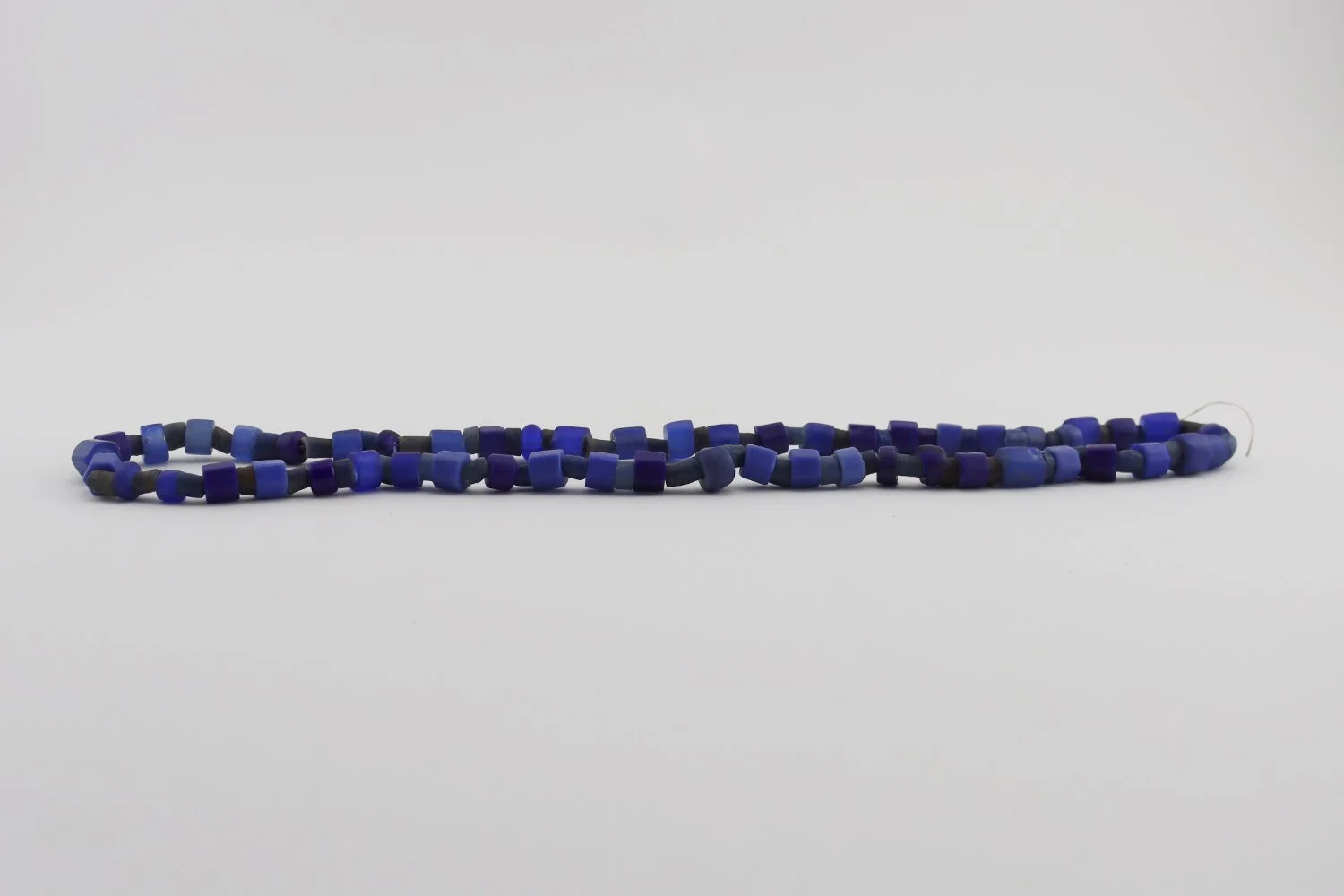
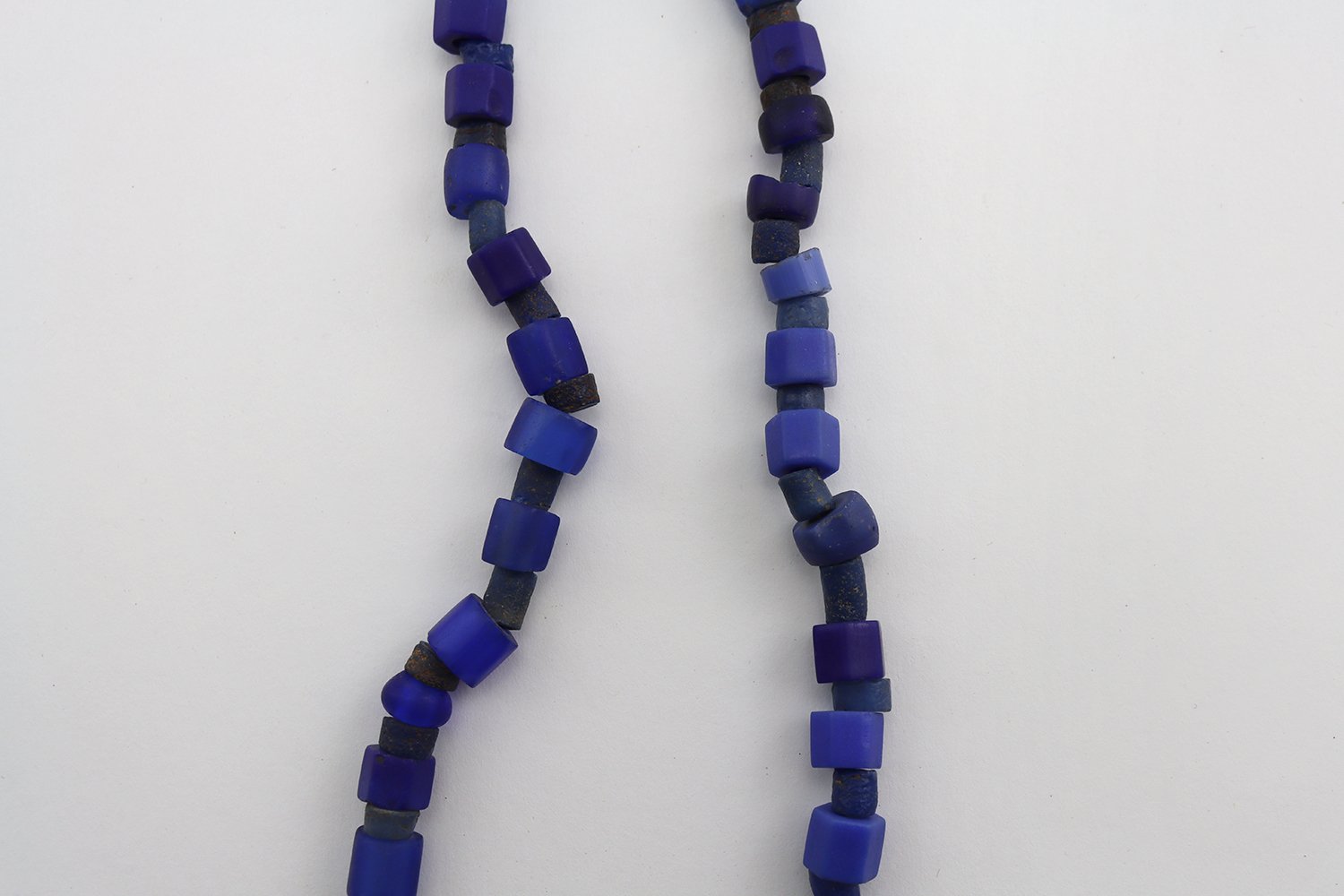
Strand of 104 glass trade beads, circa 18-19th century
Strand of 104 glass trade beads, a mix of soft blue or "Russian blue" faceted beads likely Venetian made and blue cylindrical beads (possibly African), and blue rounded bead. Found at the foot of Granville street by the Fraser river, circa 18-19th century, widest bead approximately 3/8", length of strand approximately 25"
As trade opened up throughout the Pacific Northwest, glass beads were introduced and became integral in trade between European fur traders and local Indigenous peoples. Being compact and easily transportable, beads became widely sought after for their colours and ease of use and soon replaced hand made local beads made from shell, pearl, bone, teeth and stone. They became a medium of exchange in favour of the European monetary system, were kept as ornaments and decorations, and often admired as status symbols or used to embellish personal items or jewellery. Many varieties of trade beads were used, the most popular being those known as “Russian Blue” after the Russian involvement in the fur trade in the area starting in the late 18th century. These are characterized by their solid cobalt blue colour and faceted disk shape with multiple sides and edges. Despite their name many of these beads were manufactured in Venice, Italy, although some were also made in Bohemia. Designed for export, these beads were distributed to traders and found their way through various trade routes to both Africa and the Americas. It is said that one beaver skin could be traded for as much as a six-foot long strand of beads.
Size: 12.5 h
P21872
uno@langmann.com
604 736 8825 or 1 800 730 8825