AGNES SLOTT-MØLLER
(Danish 1862-1937)
AVAILABLE WORKS
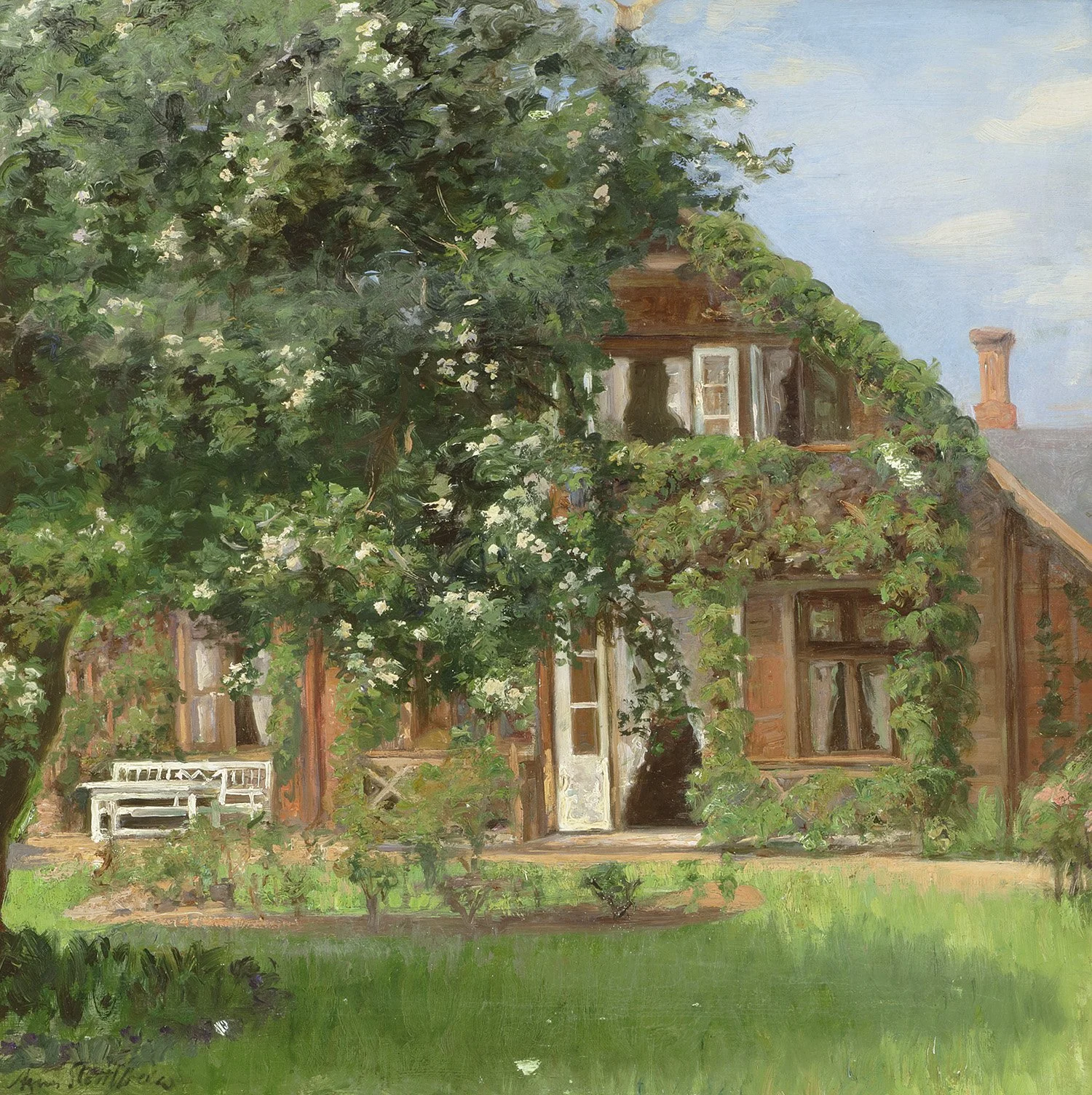
Agnes Slott-Møller, was an important Danish Nationalist and Symbolist painter, combining the influence of the British Pre-Raphaelites with Danish history and folklore. Unlike many of the other women artist of her day, she focused on Danish history, medieval legends and literature as inspiration for her work. By her mid teens she begun to take lessons at the Industrial School for Women, and upon graduating in 1885 took lessons from Peder Severin Krøyer and then Harald Slott-Møller. She eventually married Harold Slott-Møller in 1888 and together they the embarked on a tour of Italy to study Medieval and early Renaissance art firsthand. This trip shaped her lifelong interest in this historical style, and the couple believed that reintroducing heroes and legends from Danish history would strengthen the country’s identity and create role models for the future.
In 1891, Agnes Slott-Møller and her husband Harald, along with Johan Rohde, established a new modern artist’s association “Den Frie Udstilling” (The Free Exhibition), a revolution against the conservative Academy exhibitions. Unlike the other members, Agnes and her husband found inspiration in Danish medieval history, folk ballads and poetry. By 1904 she had become disillusioned with the direction of the group and returned to exhibiting at the Royal Academy, winning the top Academy prize, the Eckersberg Medal, in 1906, and the Ingenio et Arti Medal in 1932. By this time, the couple’s fervent Nationalism and opinions were becoming unpopular with other contemporary artists, causing them to withdraw from artistic gatherings. For the most part she remained at the edge of Danish artistic society until her death in 1937.