Discover Vancouver Beyond the Pitch: Uno Langmann Gallery
As Vancouver welcomes soccer fans from around the world for the FIFA celebrations, visitors have a unique opportunity to experience more than just world-class matches. Between games, explore the city’s vibrant arts and culture scene with a visit to Uno Langmann Gallery.
Located just across the Granville bridge from downtown Vancouver, Uno Langmann Gallery showcases one of Canada's most remarkable collections of historical art. From iconic Canadian landscapes to fascinating works by Indigenous and international artists, the gallery offers a rich cultural experience that complements the excitement of the tournament.
Whether you are a passionate art lover or simply looking for an inspiring way to spend an afternoon, the gallery provides a peaceful retreat from the crowds while offering a deeper connection to Canada's artistic heritage. Visitors can enjoy thoughtfully curated exhibitions, discover unique stories behind the artworks, and gain insight into the country's diverse cultural landscape.
During your stay in Vancouver for the FIFA festivities, make time to explore the city beyond the stadiums. A visit to Uno Langmann Gallery is a memorable way to experience the creativity, history, and culture that make Vancouver such a special destination.
Celebrate the beautiful game and discover beautiful art along the way.
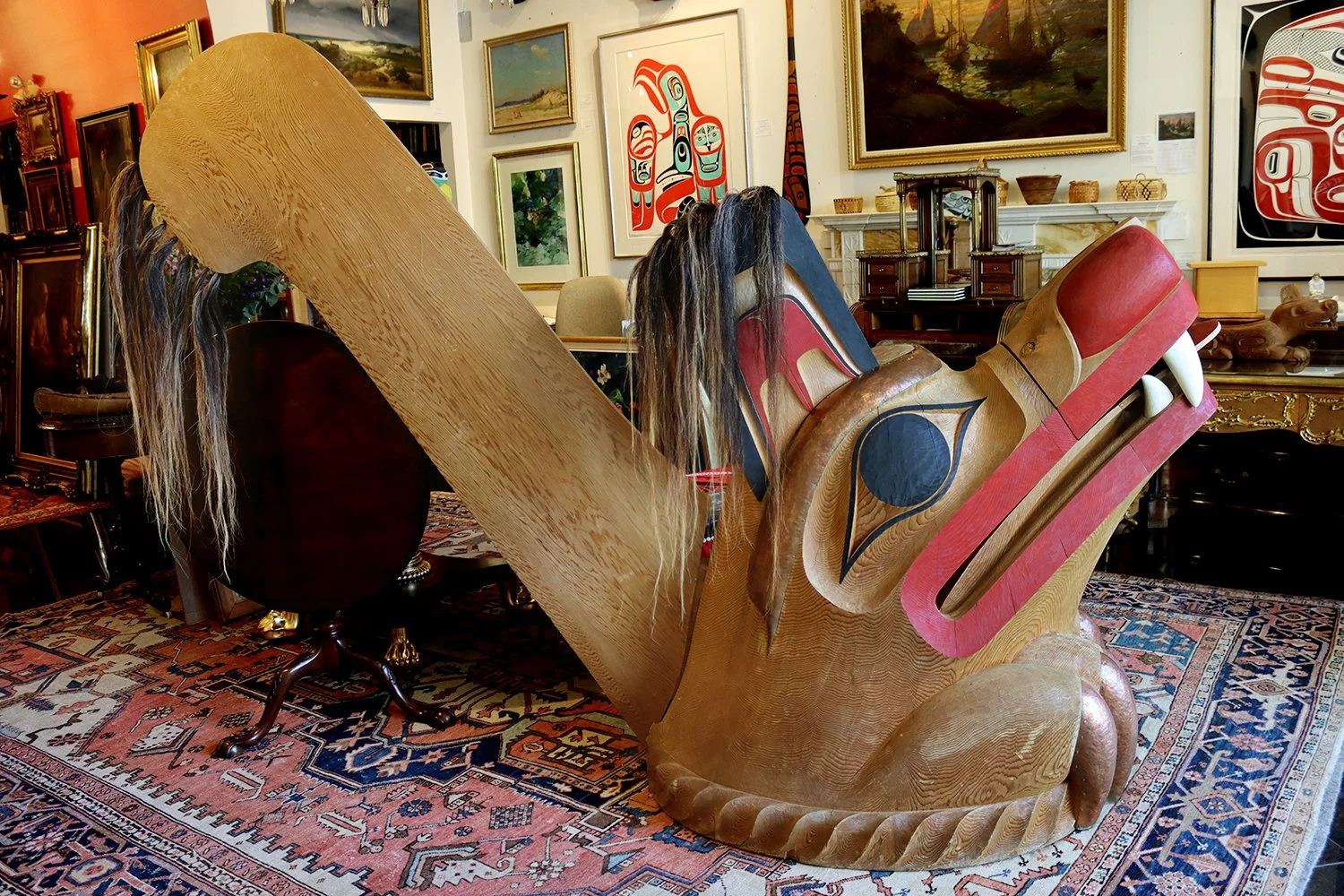
Wasco by James Hart, red cedar, pigment, copper and horse hair, 1998. Size in inches: 72 h x 99 w x 46 d. P21828. The Wasco is a legendary Haida creature that lives in the ocean, with hybrid features of a killer whale and a wolf that include copper claws and eyebrows.
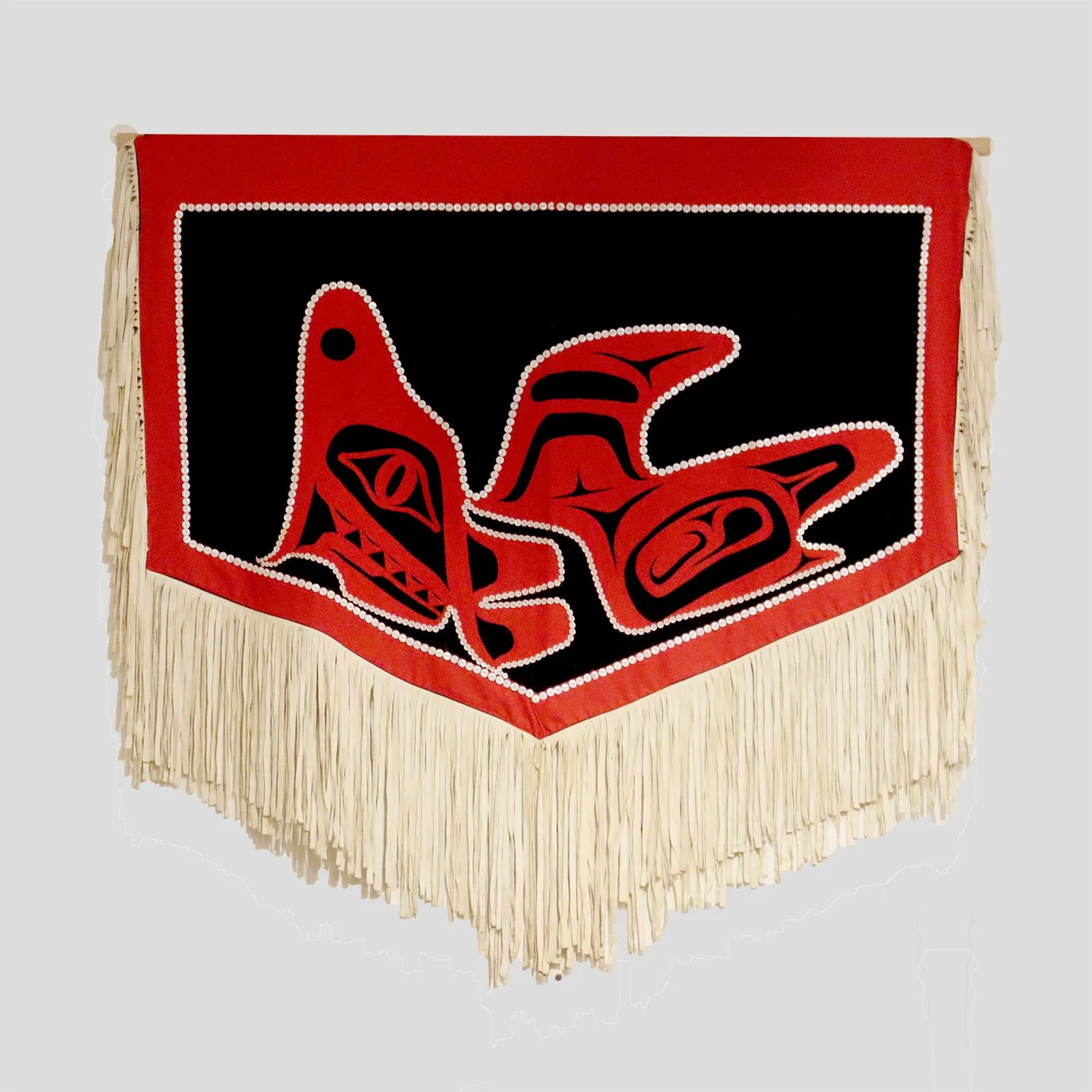
Dorothy Grant (Haida/ Canadian 1955) ‘Danced Shark Robe’ red and black five sided shark robe, based on Chilkat robe shape, in red and black with button work decoration and white deer skin fringes. One of five made in the early 1980's and used in a ceremony in Haida Gwaii, and danced several times in ceremonies. Size: 39 h x 53 w in (size is without the fringe) ZP20770
Phil Nuytten (1941-2023)
Often referred to as a “Renaissance man”, Phil Nuytten was a pioneer in many fields – underwater explorer and sub-sea engineer, inventor, marine archaeologist, tech manufacturer, businessman, songwriter, carver, author, native advocate, and avid collector. He was born in Vancouver in 1941 and developed an early interest in both diving and Northwest Coast Indigenous art. Phil’s entrepreneurial interests were supported by his parents, who backed him in his early carving and diving endeavours. He turned these passions into a successful career and sat on award and grant committees for several philanthropic diving and Indigenous organizations, as well as mentoring and supporting young ocean advocates and students. He received honorary doctorates from Queens University, Vancouver Island University, and Simon Fraser University. In 1992, Phil received the Order of British Columbia in recognition of his contribution to the economic well-being of the province and the recognition and support of the indigenous culture, and for making the province known beyond its borders as a leader in underwater high-technology. He was appointed an Officer of the Order of Canada in 2016 for his innovations in deep sea exploration. He was married to his high school sweetheart and beloved wife Mary for 58 years until her death in 2021. He continued to work, produce and collect until his death at the age of 81. (Read more here).
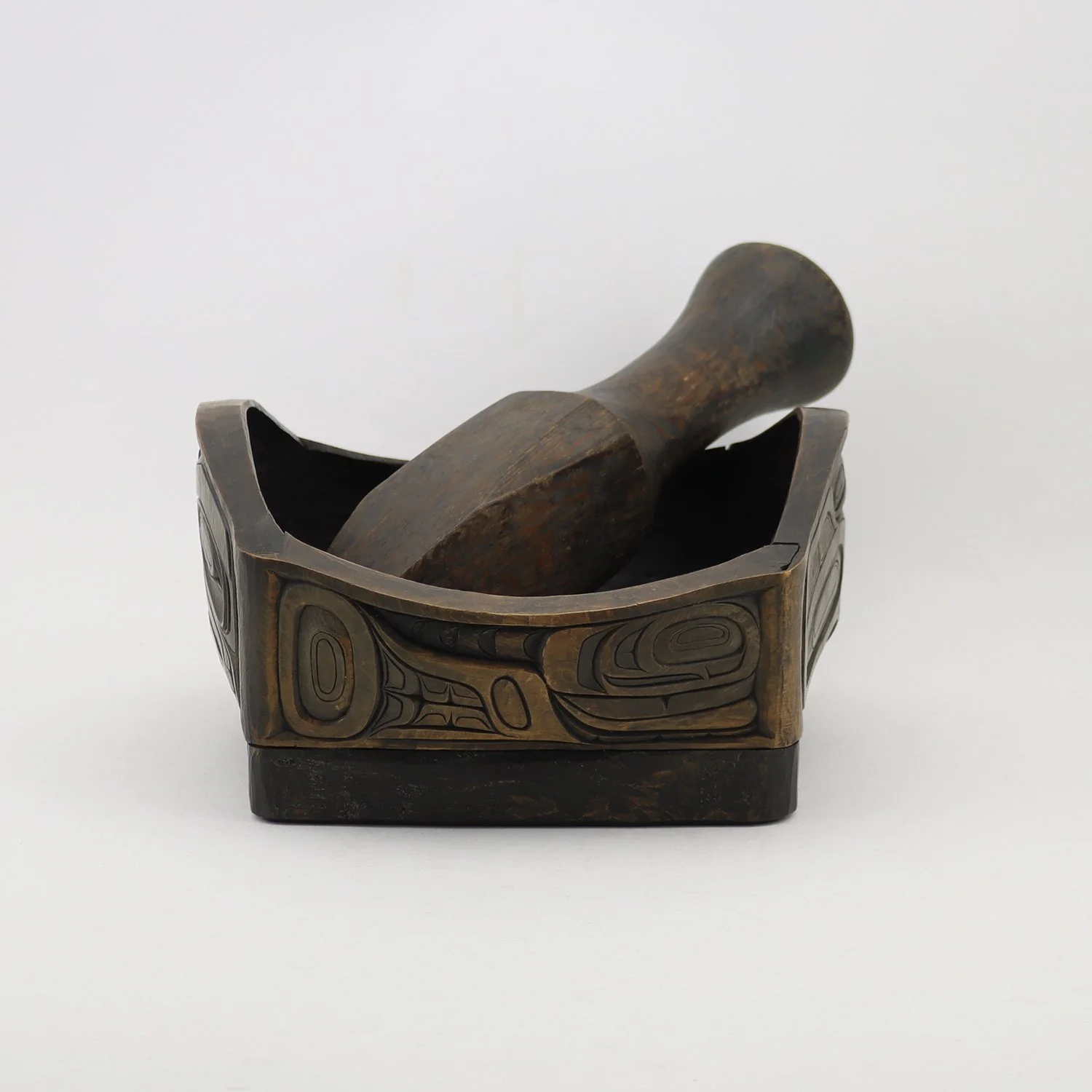
Phil Nuytten (Kah-Sah-Las) (Canadian 1941-2023) ‘Bentwood Bowl and Pestle’ bentwood/kerfed and carvedand stained bowl, copy of one in the UBC Museum of Anthropology, with dark stain, together with wooden pestle in matching stain, pestle size 11 ½ in long. Size: 5 h x 9 w x 9 d in. ZP20762
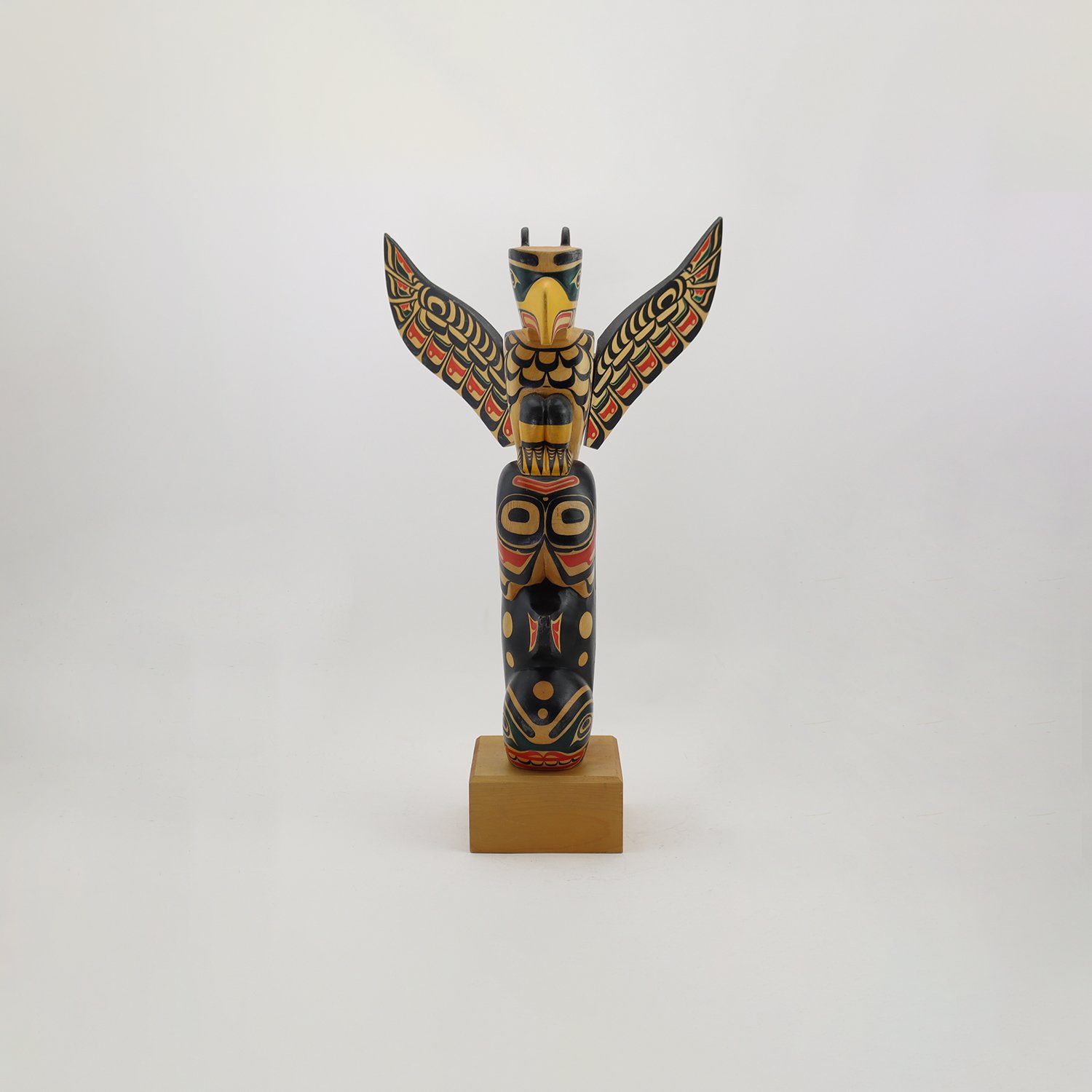
Phil Nuytten (Kah-Sah-Las) (Canadian 1941-2023) ‘Thunderbird and Whale Totem Pole’ carved and painted wooden totem pole of Thunderbird and whale, signed and dated on back "Phil Nuytten 1988". Size: 17 ½ h x 12 ¼ w x 8 ¼ d in. ZP20760
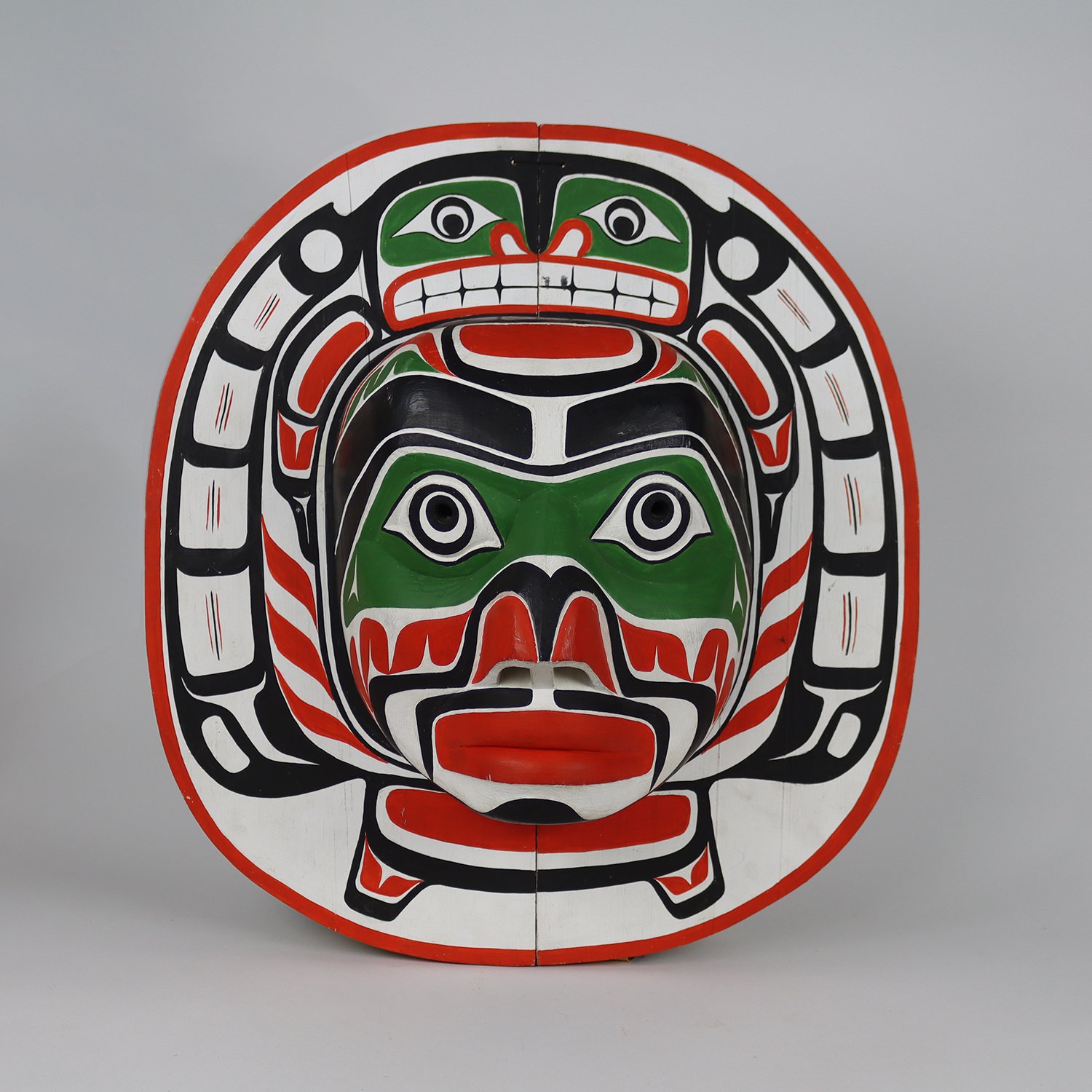
Matt James (Kwakwaka'wakw (Kwakiulth) (Canadian) born 1967) ‘Moon & Whale Mask’ red cedar mask painted red, black, white and green, depicting Moon and Whale, 1985. Exhibited: The Private Eye, Art Collectors and Their Stories. Size: 24 ¼ h x 22 ½ w x 9 d in. ZP20814
Robert Charles Davidson G̲uud San Glans (Eagle of the Dawn) born 1946
Robert Charles Davidson, G̲uud San Glans (Eagle of the Dawn) of the Eagle Clan, was born in Hydaburg, Alaska in 1946 and was raised in Old Massett, Haida Gwaii. His father, Claude Davidson, and Grandfather, Robert Davidson Sr., began Robert’s carving career in wood and argillite when he was 13 years old. He was majorly influenced by his great-grandfather Charles Edenshaw and his grandmother Florence Davidson who had 13 children, providing a large number of ‘aunties’ to whom Robert was very close.
It was necessary to move to Vancouver in 1965 for Robert to complete high school, and it was there that he learned to produce silkscreen prints. In 1966 he was demonstrating carving at Eaton’s Department Store where he met Bill Reid, with whom he would develop a lasting relationship. Robert moved into Bill Reid’s studio where the apprentice made his own tools and would learn the fundamentals of two-dimensional design, and worked with him for the next eighteen months. Bill Reid is credited as the connector or bridge between the works of Charles Edenshaw and Robert Davidson.
In 1967 Robert attended the Vancouver School of Art (now Emily Carr University) and was swept up in the 1960’s abstract and modern art scene. He enrolled in a jewellery course where he began experimenting with abstraction, which also influenced his print making. He taught for six months in 1968 at ‘Ksan, a reconstructed village near Hazelton, and in 1969 he returned to Masset where he carved and erected a forty-foot totem pole, the first to be raised in Haida Gwaii in almost a hundred years. During this time his reputation spread and he was regularly commissioned for poles, masks, carvings prints and jewellery in silver and gold.
Robert Davidson is best known for his thorough understanding and mastering of traditional Haida sculpture and design. He is celebrated for his fine craftsmanship as well as his understanding of Northern two-dimensional design. Widely recognized, Robert Davidson has won many awards including the Governor General’s Award for Visual Arts and the Audain Prize for Lifetime Achievement Award in the Visual Arts. He is the recipient of the Order of BC and the Order of Canada, and is the subject of the documentary Haida Modern. The Vancouver Art Gallery has held nearly twenty-five solo shows of Robert Davidson’s work, and his carvings, prints, paintings and jewellery can be found in major collections and institutions worldwide. Robert Davidson is the subject of the film Haida Modern which was released in 2019 and the 1969 pole raising is the subject of the recent documentary film Now is the Time.
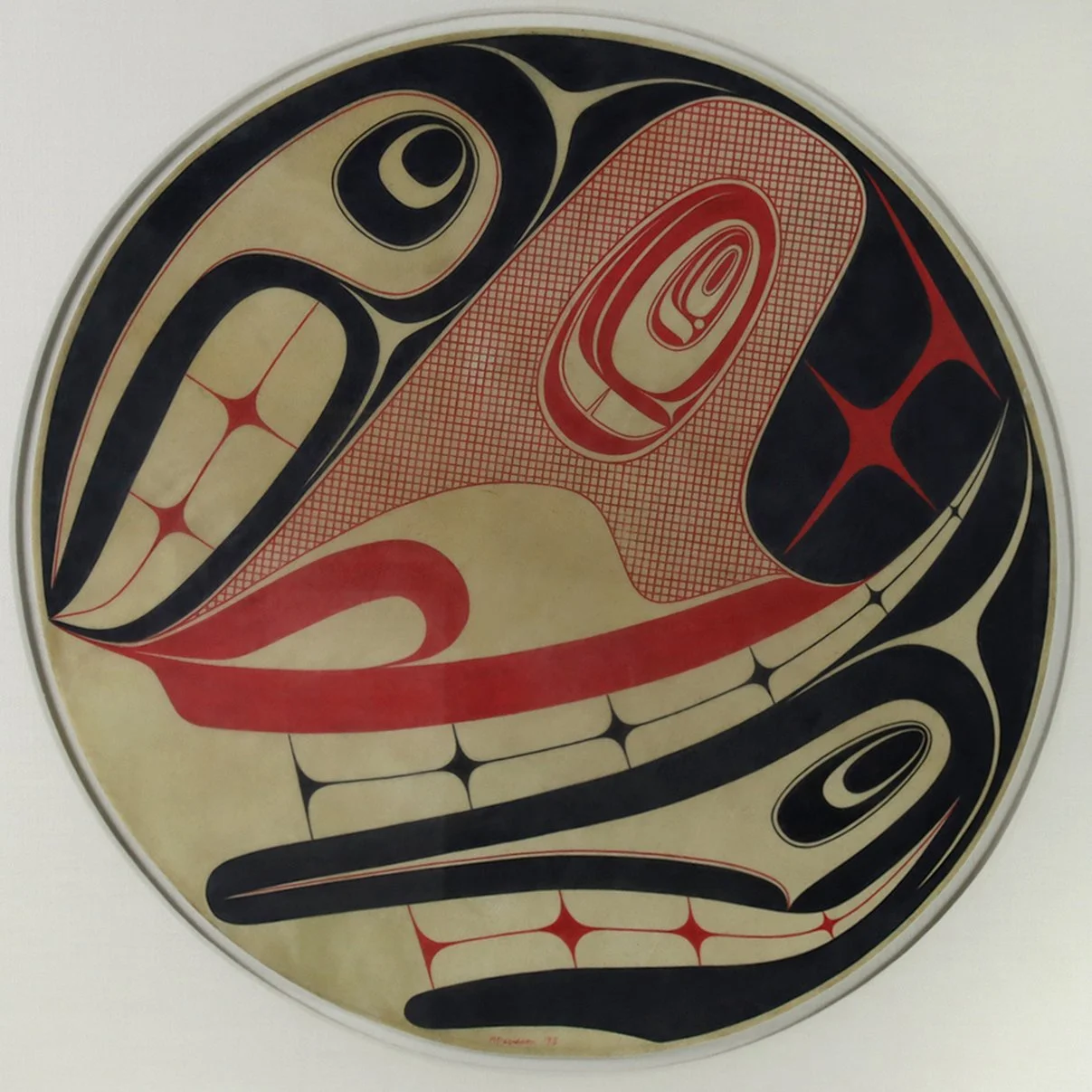
Robert Charles (G̲uud San Glans) Davidson (Haida/Canadian Born 1946) ‘Drum Face Depicting Four Faces’ original painted drum face, acrylic paint on deer hide, mounted and framed, signed and dated lower edge "R Davidson ‘93". Size: 24 h x 24 w (with frame: 32 ½ x 32 in). ZP20740
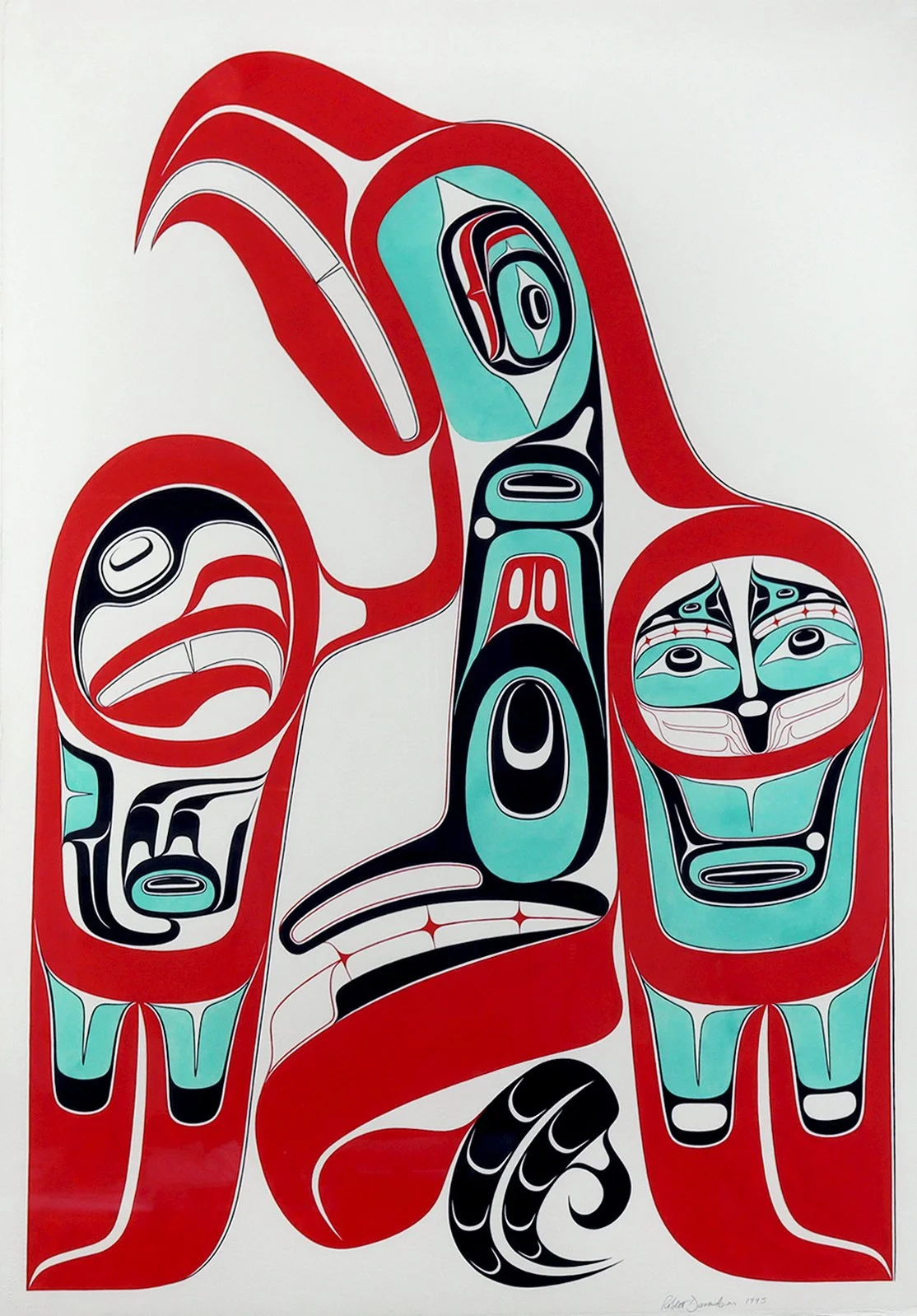
Getting Ready to Take Flight by Robert Charles Davidson (Haida/Canadian born 1946). Original painting, in black, green and red, signed on lower right "Robert Davidson 1995", this is the painting reference for the serigraph "Getting Ready to Take Flight " 1995, edition of 72 (print not included)
Accompanied by a personal letter from the artist: "Phil Nuyton: For your continued interest in my work. I am happy you got the painting and blankets. The painting is the beginning of the next part of my life. Sincerely, Robert Davidson". Size in inches: 42 h x 29.5 w (with frame 25.5 h x 40 w in) J20737
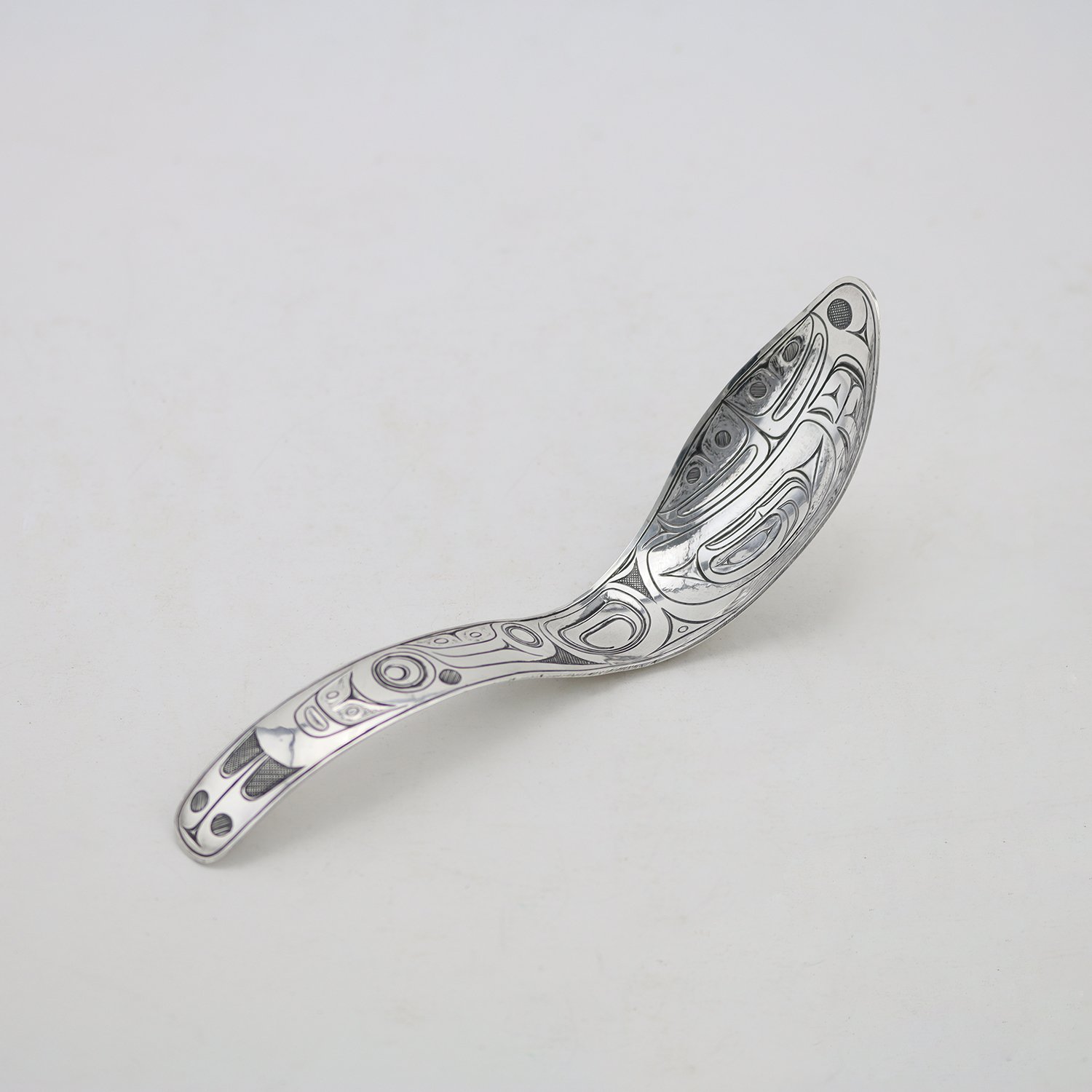
Robert Charles (G̲uud San Glans) Davidson (Haida/Canadian Born 1946) ‘Eagle Spoon’ Silver spoon with engraved eagle motif, written on back in ink "1971
Robert Davidson" and inscribed "Davidson 71". Size: 5 3/4 h x 1 3/4 w x 0.3 d in ZR20739
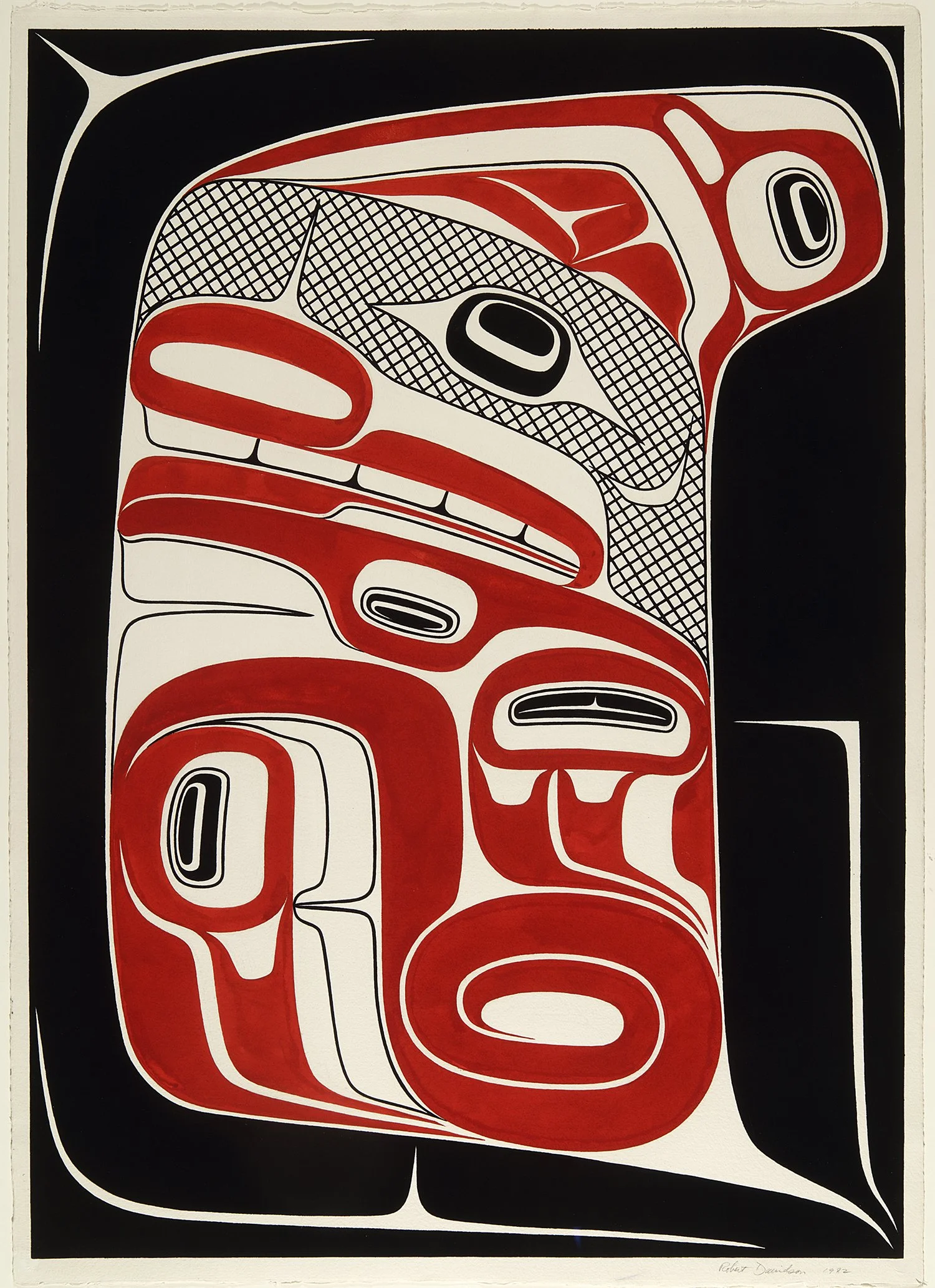
Seawolf Inside Its Own Dorsal Fin 1982 by Robert Charles Davidson (Haida/Canadian born 1946) watercolour and gouache on arches, signed and dated lower right "Robert Davidson 1982", titled on label on reverse, together with framed double sided drawing and serigraph signed and dated lower right "Robert Davidson '83" and numbered lower left "6/99" Serigraph size 42 1/8" x 29 3/4"Size: 42.125 h x 29.75 w J20698
"For the two years after the potlatch Children of the Good People, I was looking at my previous work and rehashing designs, learning the forms, but I was ready to move on. One of my teachers was a bentwood dish in the collection of the Glenbow Museum and in Robert Inverarity's book Art of the Northwest Coast Indians. The same artist (sometimes called "the Master of the Black Field") created the box featured in the Arts of the Raven exhibition and I was in the background listening to the heated discussion between Wilson Duff, Bill Reid and Bill Holm, who were mesmerized by the design. They were deeply analyzing the formline and I would shout from the background, 'There is no formline!' but I don't think they heard me. It would be years before I would understand what they were seeking. What I saw in this artist was the confidence to step outside of his comfort zone, with the skill and knowledge to do so. The artist would contain a shape like a box and he would introduce a new shape with in the shape. I realized that the art could go beyond the established conventions. I was inspired to experiment." Echos of the Supernatural page 103.
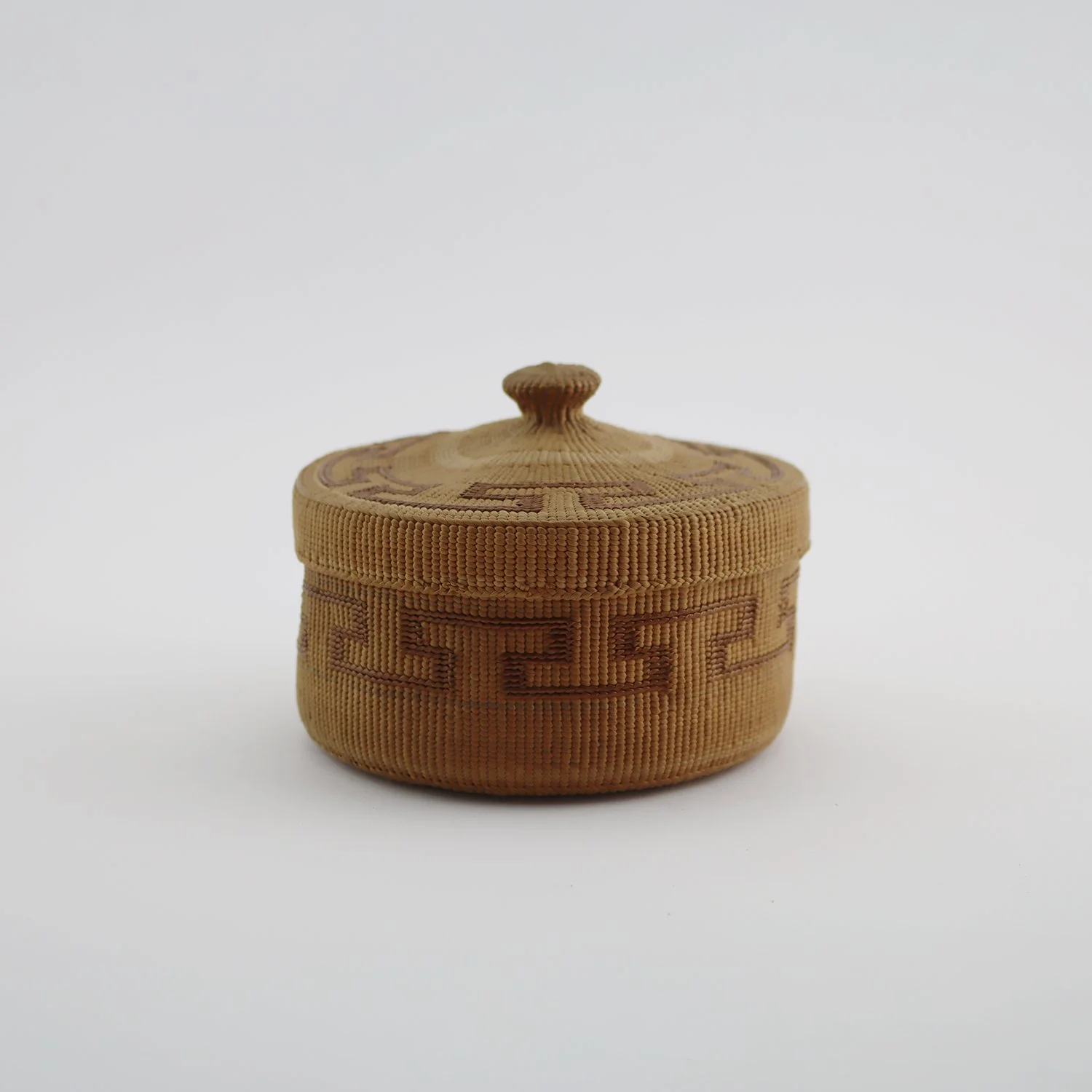
Tsimshian lidded basket, the sides and top decorated with imbricated geometric design, the lid with knop, circa 1900. Size: 3.5 h x 5 w x 5 d P21642
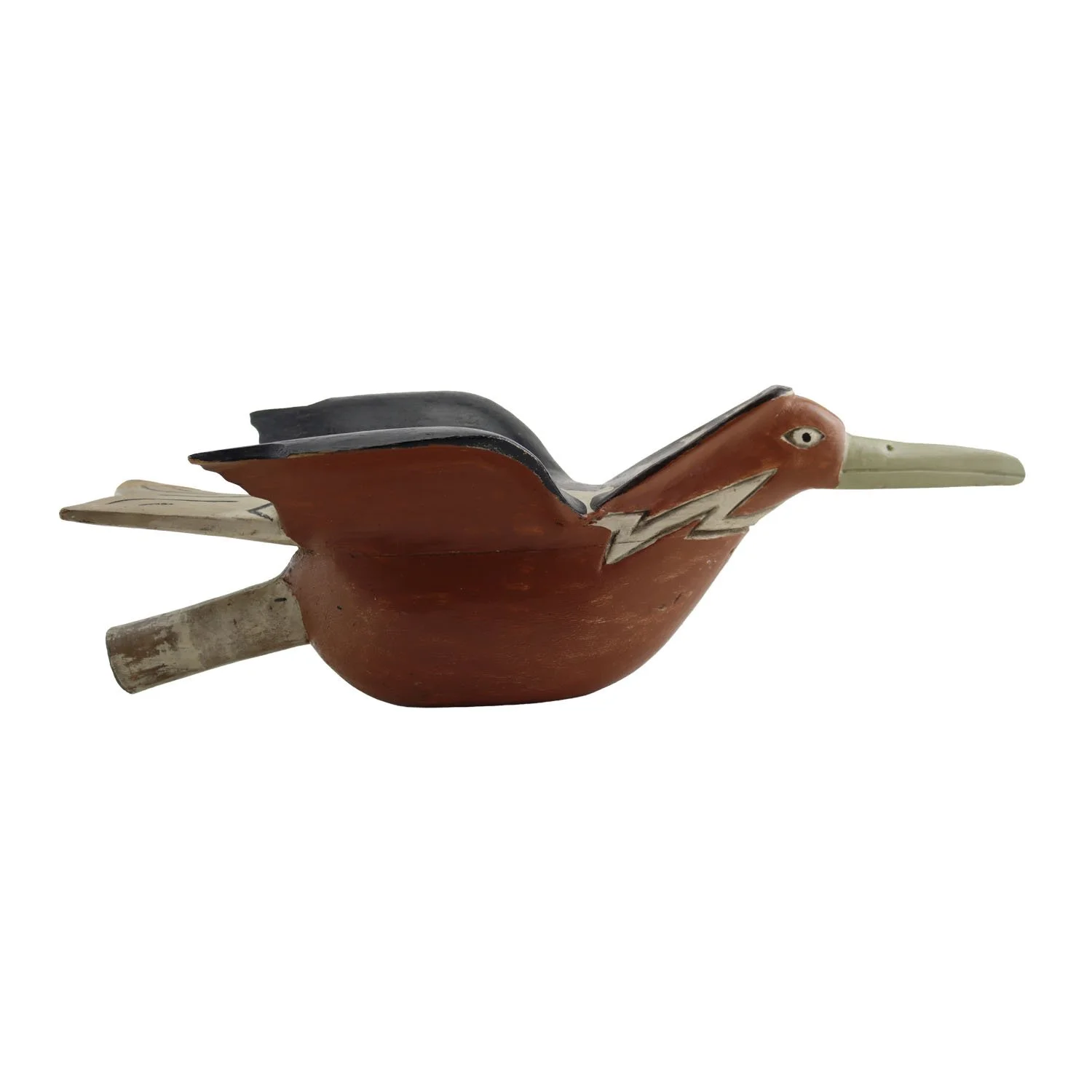
Northwest Coast carved and painted bird rattle with handle, carved in two pieces with stones inside, second quarter of the 20th century. Size: 6.75 h x 21.25 w x 7.75 d in. P21680
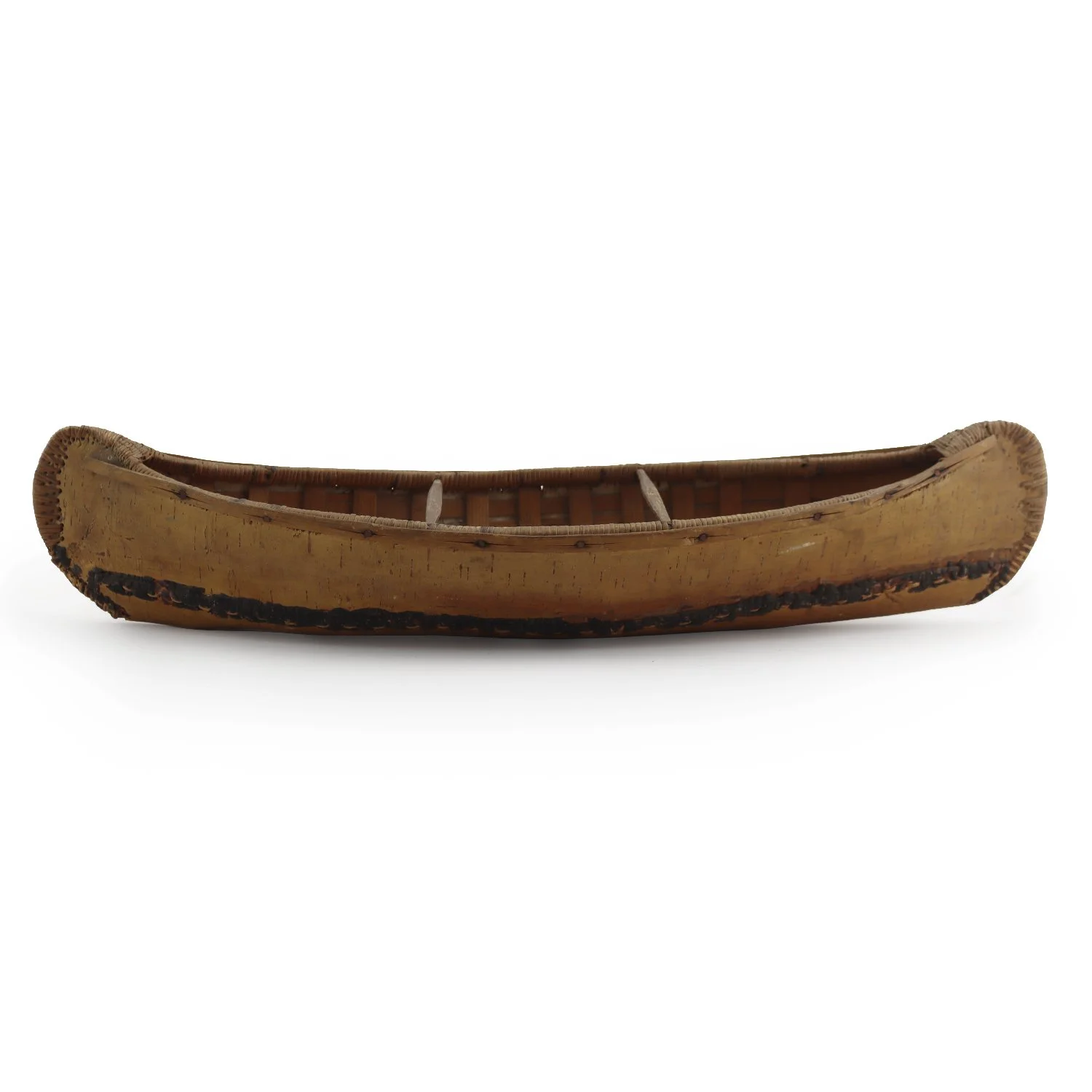
Eastern birchbark canoe model, birchbark stretched over wooden frame and stitched along the top and around the ends and bottom, with wooden rails and 2 seats, circa 1900-1920. Size: 5.75 h x 25 w x 6.37 d P21687
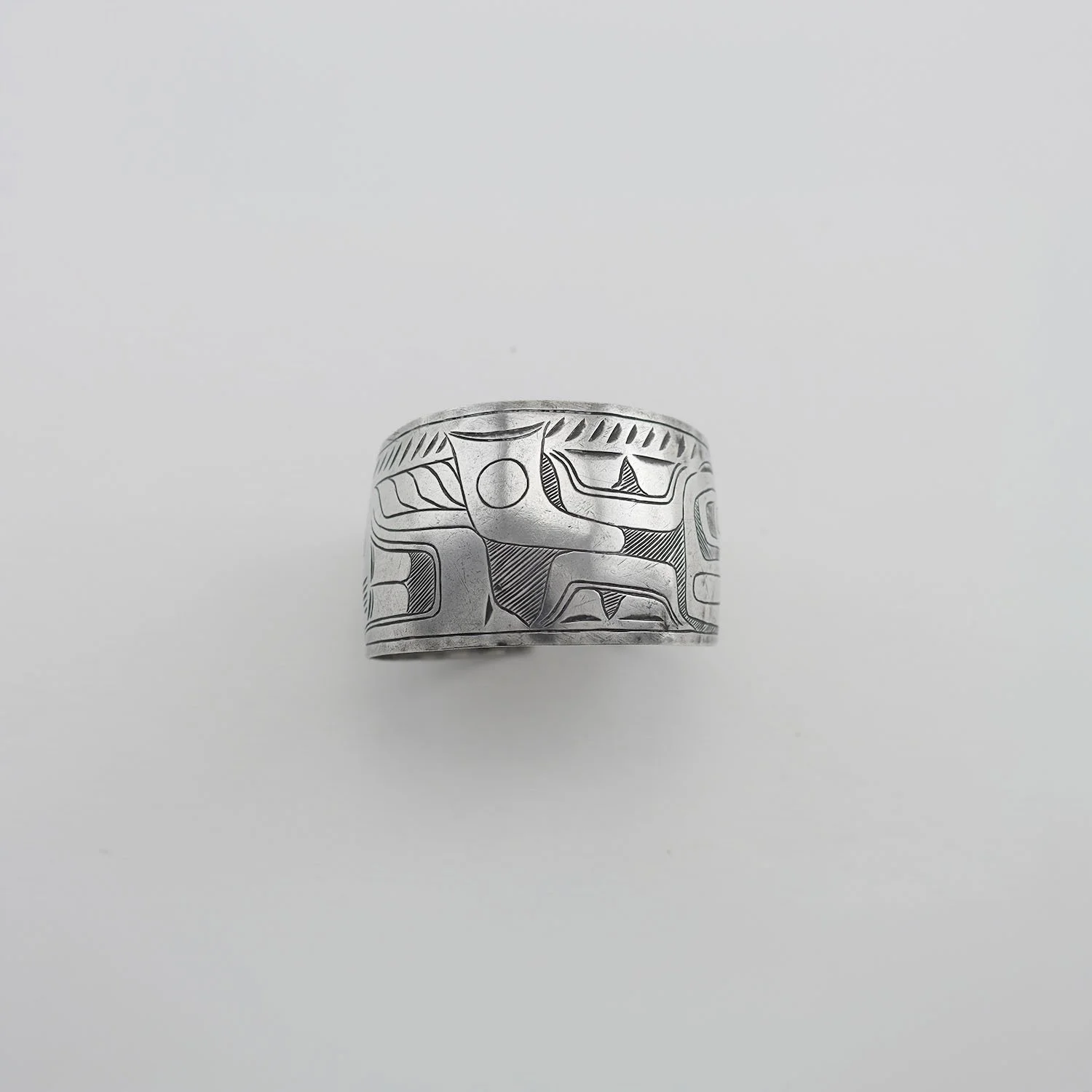
Early Northwest Coast carved silver bracelet, with clasp (broken), late 19th/early 20th century. Size: 1.5 h x 2.25 w x 1.78 d in. P21710
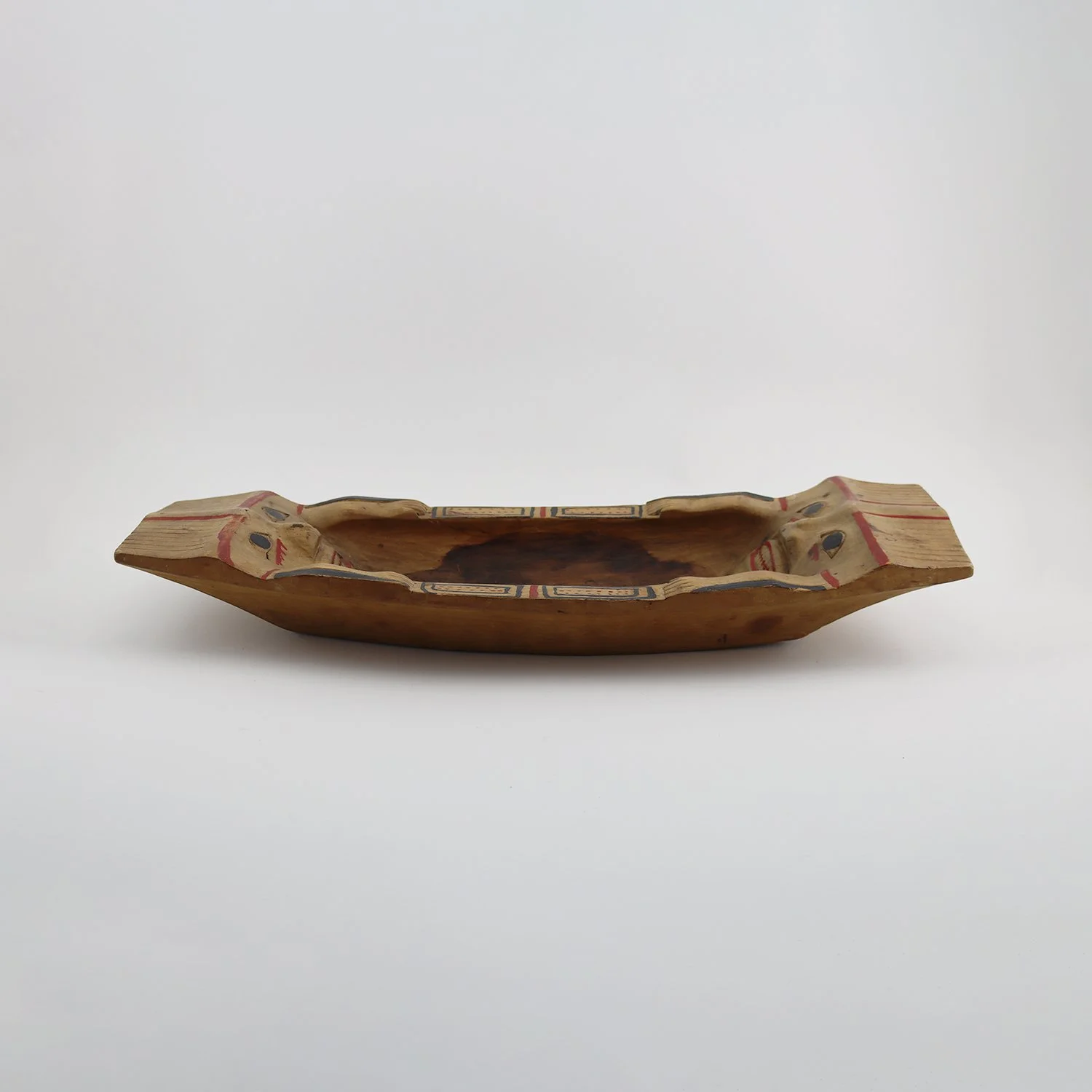
Northwest Coast carved and painted wooden feast dish, carved with heads at each end, early 20th century. Size: 2.75 h x 19.25 w x 6.75 d P21703
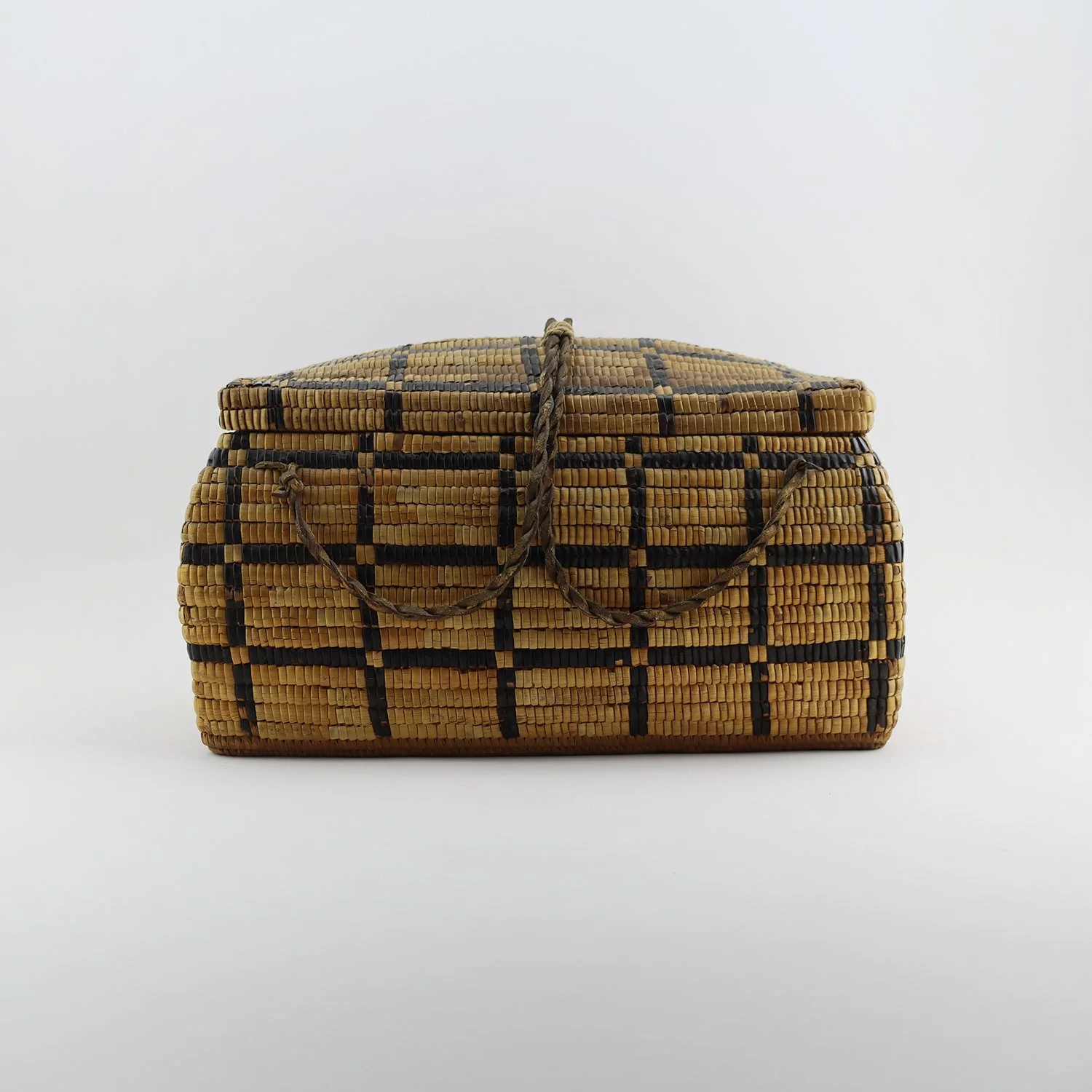
Fully imbricated Salish lidded basket with hinged lid and leather handles, imbricated with black geometric design, late 19th century. Size: 8.5 h x 14 w x 7.5 d P21665
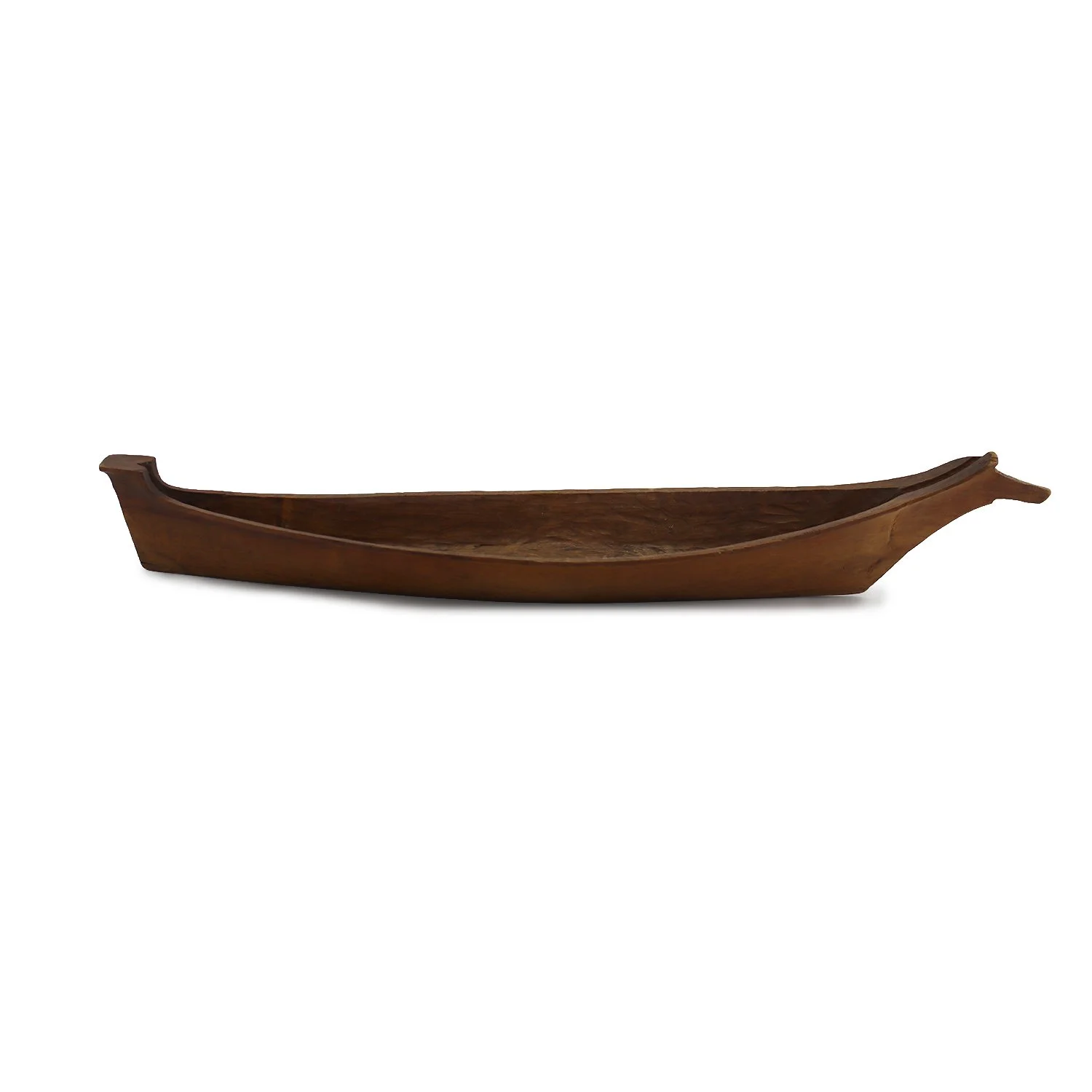
Haida carved wooden canoe model, circa 1900. Size: 3.5 h x 24.25 w x 4.75 P21684
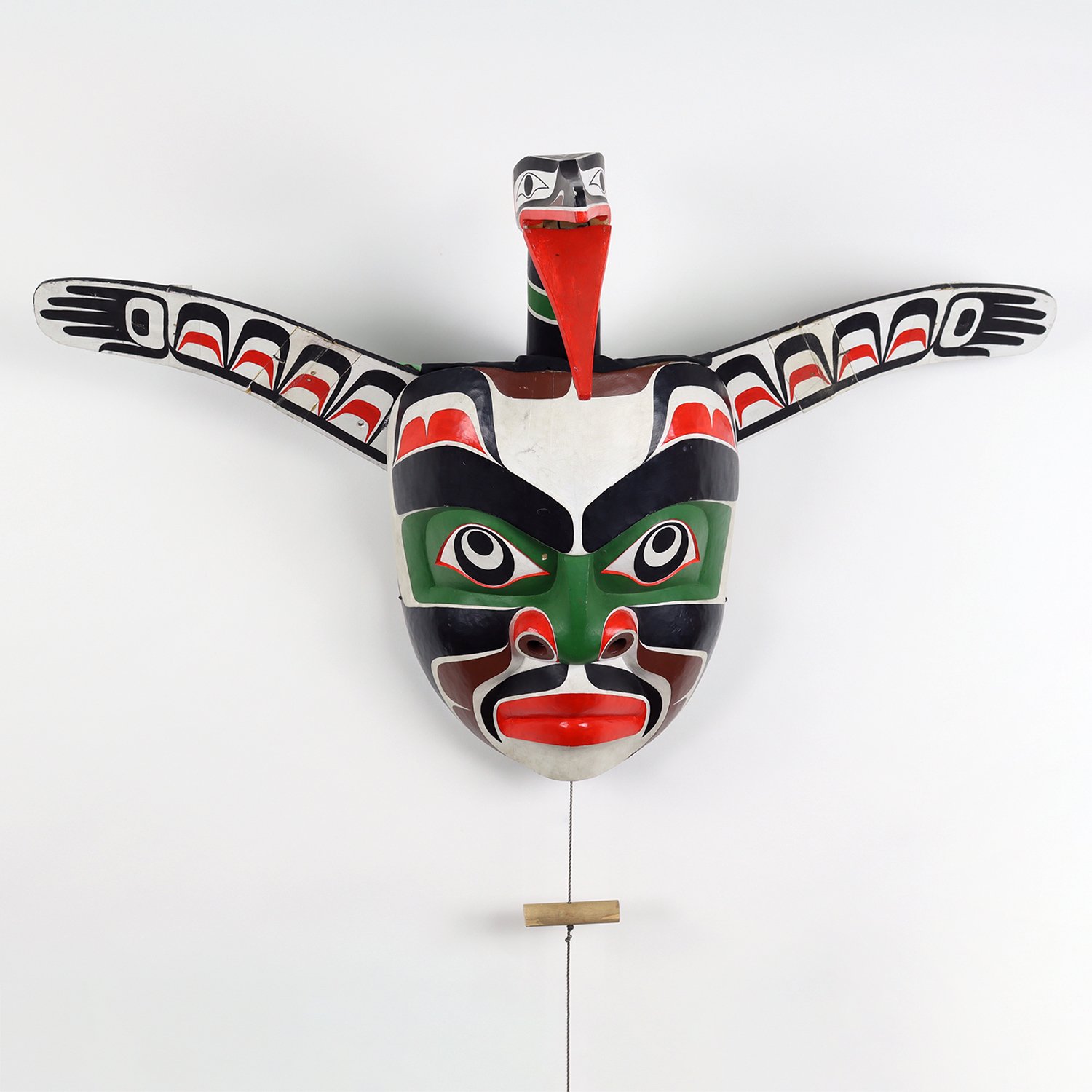
Beau Dick (Kwakwaka'wakw (Kwakiulth)/ Canadian 1955-2017) ‘Human and Loon Mask’ red and yellow cedar mask, painted, depicting Human and Loon, 1986, wings and head articulated, has been danced. Exhibited: The Private Eye, Art Collectors and Their Stories. Size: 22 h x 34 ½ w x 10 d in. ZP20815
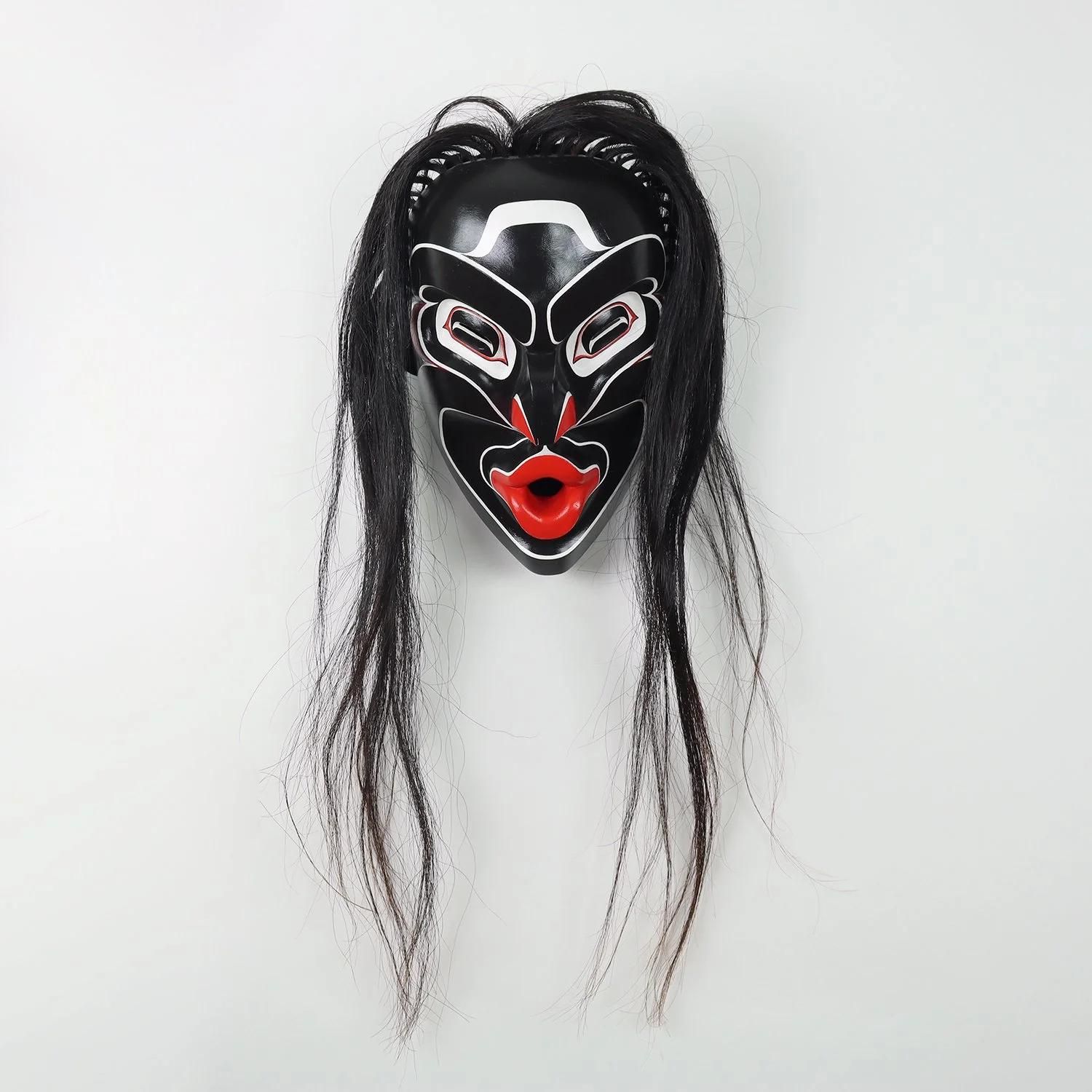
Beau Dick (Kwakwaka'wakw (Kwakiulth)/ Canadian 1955-2017) ‘Tsonokwa (Dzunukwa) Mask’ painted wood, faux hair depicting Tsonikwa the Wild Woman of the Woods, signed and dated on back "Beau Dick '88". Size: 15 h x 10 w x 6 ½ d in. ZP20822
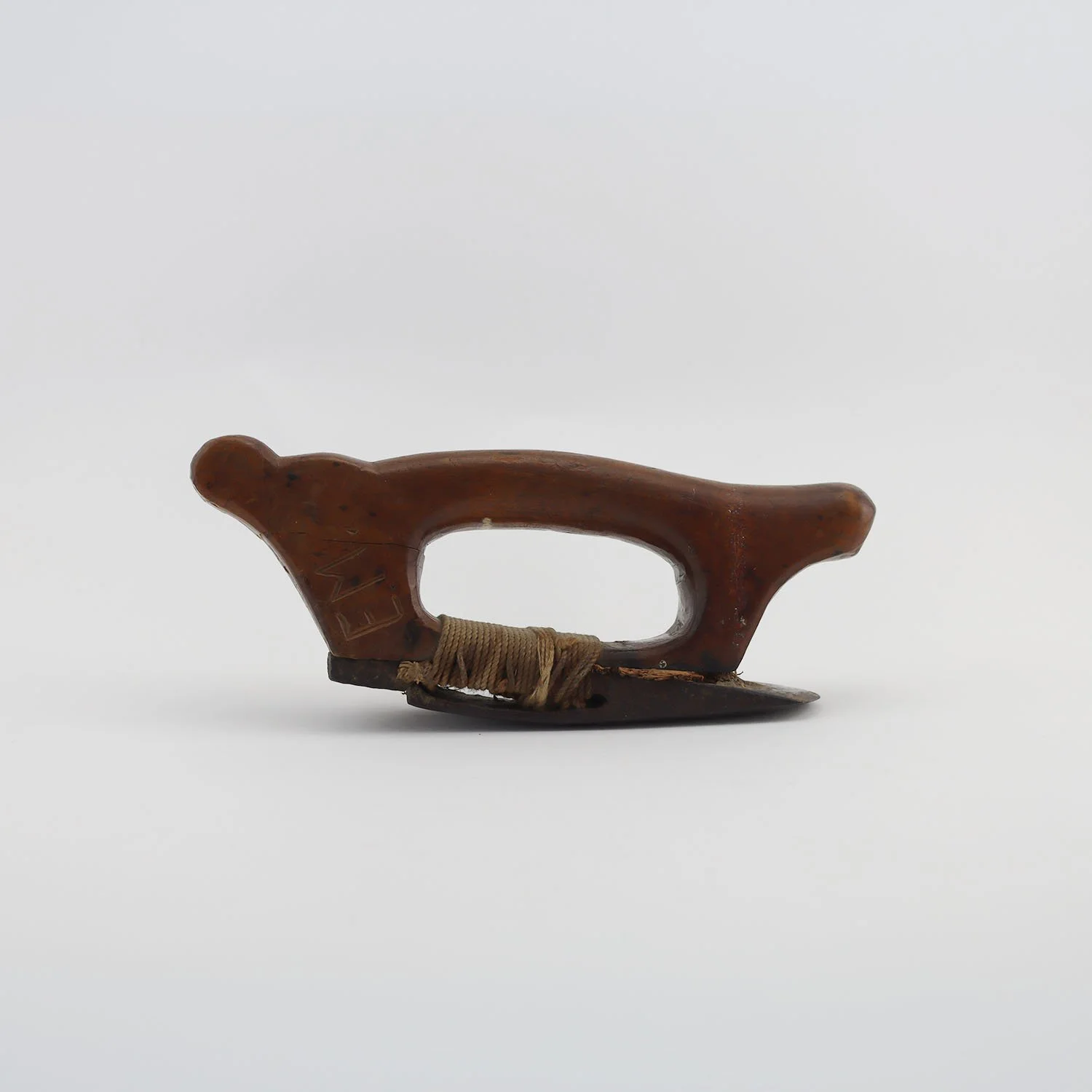
Northwest Coast D-adze with wooden carved handle and steel blade, 19th/20th century, with carved initials EM. Size: 3.5 h x 9 w x 1.87 d in. P21692
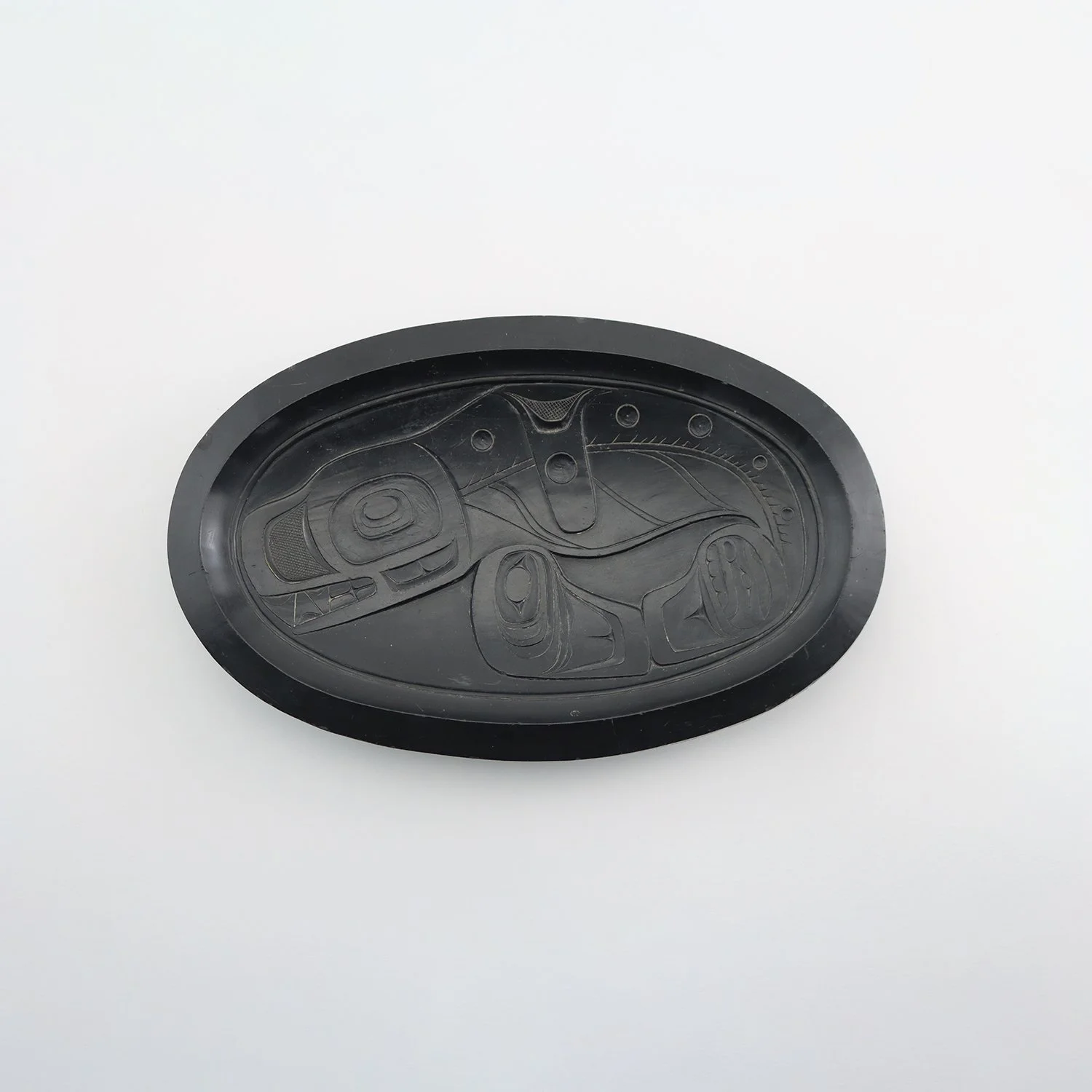
Northwest Coast oval argillite platter, the center carved with a whale, 19th century. Size: 1.75 h x 6.87 w x 10.87 in. P21706
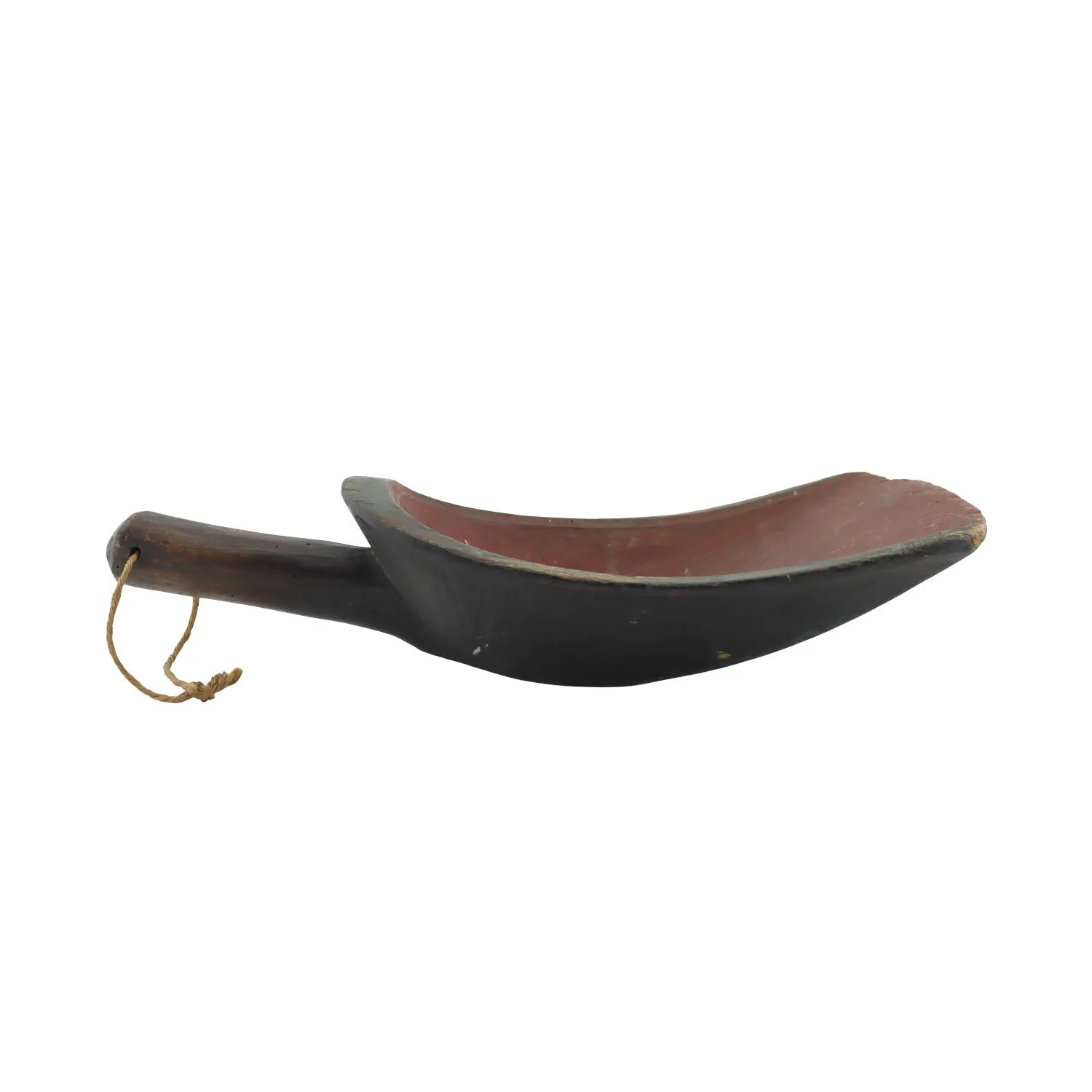
Northwest Coast wooden carved potlatch scoop/server, painted in red and blue (worn), handle with twine hanger, early 20th century. Size: 4 h x 8.5 w x 17.75 d in. P21681
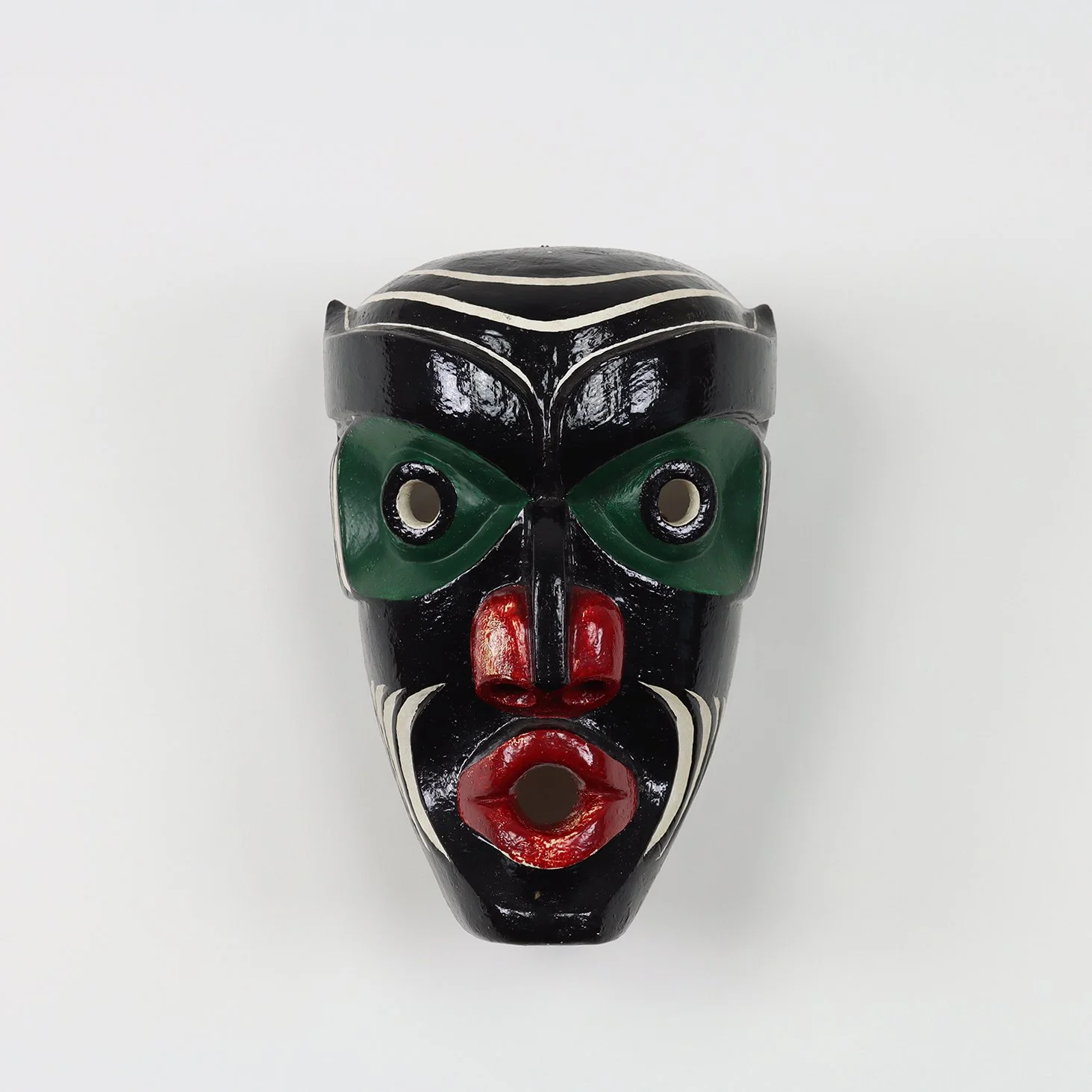
Joe Seaweed (1910-1998) ’Tsonokwa (Dzunukwa) Mask’ red cedar mask made by Joe and Willie Seaweed, painted with enamel paint, signed "by Joe Seaweed Blunden Harbour (Giant)" Exhibited: The Private Eye, Art Collectors and Their Stories, described as by Joe and Willie Seaweed (Chief Hilamas, "One Who Fixes Everything and Makes it Right" (1873-1967) Provenance: Pappas Auction, Oct 24, 1983 lot 463) Size: 11 ¼ h x 7 ½ w x 7 d in ZP20825
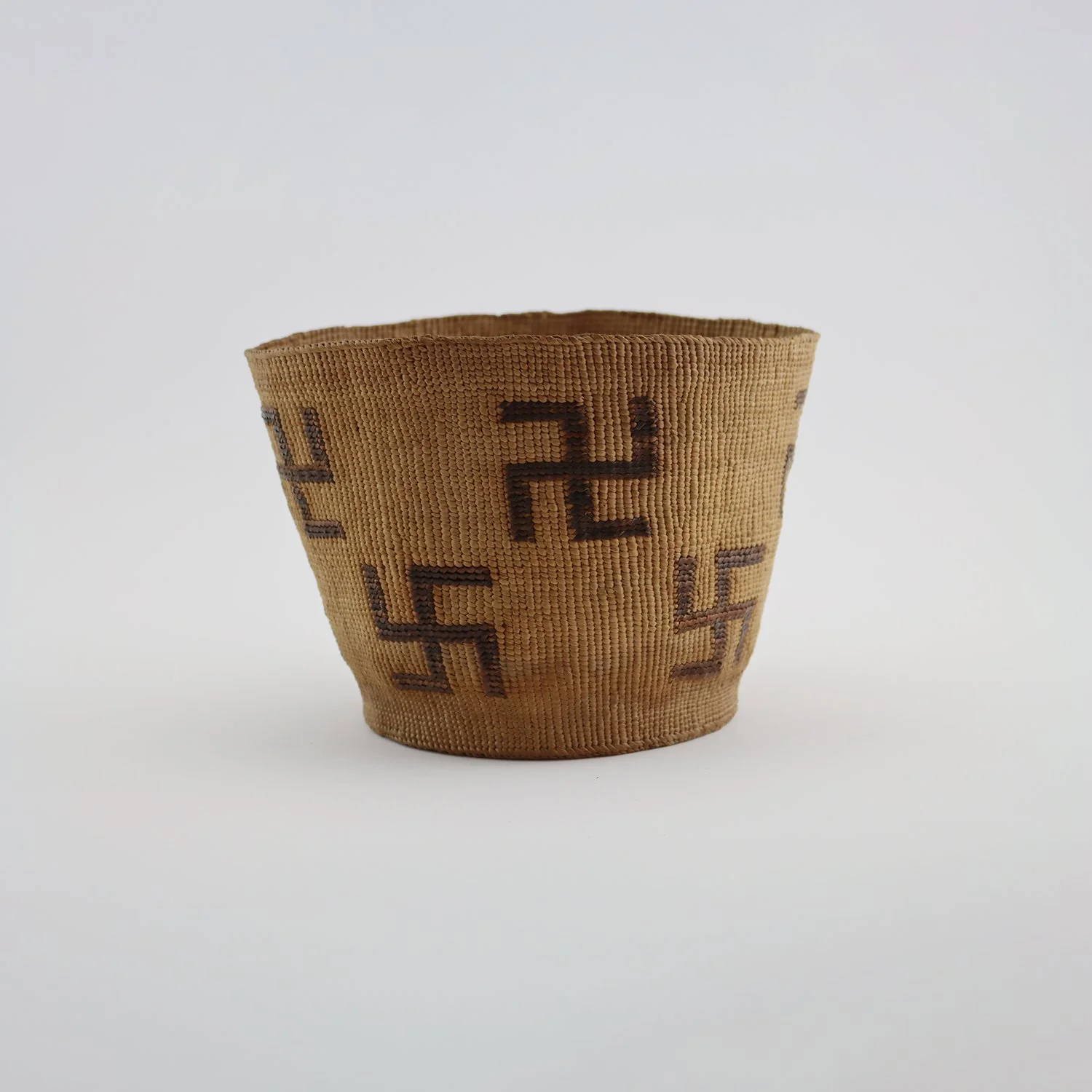
Tsimshian basket with ancient imbricated design, 19th century.
Size: 5.25 h x 7.5 w x 6 d P21641
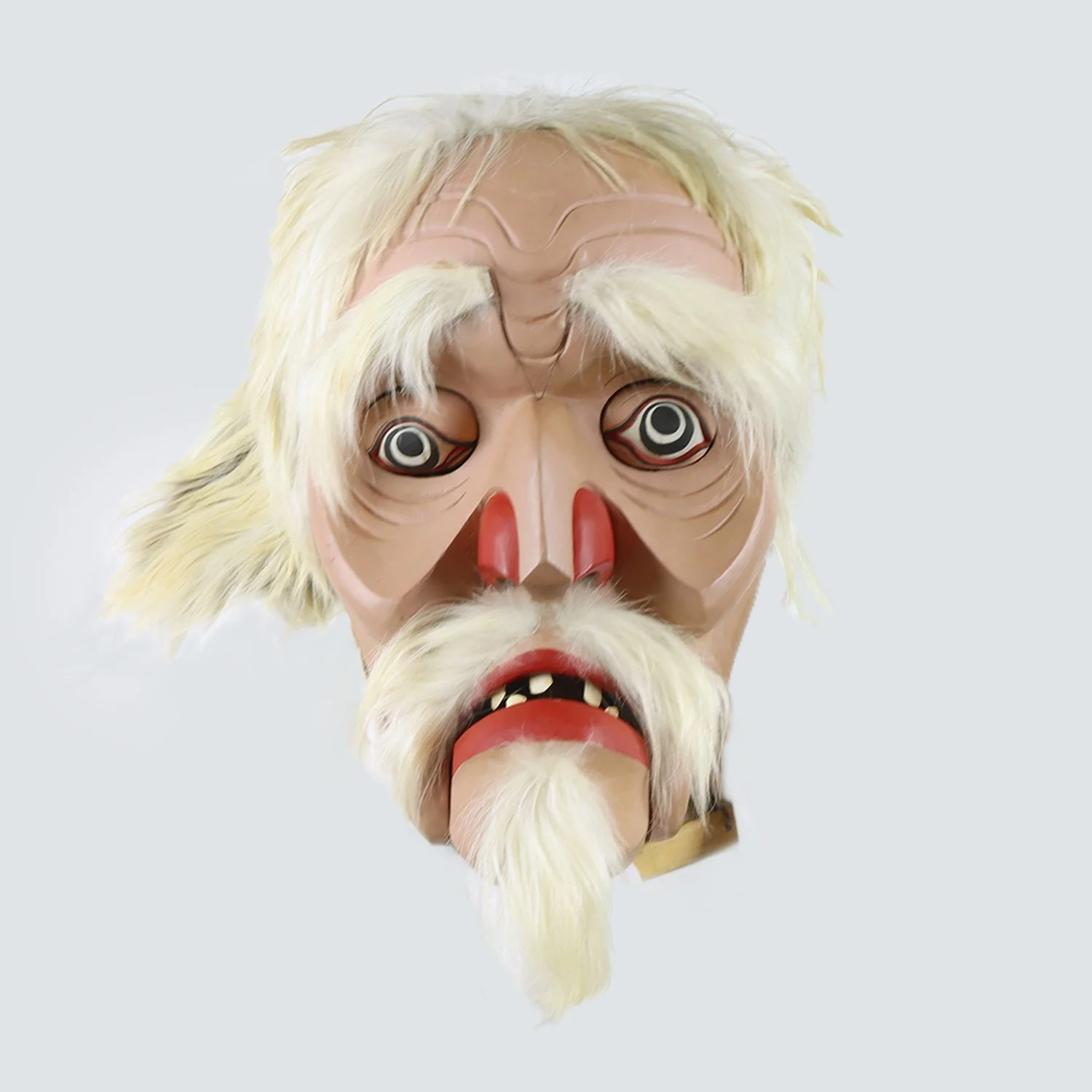
Don Smith (Lelooska) ((American/ Cherokee/adopted Kwakwaka'wakw) 1933-1996) ‘Numas (Old Man)’ yellow and red cedar mask, painted and decorated with fur and teeth, eyes, eyebrows and mouth articulated, has been danced. Exhibited: The Private Eye, Art Collectors and Their Stories. Sotheby's 2 June 1981 lot 357 (2). ZP20824
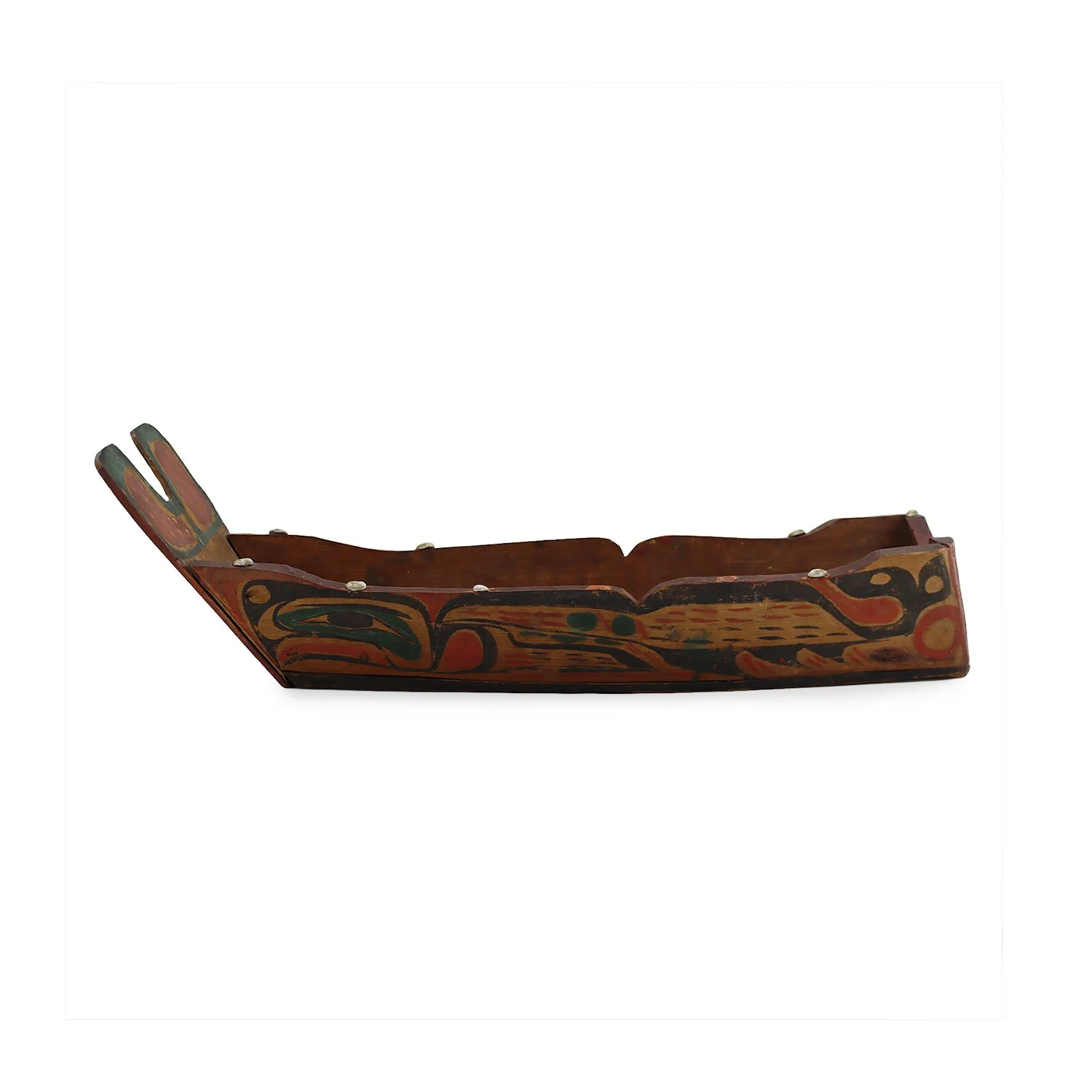
Nuu-chah-nulth carved and painted feast boat, decorated with operculum shells, circa 1920. Size; 6.5 h x 4.75 w x 21 d P21685
John Livingston (adopted Kwakwaka'wakw (Kwakiutl)
1951-2019)
John Livingston was born in Vancouver in 1951 but moved to Victoria when he was very young. He began carving at an early age at Thunderbird Park, Royal B.C. Museum. At the time Henry and Tony Hunt were head carvers at the museum and were instrumental in teaching Livingston to carve. After graduating from high school, he began a full time apprenticeship under Tony and together they opened Arts of the Raven Gallery. The Gallery was a major force in Northwest Coast Native art for over 20 years. Together Tony Hunt and John Livingston organized international exhibitions and the gallery workshop trained many of the Kwakwaka'wakw (Kwakiutl) artists working today.
John was a master carver and worked on many large totem commissions with Tony and Calvin Hunt, as well as executing totems and sculpture of his own. Besides his carving, he painted and produced over fifty limited editions prints. He was noted for his expertise in restoration, replication and appraisal of artifacts and collections of Northwest Coast materials. He also worked on major projects with Haida, Salish and Nuu-Chah-Nulth artists.
John Livingston was an adopted member of the Kwakwaka'wakw (Kwakiutl) Nation. Through his close association with the Hunt family, he participated in several large family potlatches and was given the rights to a number of important Kwakwaka'wakw (Kwakiutl) dances.
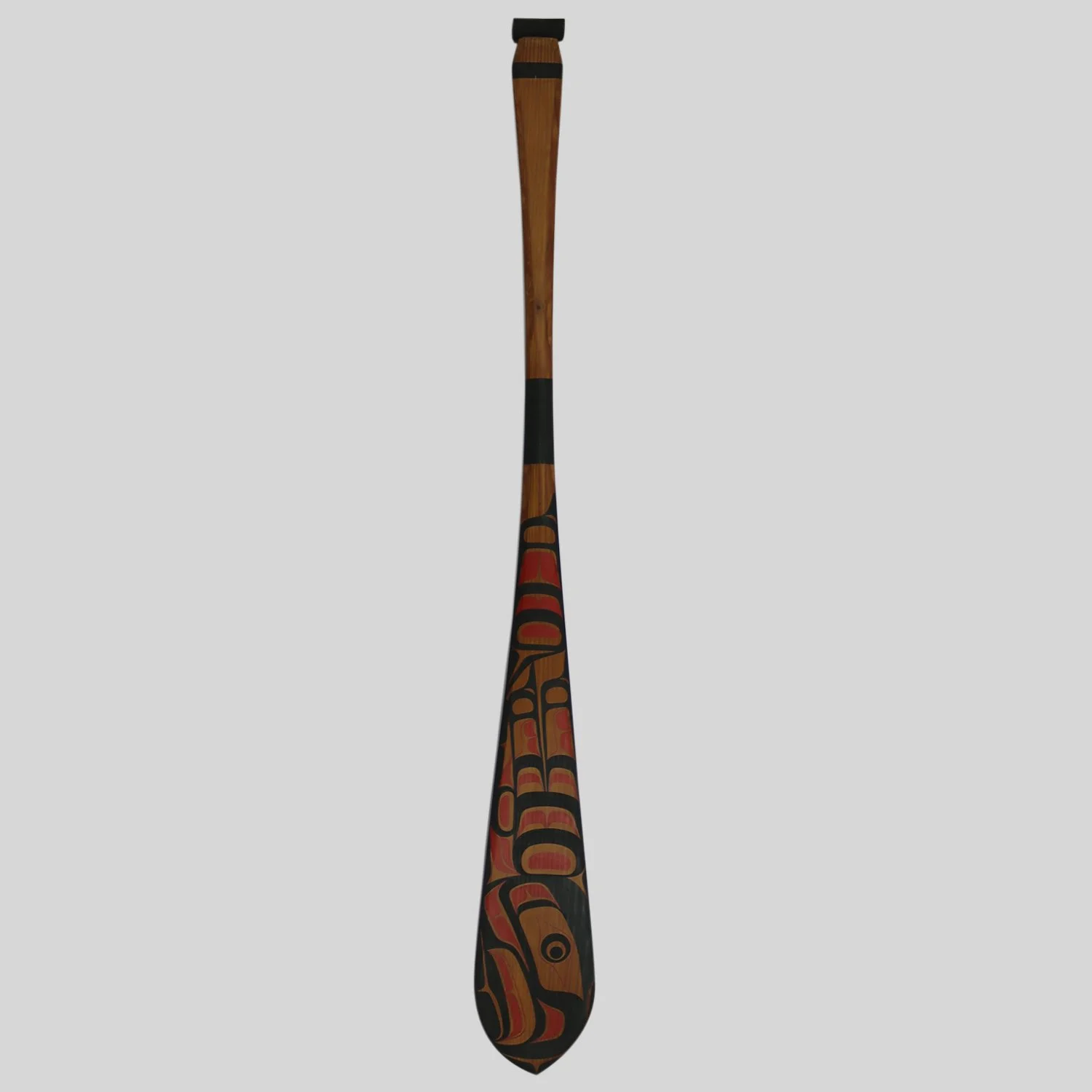
John Livingston (adopted Kwakwaka'wakw (Kwakiutl) 1951-2019) ‘Kwagulth Eagle Paddle’ wooden canoe paddle with painted decoration in black and red, back painted with black, signed on back "John Livingston Kwagulth Eagle". Size: 61 ½ h x 7 w x 1 ¼ d in. ZP20745
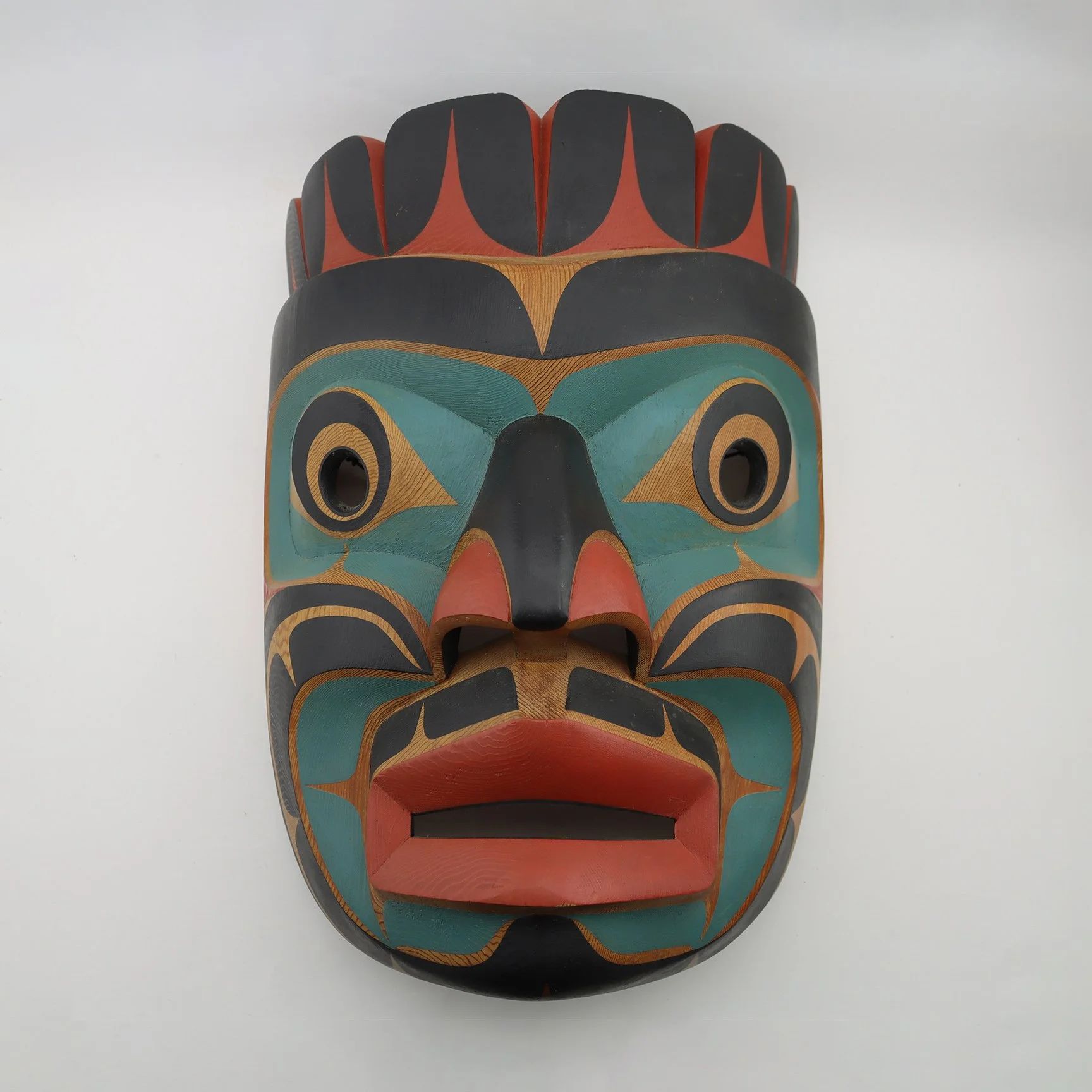
John Livingston (adopted Kwakwaka'wakw (Kwakiutl) 1951-2019)’ Portrait Mask of a Komokwa’ painted wood portrait mask, signed and inscribed on back "John Livingston /13, Komokwa Undersea Chief ". Size: 17 ½ h x 12 ¾ w x 8 d in. ZP20741