
Frederic Marlett Bell-Smith (Canadian 1846-1923)
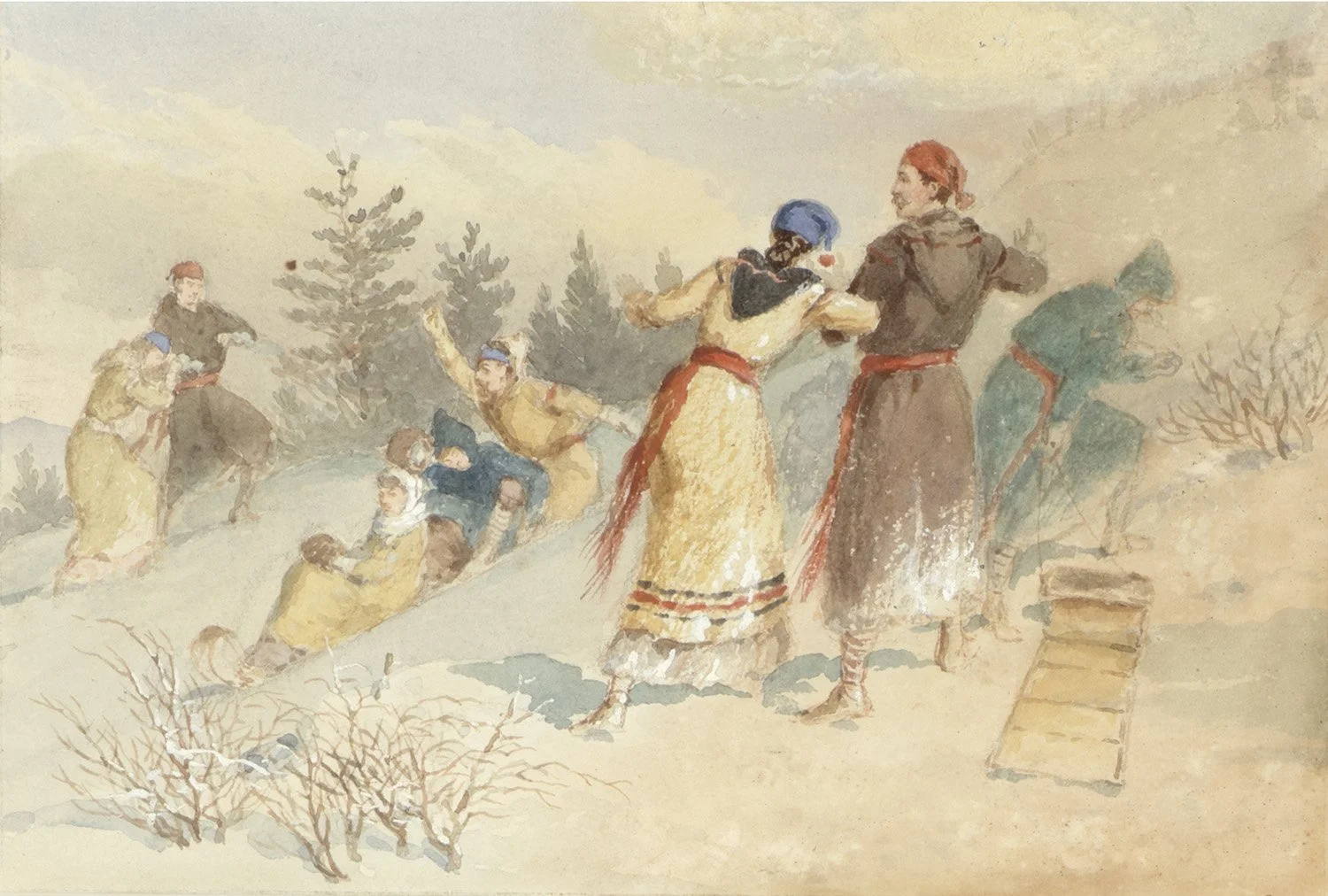
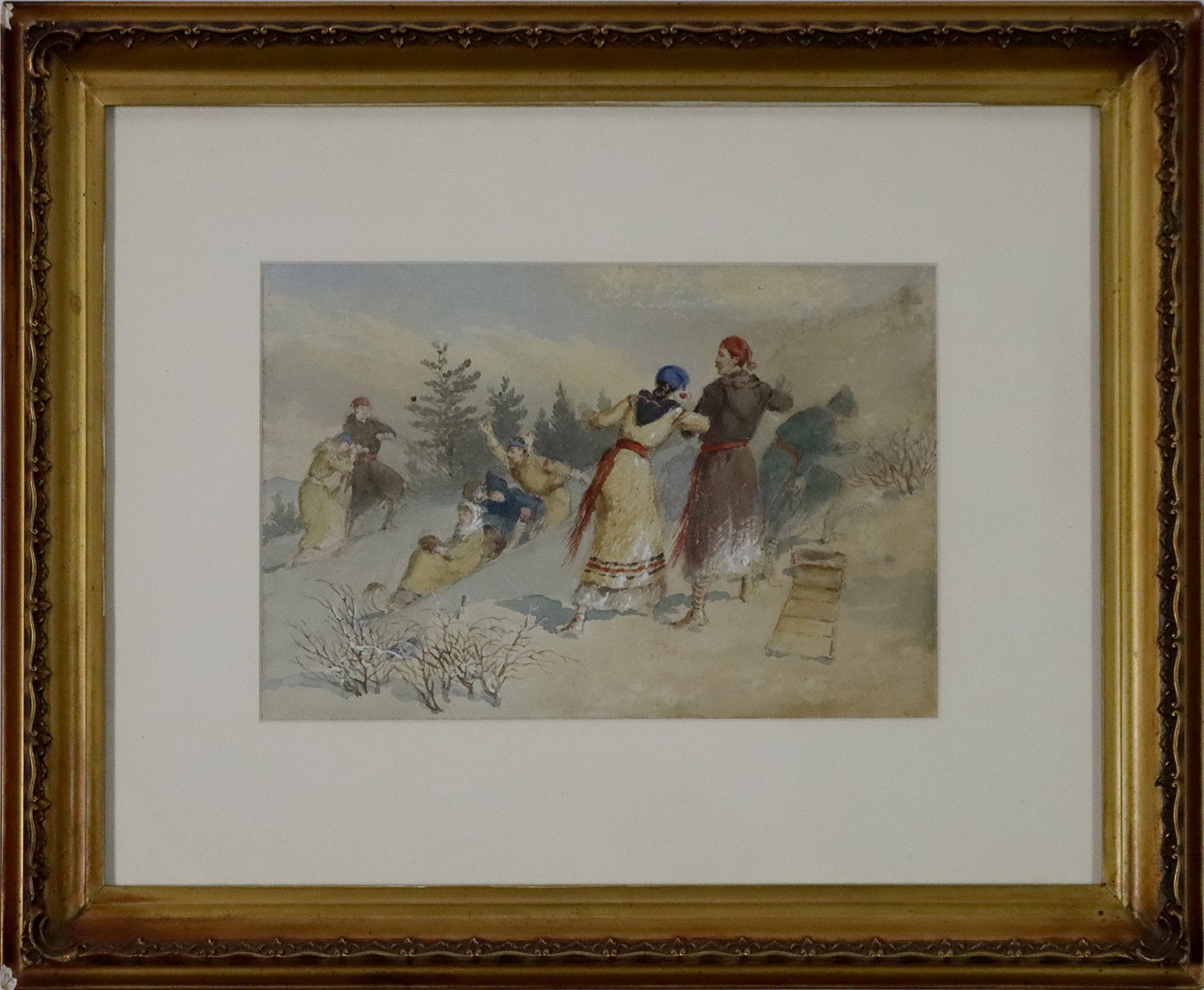
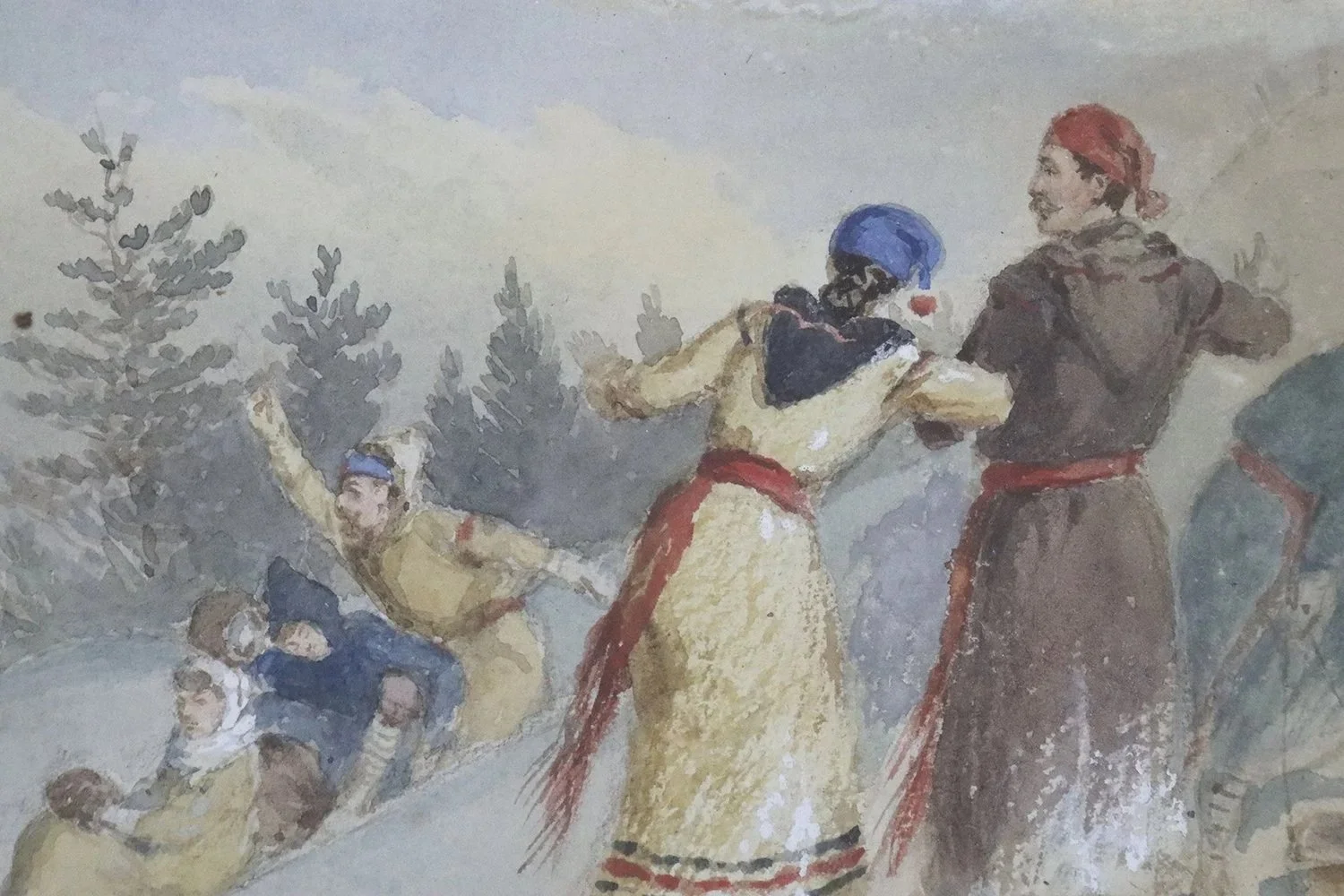
Tobogganing
watercolour, circa 1879
Provenance: Lillian Mayland McKimm collection
Frederic Marlett Bell-Smith is an important figure in the development of Canadian art. Born in London, England in 1846, he was the son of John Bell-Smith a miniature portrait painter. He originally trained under his father and later completed classical studies at the South Kensington School of Art and the Academie Colarossi in Paris. He immigrated to Canada with his family in 1867, settling in Montreal. Both Frederic and his father were founding members of the Society of Canadian Artists in their attempt to create the Canadian version of the prominent artists’ organizations which were popular in Europe during this time. Frederic was also a founding member of the Ontario Society of Artists in 1872. He was elected an Associate Member of the Royal Canadian Academy in 1880, and a full RCA member in 1886. He was one of the early artists who traveled West on the Canadian Pacific Railway. He also travelled internationally including to Paris, in 1892 to study at the Academie Colarossi, as well as to England and Holland. Bell-Smith had obtained a prominent place in the international art world by the 1890’s, allowing him a living from painting alone without needing a supplementary income from teaching. In 1894, he was able to explore his interest in depicting historical events through an oil painting series surrounding the death of Canadian Prime Minister John Thompson. The series is composed of three paintings titled "The Arrival of the Blenheim, Halifax", "The Queen’s Tribute to Canada", and "The State Funeral at Halifax". These paintings recorded the grandeur of a Canadian State Funeral, and furthered Bell-Smith’s reputation as a highly prominent Canadian artist.
This painting captures one of the truly Canadian pastimes of tobogganing, sliding down a snowy embankment on a toboggan. The toboggan was the invention of the First Nations of Canada. It originally served the purpose of allowing one to move large game, supplies or people over the snow efficiently before becoming a staple of winter sports. Generally constructed by securing two or more thin boards of larch or birch wood with the boards bent up in a curve, either by bending while the wood was green and lashing it in place until the wood dried or by steaming. By the 19th century it had become a common winter pastime shared by all Canadians.
Size: 10 h x 12 w in (with frame 14 x 17 ¼ in)
J21487