
Second Week of Advent 2025 - Holiday Gift Guide
Welcome to the second week of Advent! This week’s gift guide includes some charming paintings and unique holiday gift ideas. We have finished decorating the gallery with our Christmas Calendar Exhibition, and our 2026 calendar should be arriving in your mailbox shortly.
Visit with Uno Langmann Saturday, December 13 and 20th from 12 to 3 pm. We invite you to visit through December 23 to savour home-made treats and mulled cider gløgg, and pick up your complimentary package of greeting cards and an extra calendar if you wish.
Enjoy!
Jeanette and the Langmann Team
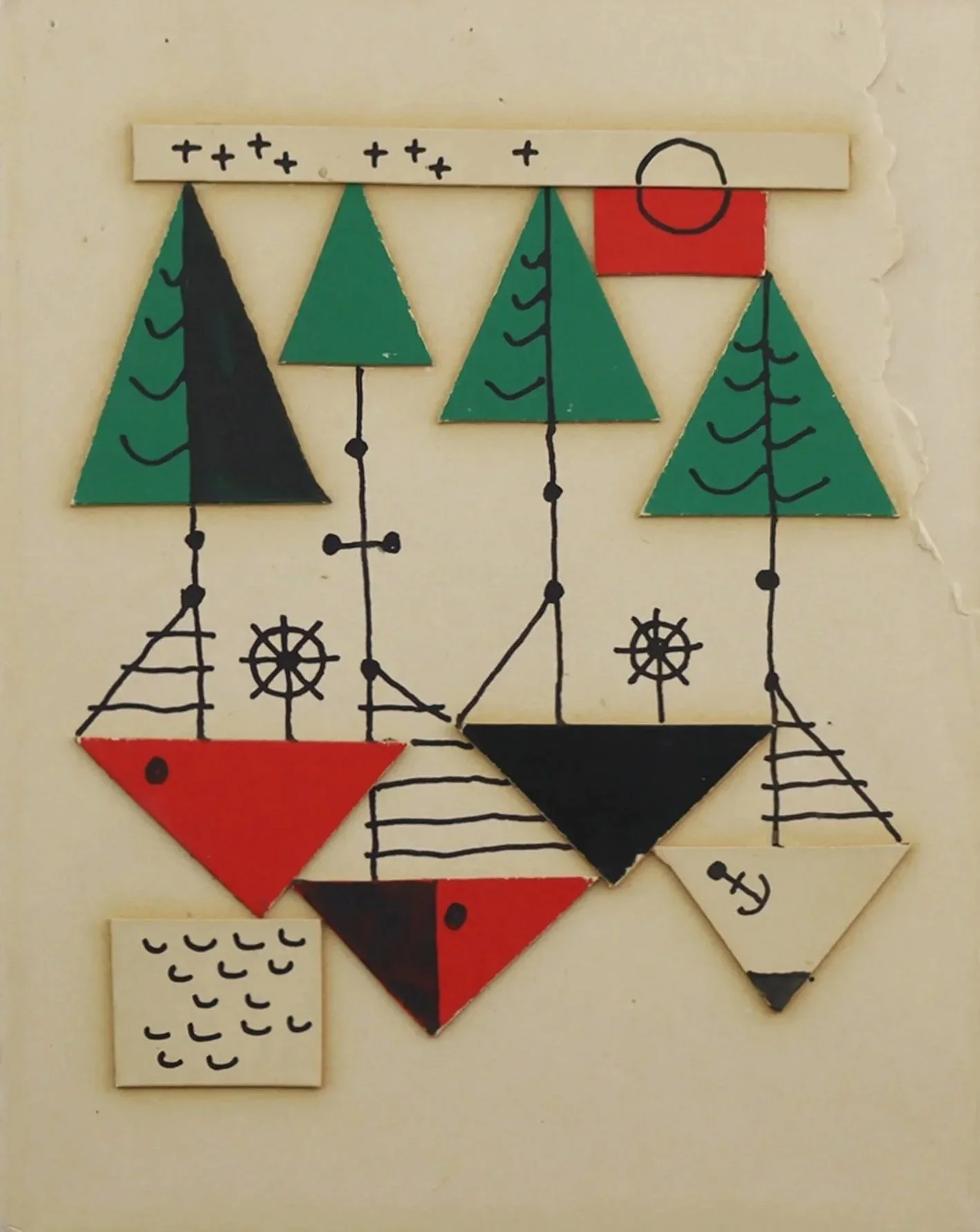
Christmas Card College by Bertram Charles Binning (Canadian 1909-1976) mixed media drawing/watercolour collage on paper.
Size: 7 ½ h x 6 w J21478
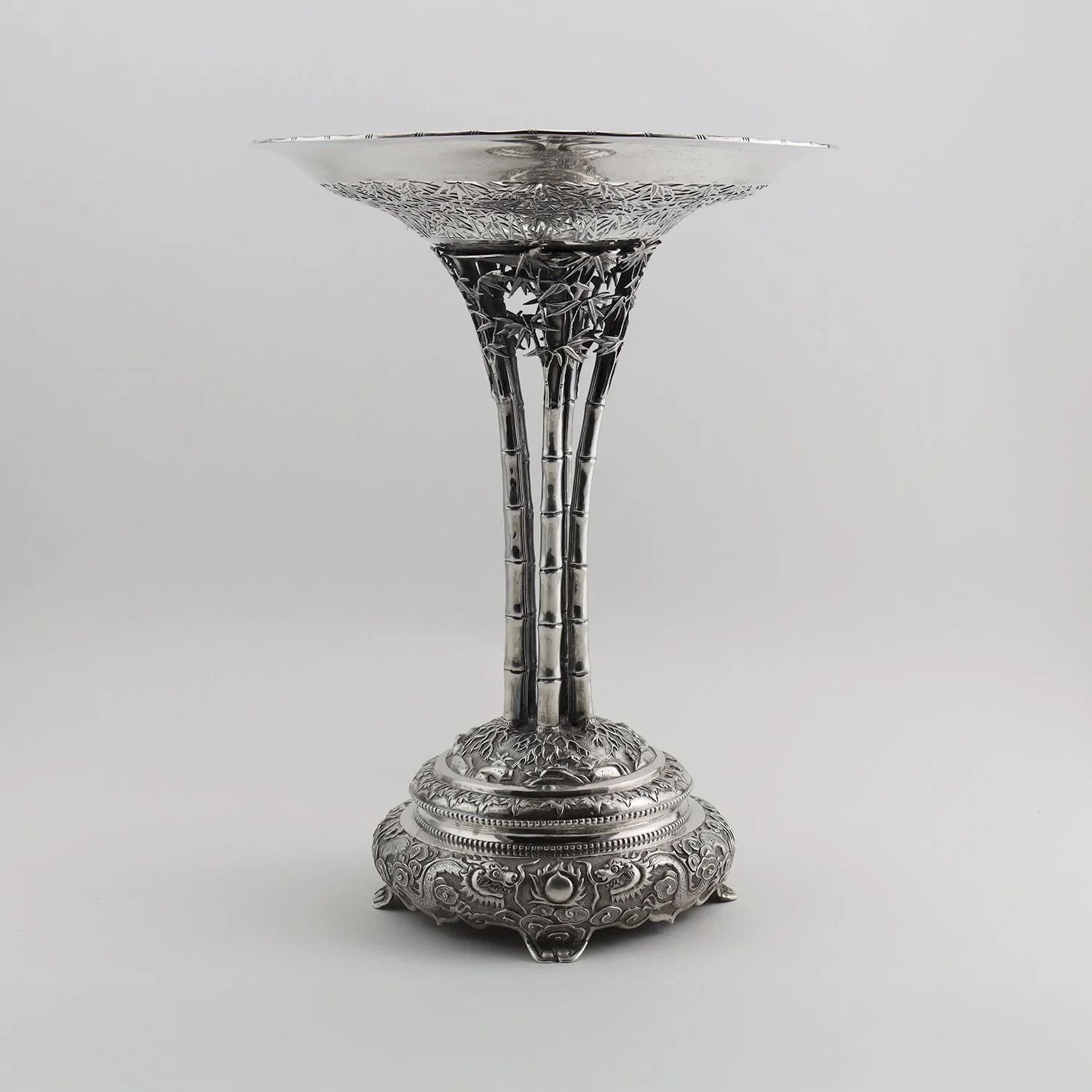
Chinese Export silver centerpiece, with maker's mark for Wang Hing, 19th century. Size: 12 ½ h x 9 ½ w x 9 ½ dC21473
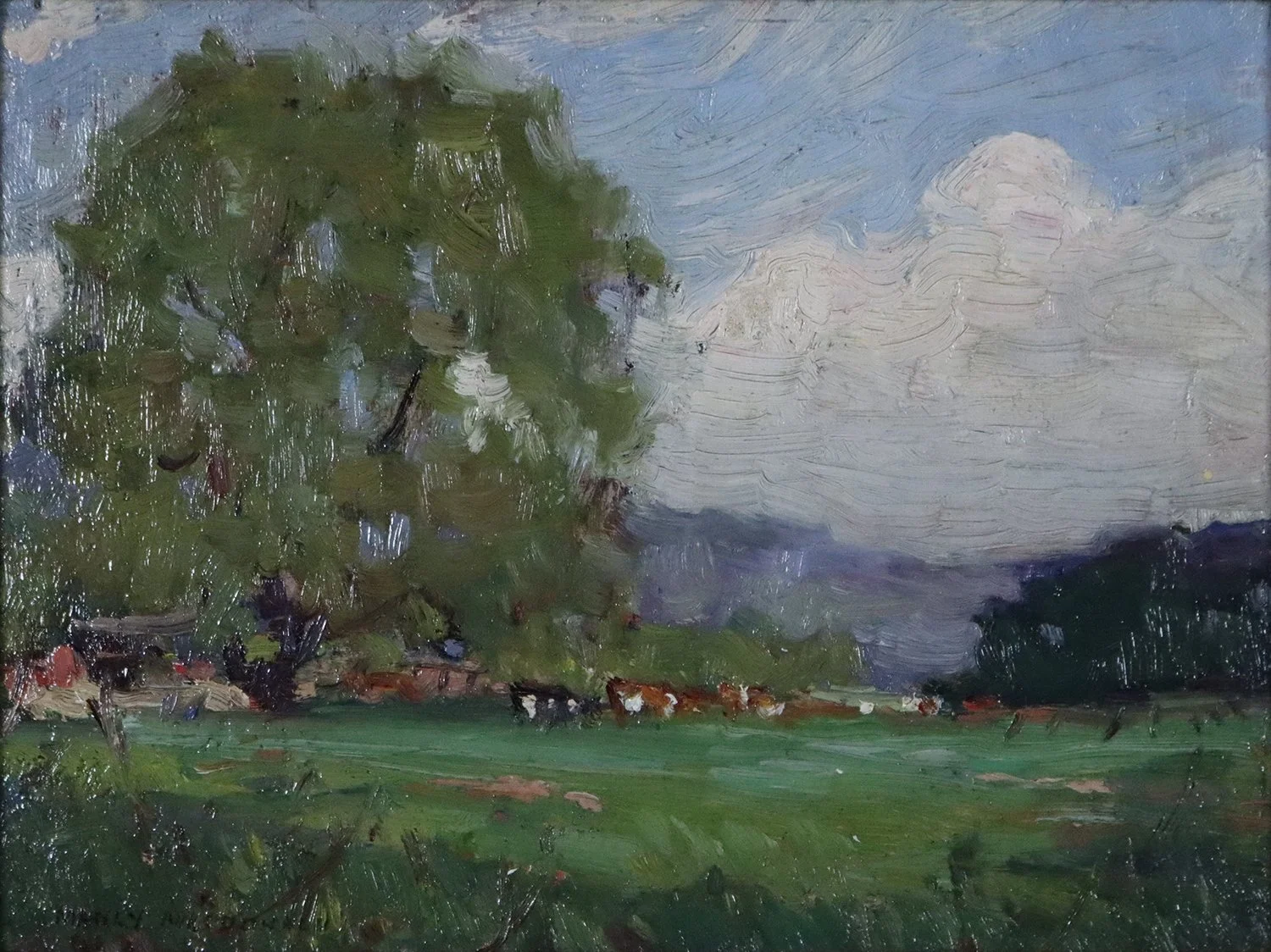
Landscape with Cows by Manly Macdonald (Canadian 1889-1971)
oil on board, signed lower left "Manly Macdonald"
Size: 6.15 h x 8 ¼ w in (with frame 9 ¾ x 11 ¾ in)
J21488

Plowing the Fields by Nathaniel Bair (British 1865-1936) watercolour, signed with monogram lower right. Size: (with frame 23 ½ x 30 ½ in) J21311
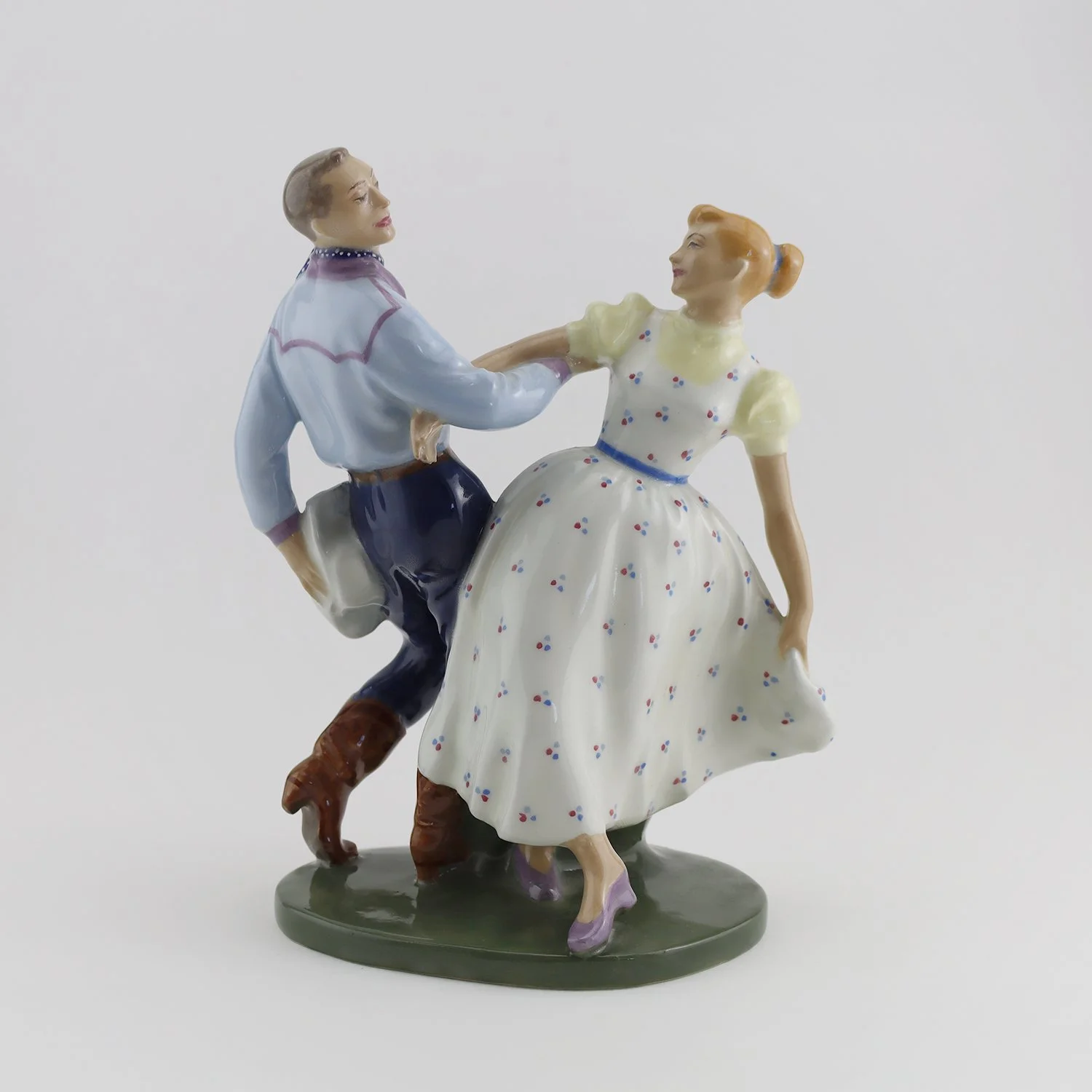
Square Dancers by Leo Mol (Ukrainian 1915-2009) porcelain figurine of two square dancers, inscribed on base underglaze "Leo Mol 53 Winnipeg Canada"
Size: 10 1/2 h x 8 1/2 w x 5 d E21389

Winter in Karlsberg Courtyard 1909 by Viggo Pedersen (Danish 1854-1926), oil on plywood panel, signed and dated lower left "Viggo Pedersen 1909" and inscribed on verso on frame " Size: 18 ½ h x 21 ¾ w in (with frame 25 x 28 in) J21407
Carlsberg House (or Karlsberg in Danish), formerly known as the Fishing Master's House, is located on Københavnsvej at the southeastern entrance to Hillerød, Denmark. The history of the property traces back to 1628 when Christian IV presented three bogs in the vicinity of Hillerød to castle clerk Johan Bøgvad, who intended on turning them into fishing ponds. One of these was located close to where Carlsberg stands today. The property changed hands several times, many of the owners being royal fishing masters and therefore the house became known as the Fishing Master’s House. The two current buildings were constructed in the 1750’s and during the coronation of Frederick V at Frederiksborg Castle on September 4, 1848, high ranking guests stayed in private homes across the town, with the Duke of Glücksburg and his entourage staying in the Fishing Master’s House.
During the late 19th and early 20th centuries, the house was let out to a number of artists and an atelier was installed in each end. The well-known artist Viggo Pedersen lived with his family in one of the two dwellings from 1898 to 1911 and enjoyed using the house and courtyard as a subject in many of his paintings. In his youth Pedersen studied under P.C. Skovgaard, belonged to his social circles, and was decisively influenced by close contact with his teacher. P.C. Skovgaard’s son Niels Skovgaard was a tenant at Carlsberg from 1900 to 1916. In 1949 the building was added to the Danish registry of protected buildings and places and the nearby Carlsbergvej Road is named after the property.
Born in Copenhagen in 1854, Viggo Pedersen attended the Royal Danish Academy from 1871-1878 and followed the ‘plein air’ trend of Danish landscape painting in the 1880s. During his travels throughout Europe he was influenced by the Barbizon School and its Romanticist depictions of peasant life in nature. He exhibited widely including with the Danish Royal Academy and the Free Exhibition founded by the Danish Artist’s Association, and is represented in major museums throughout Scandinavia.

Child's wooden windsor stick back high chair, the solid seat with open arms, raised on turned front supports, with a solid foot rest to the front. English late 19th/early 20th century Size: 30 ¾ h x 15 ¼ w x 15 ¾ d A21121
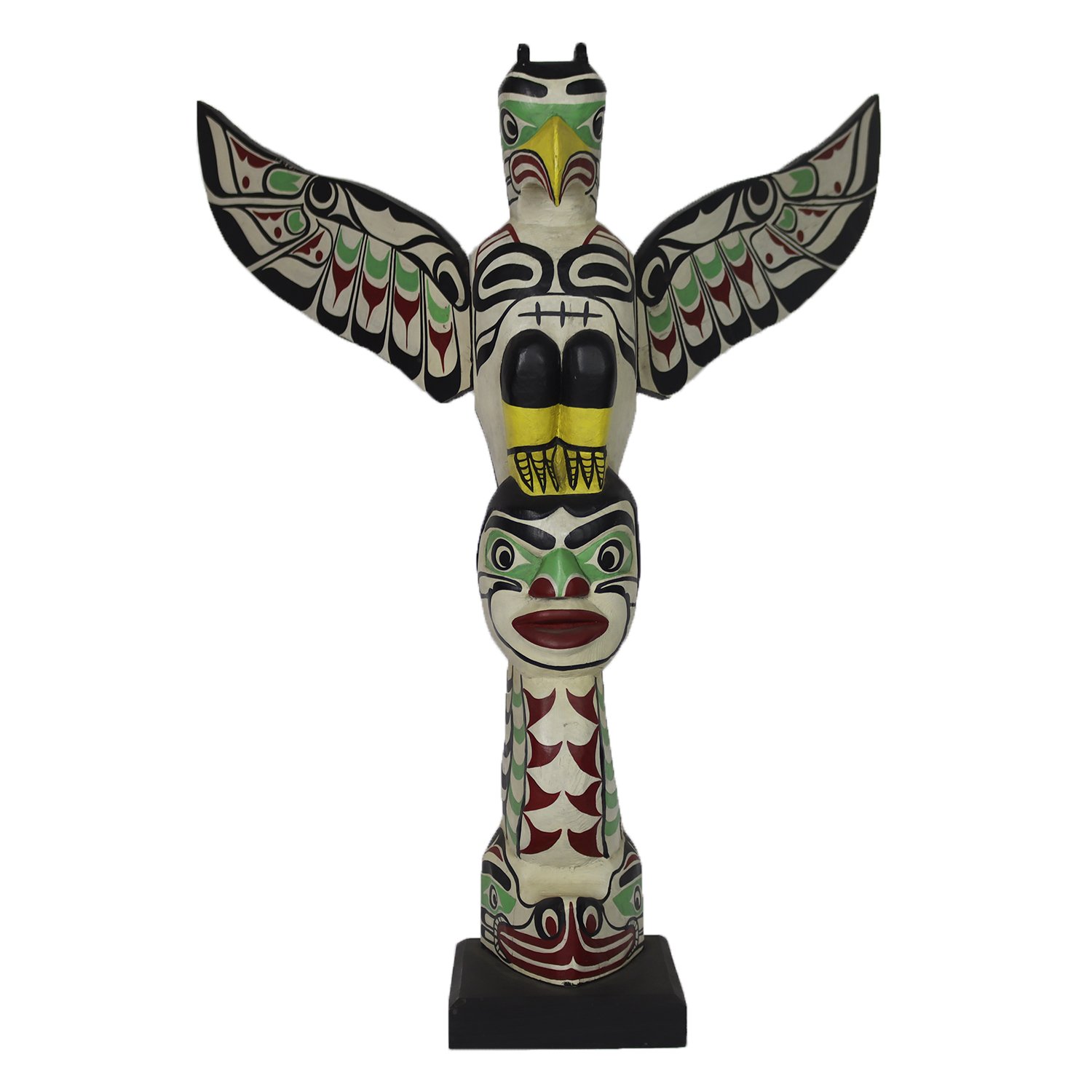
Thunderbird Totem by Ellen Neel (Kwakwaka'wakw (Kwakiutl) 1916-1966) rare carved and painted wood totem pole, painted with white underbase, depicting thunderbird, resting on square black base.
Provenance: Nuytten Collection Size: 33 h x 28 w x 17 d in J21464
Ellen Neel was born in Alert Bay on November 14, 1916, granddaughter of renowned master carver Yakuglas/Charlie James to whom she was very close, and niece of Mungo Martin. Ellen attended St. Michael’s School in Alert Bay and spent her free time with her grandfather, who took care of her while her mother was ill. From him she learned learned the basics of Northwest Coast design and the rudiments of Kwakwaka'wakw carving, and collaborated with him on a book of designs. By the age of 12 Ellen was selling her work to tourists who stopped at Alert Bay en route to Alaska. Moving to Vancouver with her husband Ted, the couple embarked on a joint business venture and converted their home into a joint studio workship where Ellen carved and painted tourist poles eventually with the help of her six children. She was commissioned to design the insignia for the Totemland Society for the City of Vancouver, and the family began carving works in Stanley Park eventually under the name Totem Art Studios. Ellen Neel is considered the first trained woman carver on the Northwest Coast, studying under her grandfather while there was still a ban on the Northwest Coast potlatch system. Breaking down many barriers and carving herself a place in a tradition primarily dominated by males, she embraced new materials and forms and would have a major part in the resurgence of traditional stylization. Known as “Ellen-Ah”, her Kwakwaka’wakw name was KaKaso’las meaning that ‘people came from far away to seek her advice’, which reflected her good humour and positive outlook. Read Ellen Neel’s complete biography here…
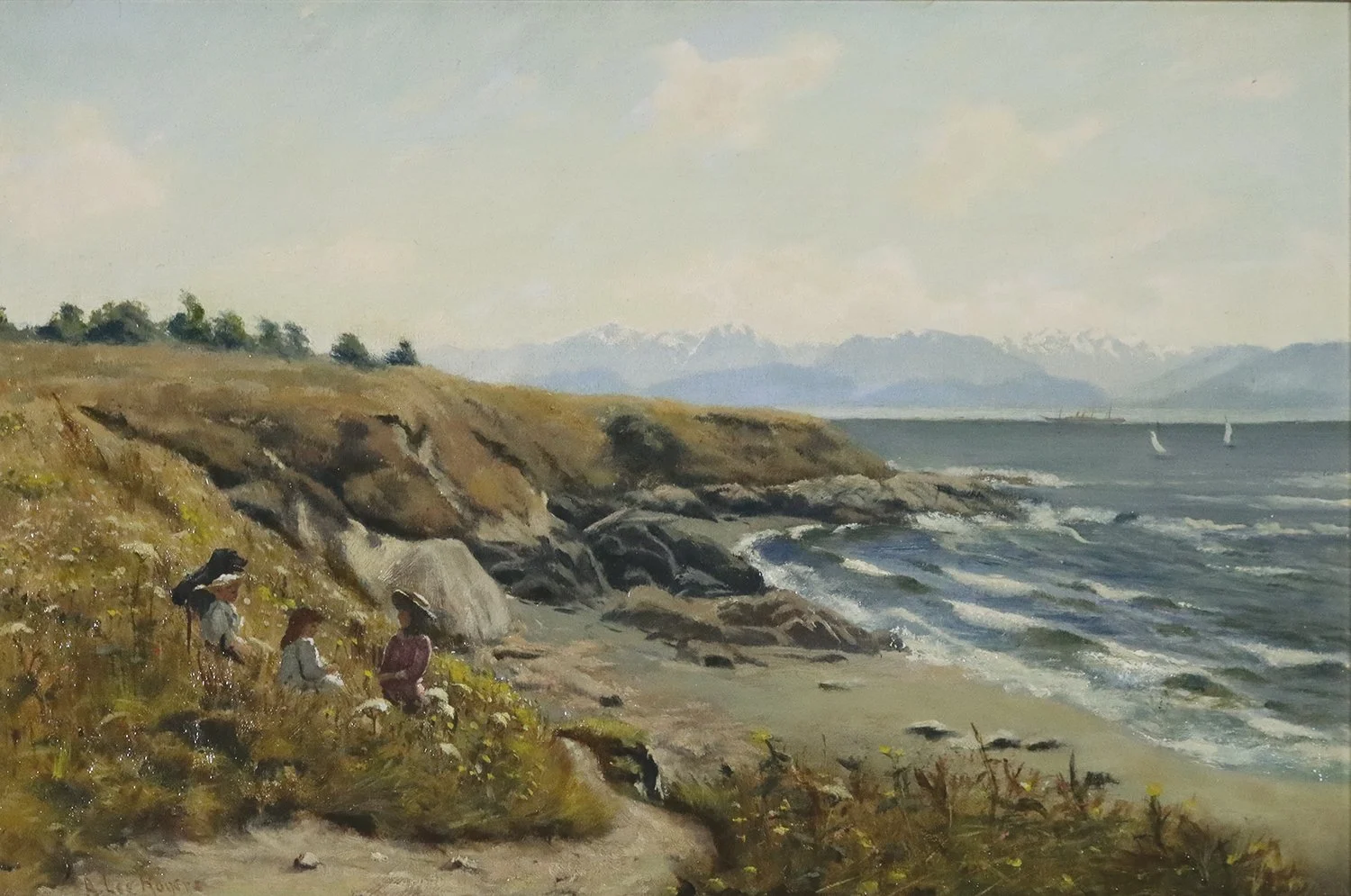
Beach Landscape with Three Figures and a Dog by Arthur Lee Rogers (Canadian active 1871-1894) oil on canvas, signed on verso Size: 13 ½ h x 20 ½ w in (with frame 20 ½ x 27 3/8 in) J21413
Arthur Lee Rogers is known for his depictions of rural Canadian landscapes of the late 19th century both in oil and watercolour. The earliest record of his work is of the prairie farms of Fort Garry, Manitoba in 1871. By 1874, Rogers' work was included in Vancouver's first art society exhibition. Arthur Lee Rogers paintings are captivating in the combined use of a soft colour palette and a very relatable subject matter. Other subjects of his include the Rocky Mountains, the interior of British Columbia, the Fraser Valley, and Vancouver scenes such as the Burrard inlet.
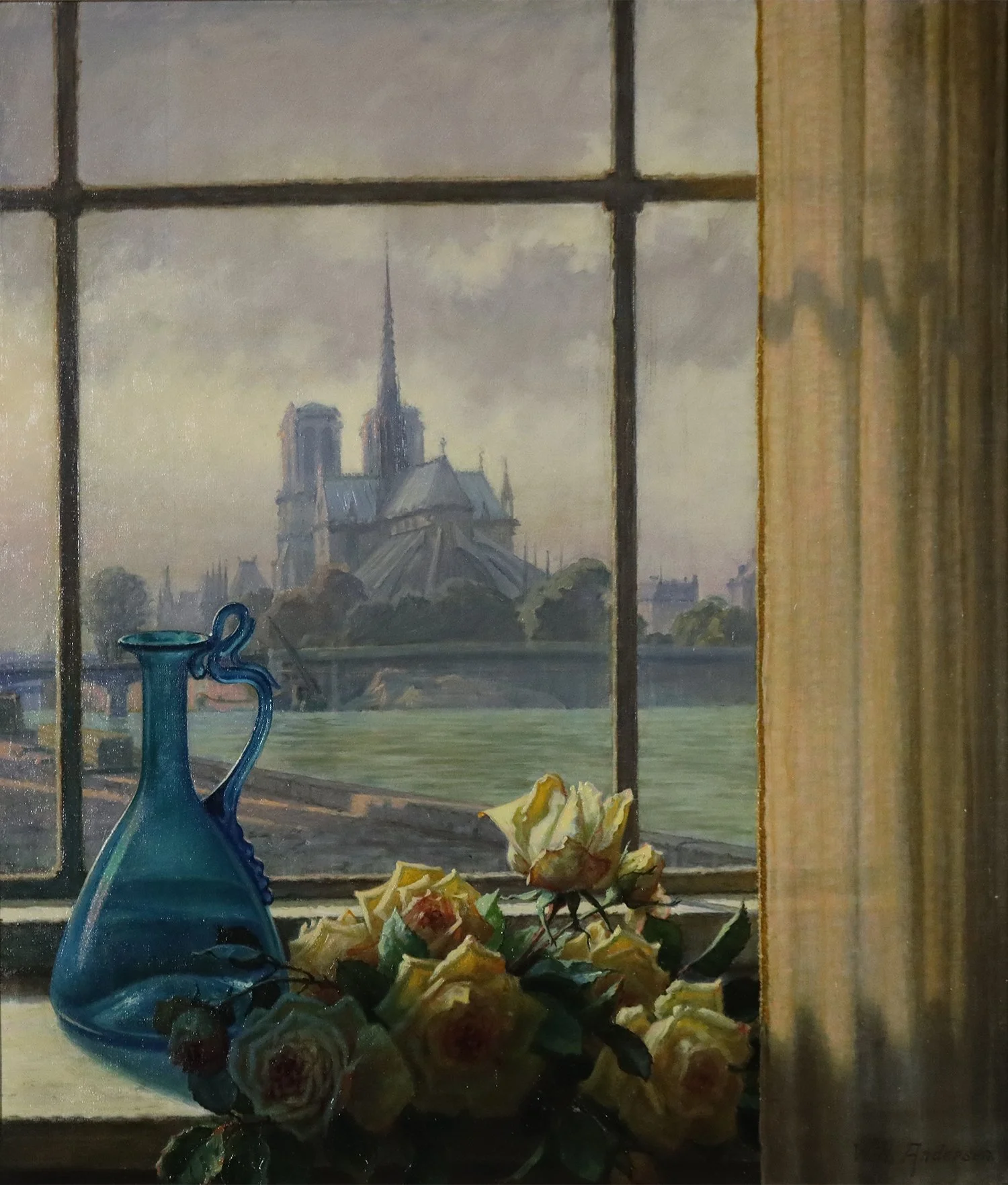
Roses and a Glass Jug on a Windowsill with Notre Dame in the Distance by Wilhelm Andersen (Danish 1867-1945) oil on canvas, signed lower right "Wilh Anderson" Size: 22 ¾ h x 19 ¾ w in (with frame 27 x 23 ¼ in) J21404
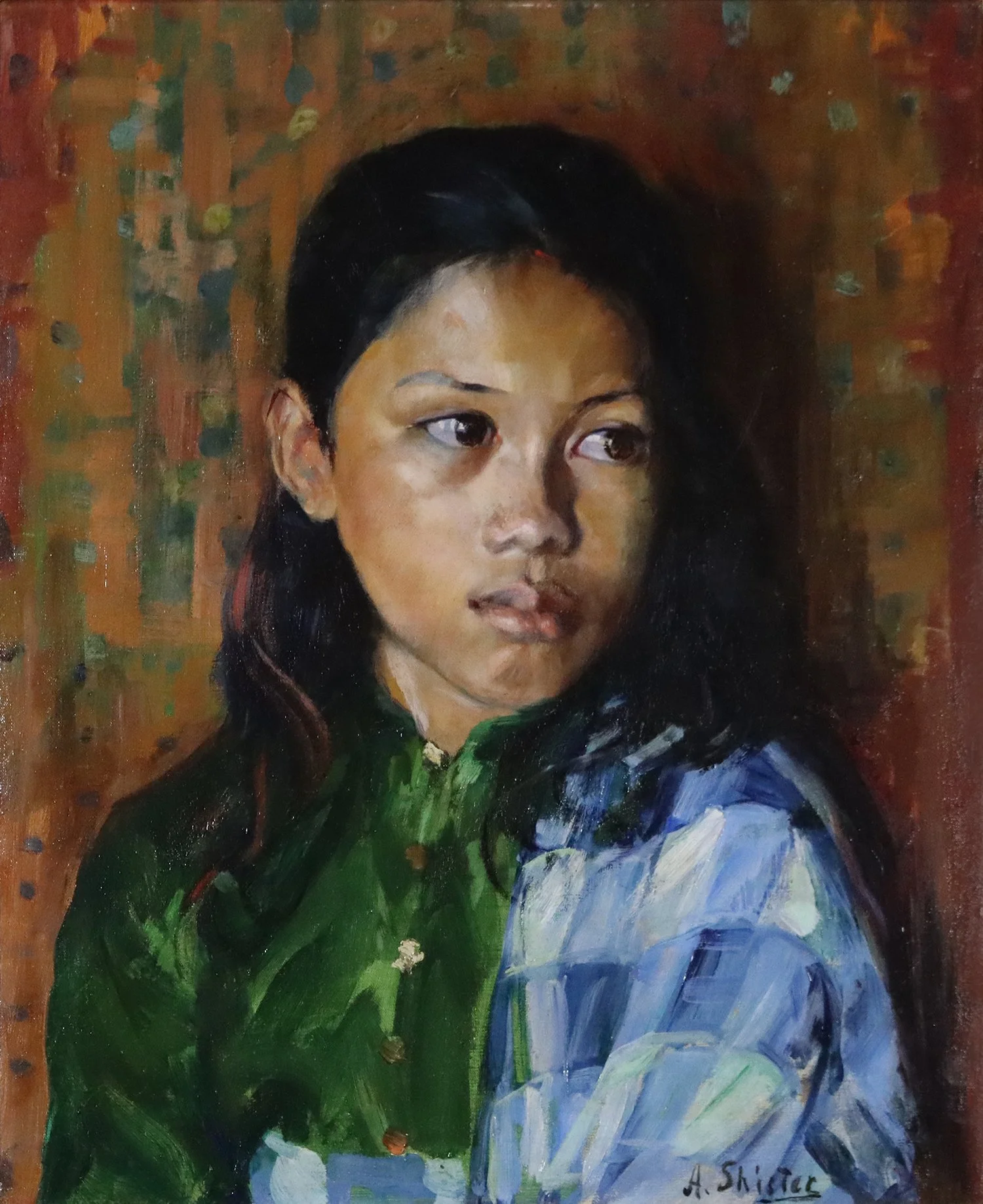
Portrait of Young Girl by Anatole Shister (Russian 1884-1961)
oil on canvas, signed lower right "A. Shister" Size:16 1/2"h x 23 1/4"w in J21242
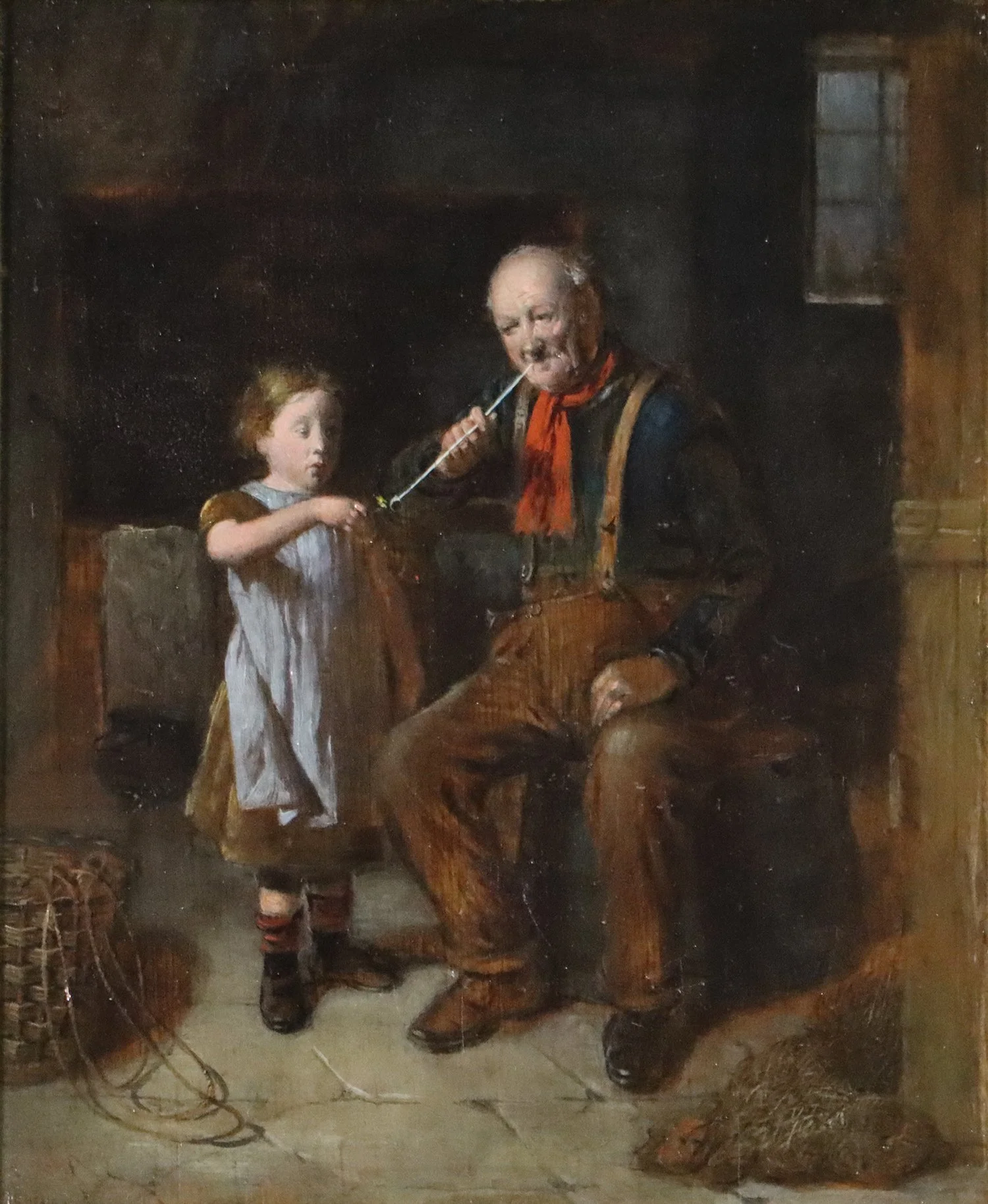
Oh! Take it by William Hemsley (British 1819-1893) oil on panel signed and inscribed on verso "Oh! Take It/WM Hemsley", signed indistinctly lower left. Size: 8.62 h x 7 w in (with frame 14 ½ x 13 ¼ in) J21261
William Hemsley was a self-taught genre painter working in London during the second half of the 19th century. His genre scenes of everyday life, which are usually painted on small scale, follow the gentle tradition of Thomas Webster (1800-1886) and Frederick Daniel Hardy (1827-1911). He was, like them, fond of painting children at play.
At first, Hemsley followed his father’s profession, architecture, teaching himself painting in his spare time. He travelled in Germany and Holland and exhibited at the Royal Society of Artists, Walker Art Gallery, Manchester City Art Gallery, Royal Institute of Painters in Watercolour, Royal Institute of Oil Painters, Arthur Tooth & Sons Gallery and the Royal British Academy, where he exhibited seventy-six times.