
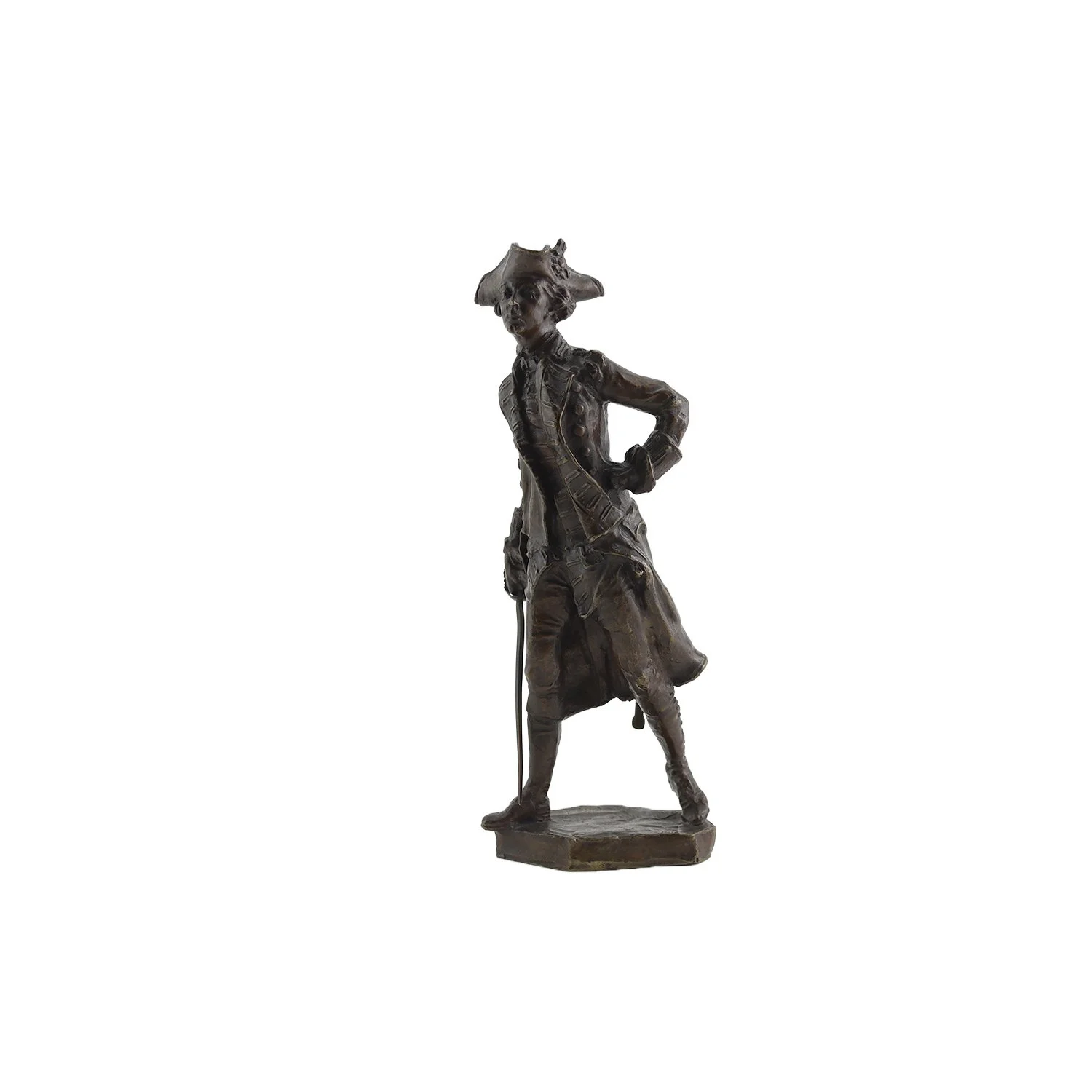
bronze with mid-brown patina, signed and dated on base "Vernon March.1910", cast circa 1910.
Size: 1.25 h x 8 w x 8 d
G21808

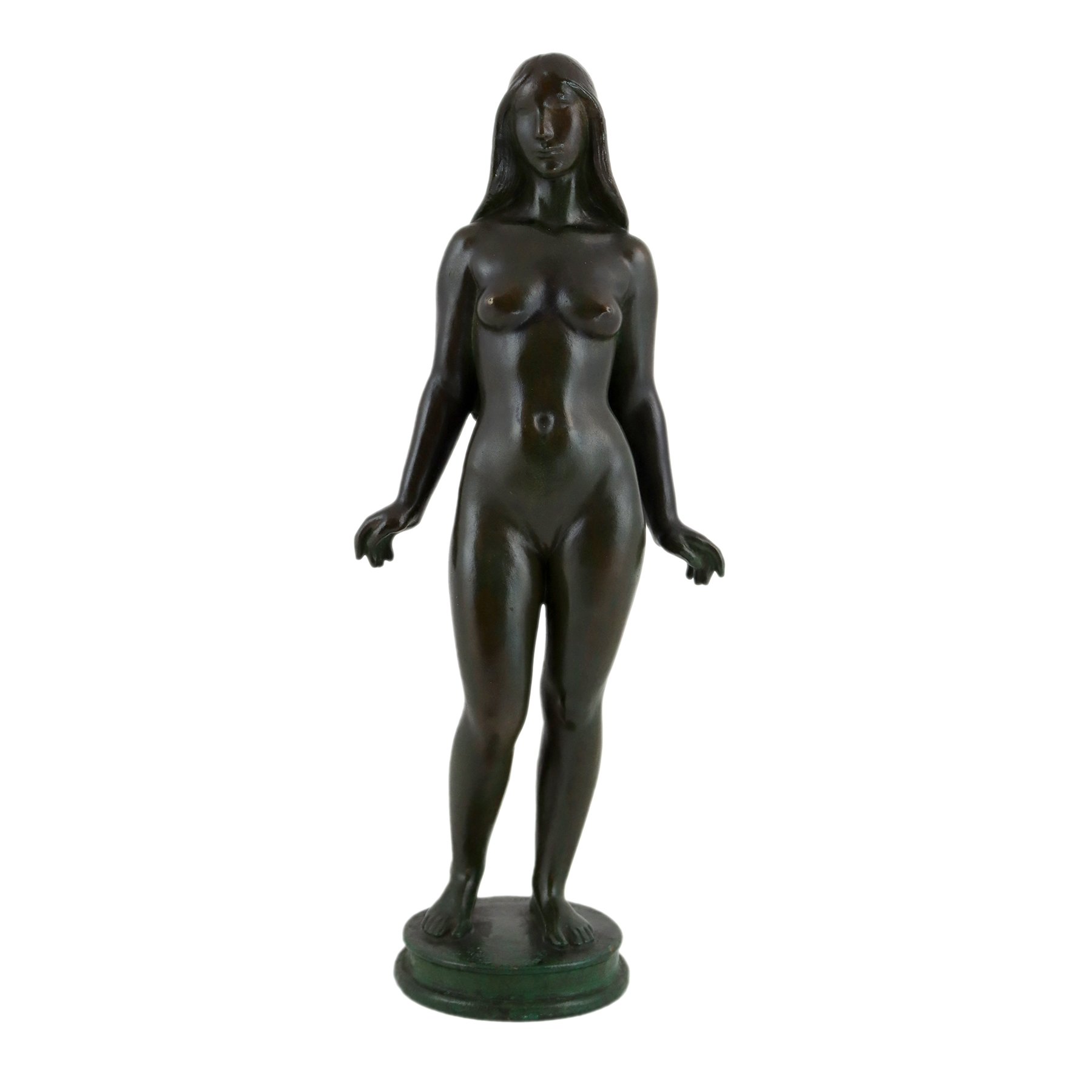
Johannes Hansen (Danish, 1903-1995)
Nude Standing
Bronze of a nude woman standing contrapposto with long flowing hair, monogramed "JH" and foundry stamp to base partially legible "….. Køb"
Size in inches: 16 h x 7 w x 4 d
G20365

After Pierre-Jules Mêne (French, 1810-1879)
Horse and Fence
Bronze, signed lower left "P.J. Mene"
Size: 7.5” h x 10” w x 4” d
G20303

Gottlob Deihle (German 1856-1933)
The Smelter
bronze, signed on base "G. Deihle, D'dorf Feb 24"
Size: 16 x 13 x 7 ¼ in
G17787

Leo Mol (Ukrainian/Canadian, b. 1915)
Nude Study
bronze study of nude, signed and dated on base at back "Mol Leo 85"
Size: 10 h x 15 w x 6 d in
G19389
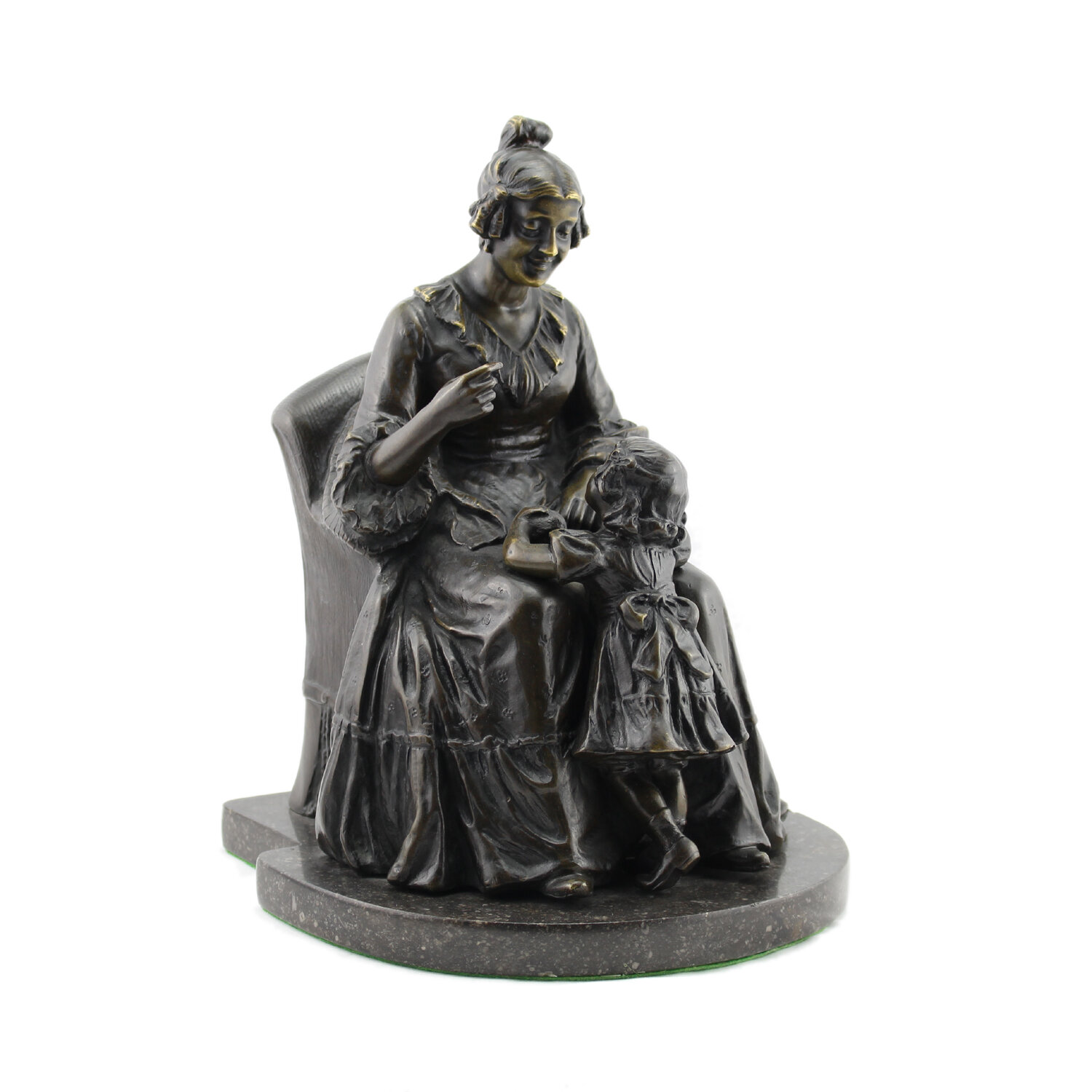
Carl Brose (German 1880- )
Mother and Daughter
bronze figure circa 1910, signed on back of chair "Brose"
Size: 10 ¼ h in
G13397
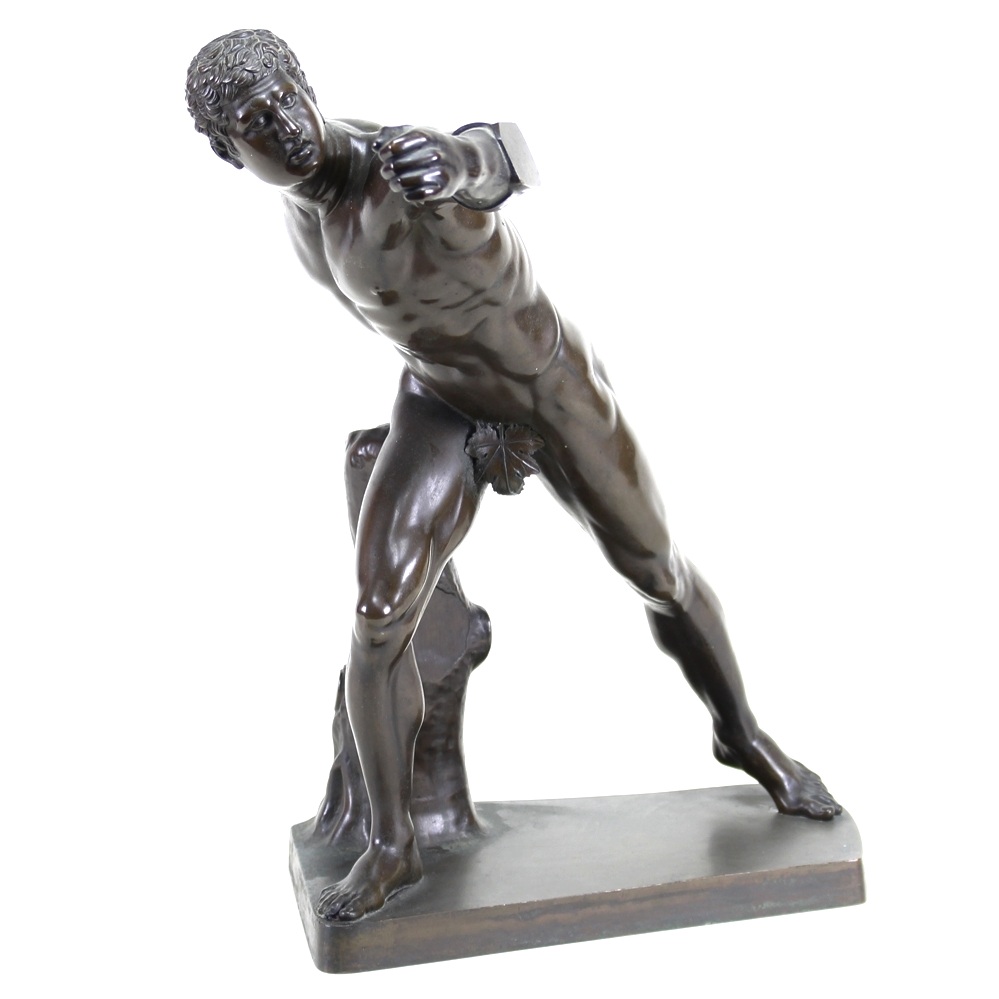
Bronze sculpture after the antique, inscribed "G. HOPFGARTEN. ROMA. 1862" on base. This is a copy after the Borghese Gladiator, a Hellenistic life-size marble sculpture portraying a swordsman battling a mounted combatant, created in about 100 BC. The name comes from the Borghese Villa in Rome, where it stood in a ground floor room named for it. It was sold by Camillo Borghese to his brother In-law Napoleon Bonaparte and taken to Paris and added to the Louvre collection where it still resides.
Size: 15 1/2 x 16 x 14 in
G18796

Alfred Boucher (French 1850-1934)
Au But! (To the Goal!)
bronze, inscribed on base "A. Boucher" and with foundry mark "Siot-Decauville Fondeur Paris ** 7742"
Boucher's first great success was achieved in 1886 with the plaster version of Au But (To The Goal!), otherwise known as Les Coureurs, which was exhibited at the Salon of 1886 and won a first class medal. Many critics commended the sculptor’s talent and Paul Leroi wrote of the piece in L’Art, “a plaster group with an extreme vigour, an admirable intensity of life, the greatest movement, and a rare suppleness of modelling, in short, one of the masterpieces which honours French art.” The three nude runners are just at the goal and intensely struggling; a most difficult theme executed with the greatest of skill. The state awarded Boucher the Chevalier de la Legion d’Honneur and commissioned a life-size bronze version of Au But. The finished cast was exhibited at the Salon in 1887 (no. 3675), before being placed in the Luxembourg Gardens, where it remained until, sadly, being destroyed during the Nazi occupation. Such was the popularity of this work, it was edited in many different sizes, and by numerous foundries, including Barbedienne, Susse and Siot-Decauville.
Size: 18 ¾ x 26 ½ x 13 in
G17786