
Father's Day Gift Guide 2026
Happy Father’s Day!
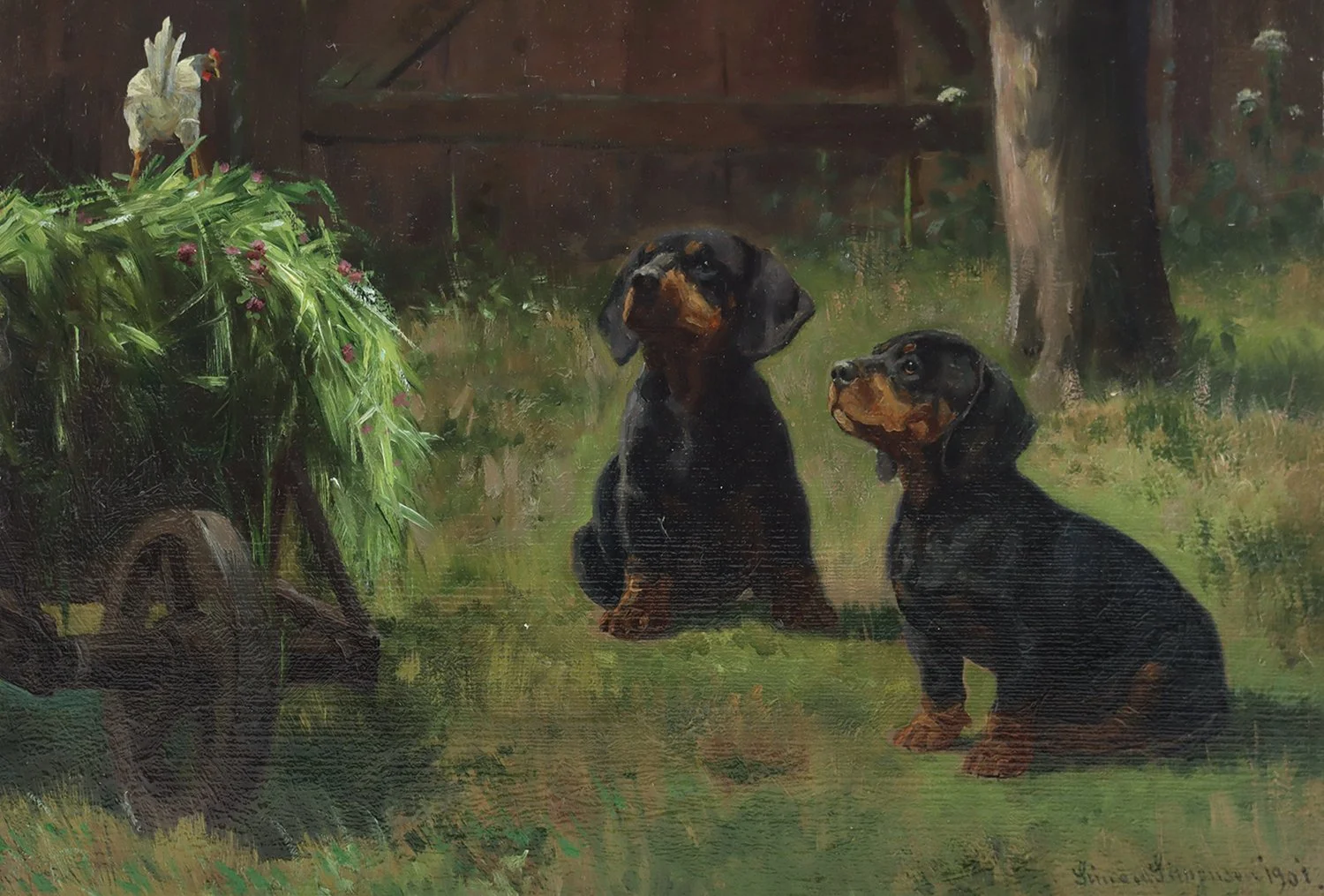
Two Dachshund Puppies in a Farmyard by Simon Simonsen (Danish 1841-1928), oil on canvas, signed and dated lower right "Simon Simonsen 1901", with inscription on stretcher " Nr. 2 Simon Simonsen To Hvalpe (two puppies)" Size in inches: 7.75 h x 11 w (with frame 8.75 h x 12.25 w in) J21823
Father’s Day is a celebration of fathers and paternal figures, defined by strength, responsibility, and security, both physical and emotional. Customs for honouring fathers date back to the Middle Ages. As early as 1508 the Catholic church commemorated the fatherly Nutritor Domini (“Nourisher of the Lord”) on the Feast Day of Saint Joseph, March 19. Today, celebrations are held world wide on various days often in March, May and June, with North Americans observing on the third Sunday in June.
On July 5, 1908 in Grafton, West Virginia, the same day as the first Mother’s Day celebration, a Sunday sermon was held in memory of 362 men who died the previous December in explosions at the Fairmont Coal Company mines in Monongah, West Virginia. This was a one-time commemoration and the holiday was not presented again until 1910 in Spokane, Washington when Sonora Smart Dodd proposed an official equivalent to Mother’s Day for male parents. After hearing a sermon about Jarvis’ Mother’s Day celebration, Sonora proposed the idea to celebrate all fathers on June 5, the birthday of her devoted and selfless dad. Her father, civil war veteran William Jackson Dodd, raised fourteen children after being twice widowed. Pastors did not have sufficient time to prepare their sermons and the celebration was deferred to the third Sunday in June. Washington State held the nation’s first statewide Father’s Day at the YMCA on June 19, 1910 however it was not until 1972 that it became a permanent national holiday in the US, 58 years after Mother’s Day.
Enthusiasm for the holiday waned with the Great Depression and began being promoted on a national level well into the 1930’s. Efforts were aided by the Father’s Day Council which was founded by the New York Associated Men’s Wear Retailers in 1938 which promoted the day on a commercial scale as a ‘second Christmas’ for men. With the onset of WWII the celebration was encouraged as a way to honour troops and support the war effort, and the day became a national institution. Today we celebrate all fathers and father figures with gestures of appreciation and family gatherings.
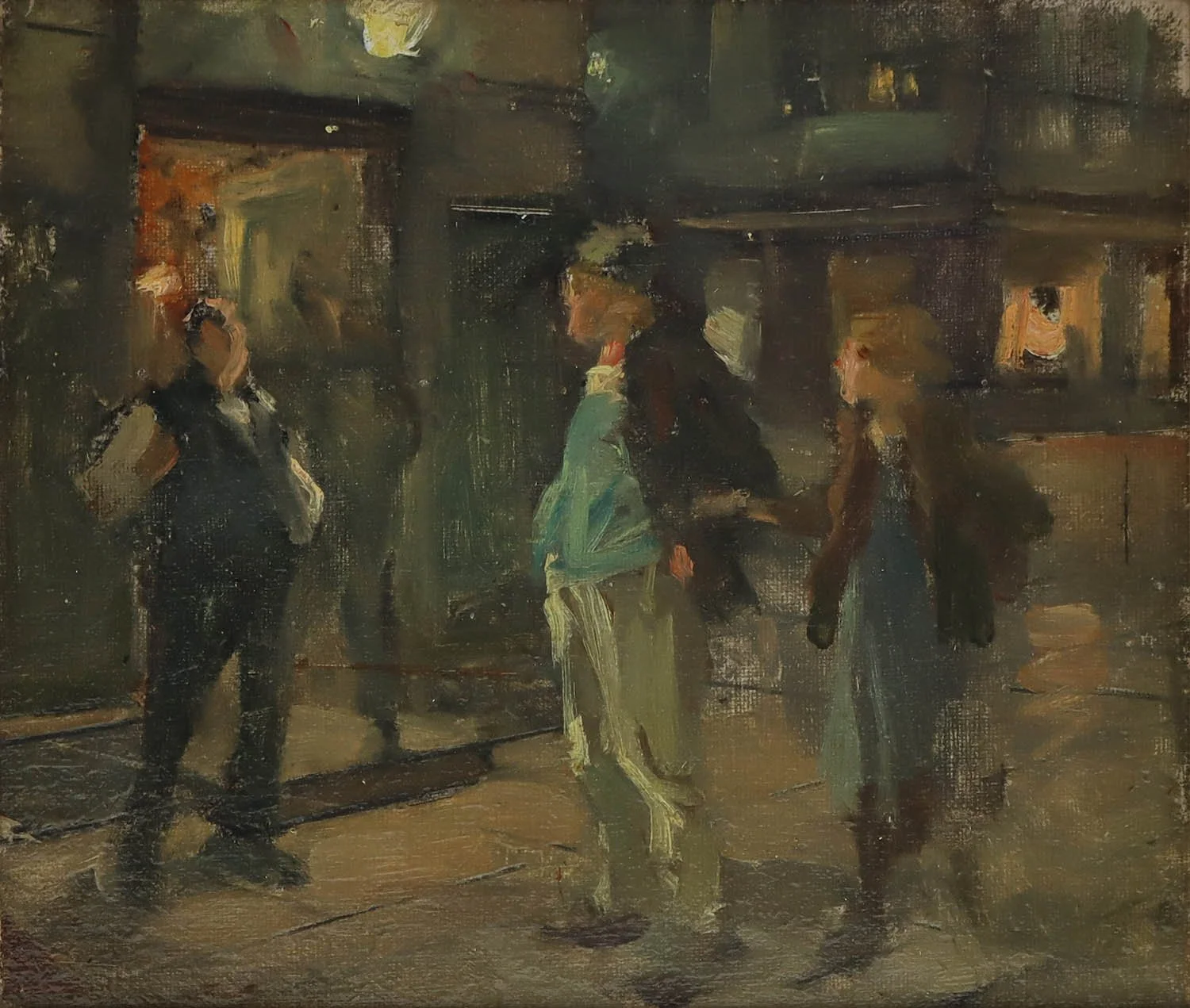
Quitting Time by Erik Ludwig Henningsen (Danish 1855-1930) oil on panel, inscribed on reverse "M-15818 Fyraften" and estate stamp No. 224 Size in inches: 6 h x 6.5 w (with frame 10.25 h x 11.25 w in) J21785
Erik Ludwig Henningsen (Danish 1855-1930)
The title of this work, "Fyraften" is a term used for ending the work day, knocking off, quitting work. However in this case it is used as a play on words for the end of the evening, time to go home. The scene depicts figures outside the local tavern at the end of the evening.
Erik Ludvig Henningsen was a Danish painter and illustrator known for his genre and social realist works depicting children and the working class. He was born in Copenhagen in 1885 and was the younger brother of Frants Henningsen, also an accomplished painter. In his adolescence Erik displayed great artistic talent and was accepted into the Royal Danish Academy in 1873 at the age of 18, graduating in 1877. He traveled widely throughout Europe and won numerous awards, exhibiting in Copenhagen, Vienna and Paris. Henningsen became focused on city life in Copenhagen, and during the first two decades of the 20th century his work concentrated on genre scenes and historical work. He was also an illustrator for books and magazines, perhaps his most iconic work being his poster “The Thirsty Man” (1900) for Tuborg Brewery. He is represented in institutions including the Hirschsprung Collection, Copenhagen Museum and Stockholm Museum.
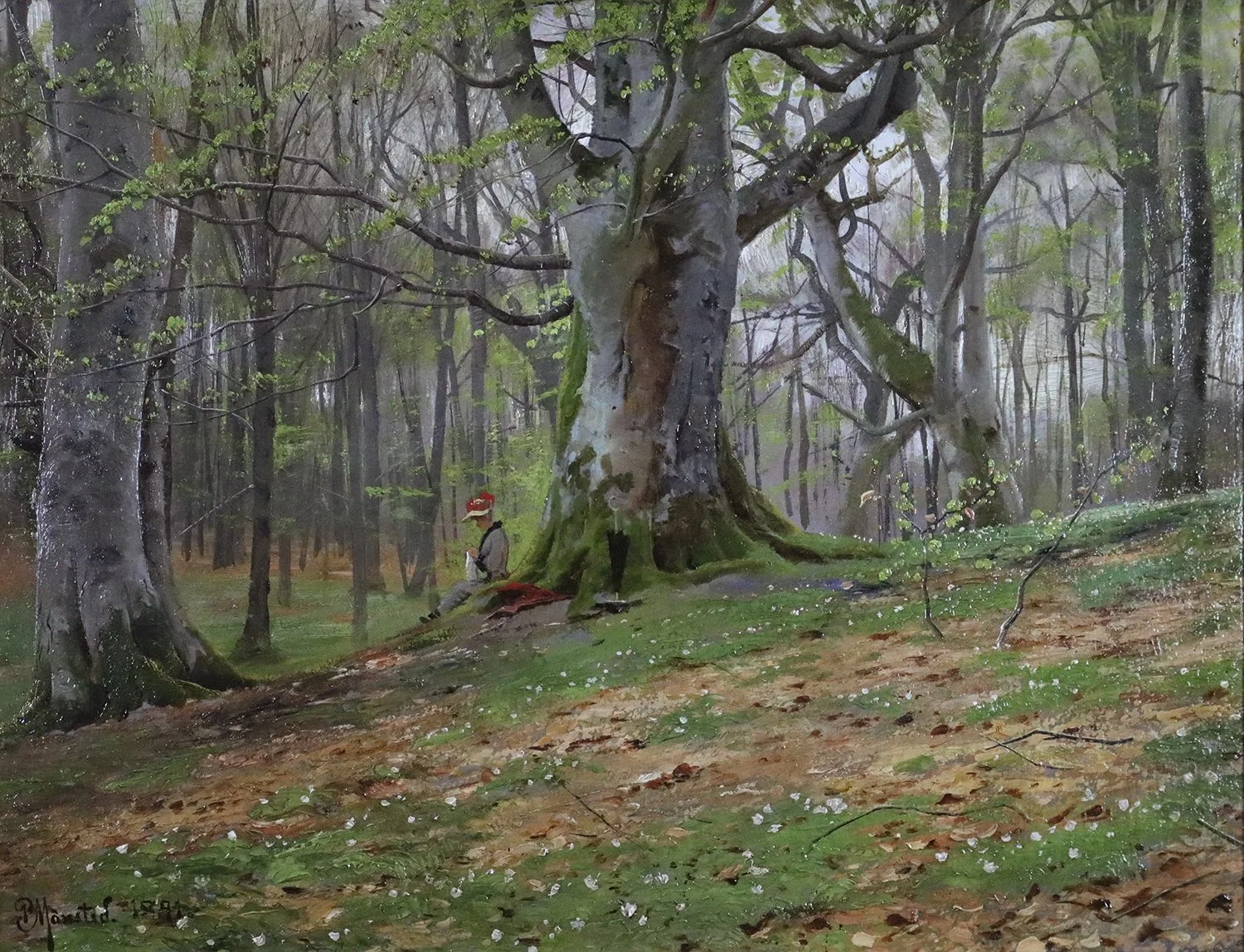
Spring Forest with Woman Seated Under a Tree by Peder M. Monsted. Oil on cardboard, signed and dated lower left "P Monsted 1891" Size: 12.5 h x 16.5 w (with frame 24.75 h x 28.5 w in) J21825
Peder M. Monsted (Danish 1859-1941)
Popular throughout Europe and Africa throughout his career, Peder Mønsted clearly established himself as Denmark's greatest landscape artist for his supreme technical abilities, strong compositions and meditative peacefulness. His brushwork varied from very loose and Impressionist to a neatly detailed attention that served to heighten the sensation of presence.
Peder Monsted was born in Balle Molle, near Grenaa, Denmark, in December 1859. He died at Fredensborg in June 1941. His urn rests at Garnisons Kirkegard, an old cemetery in Copenhagen where many prominent Danish people are buried. He was the son of Otto Christian Monsted who was a shipbuilder, photographer and collector for the National lottery, and Thora Johanne Petrea Jorgensen. He married Elna Mathilde Marie Sommer in Frederiksberg in 1889. (Read more…)
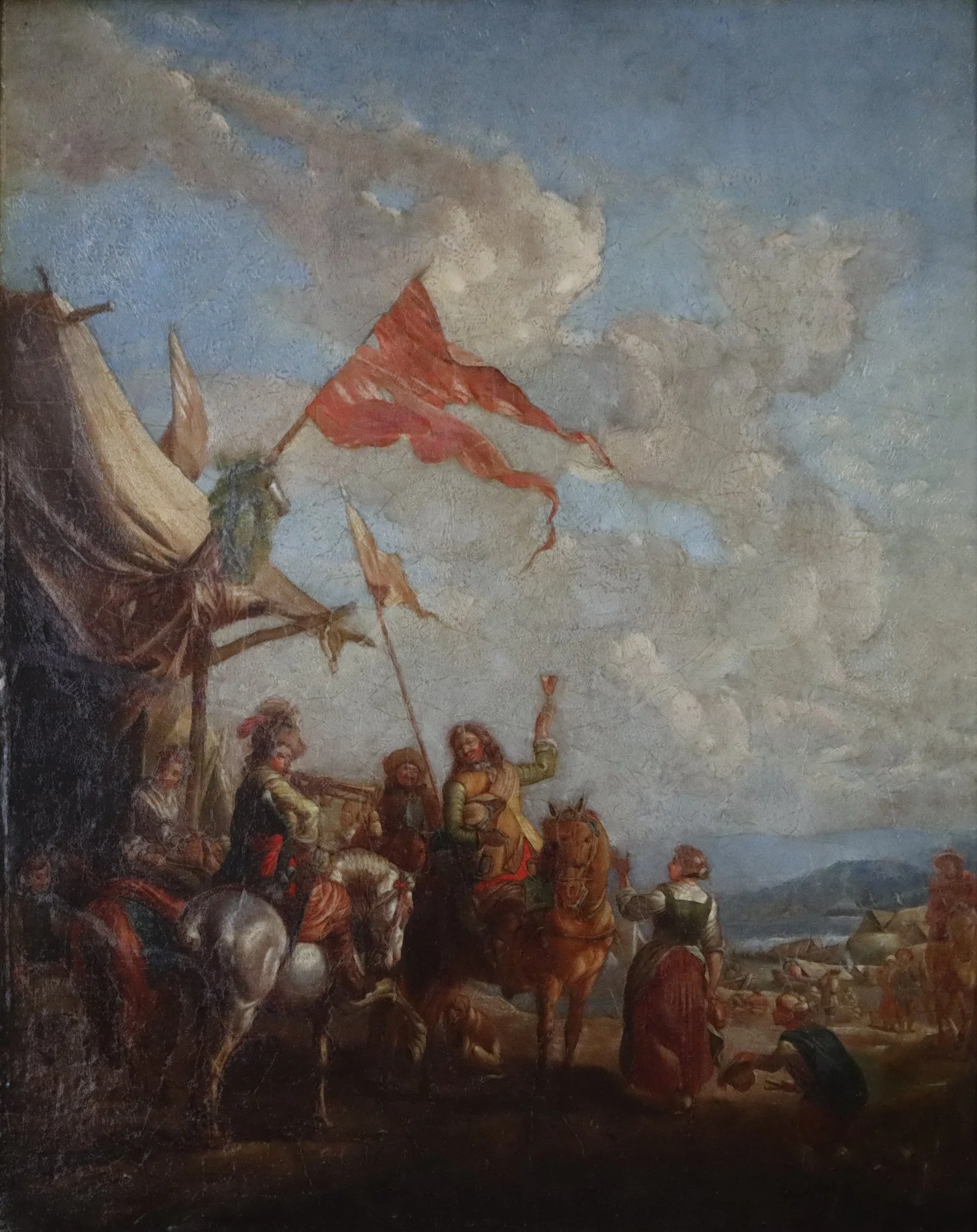
Figures on Horseback in the style of Pieter Wouverman, oil on panel, unsigned, in ornate gilt frame with 'key' front lock. Size in inches: 17.25 h x 13.75 w (with frame 27.25 h x 24 w x 3.75 d in) J21498
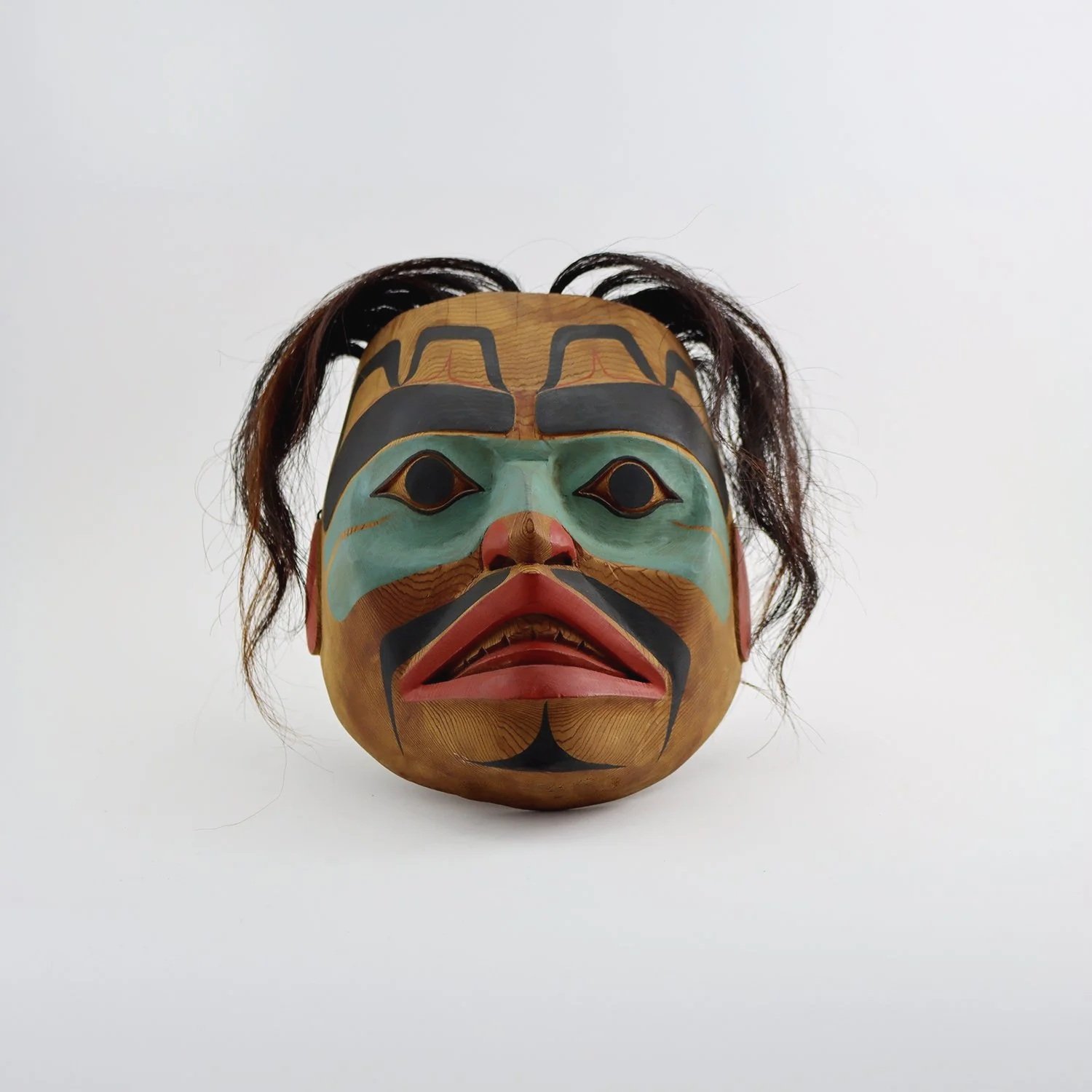
Carved and painted wooden mask with inset hair by Fearon "Smitty" (Tsungani) Smith Jr. inscribed "Tsungani" and with label "672-721 Bella Bella 92"
Size: 8.75 h x 7.75 w x 3.75 d
21688
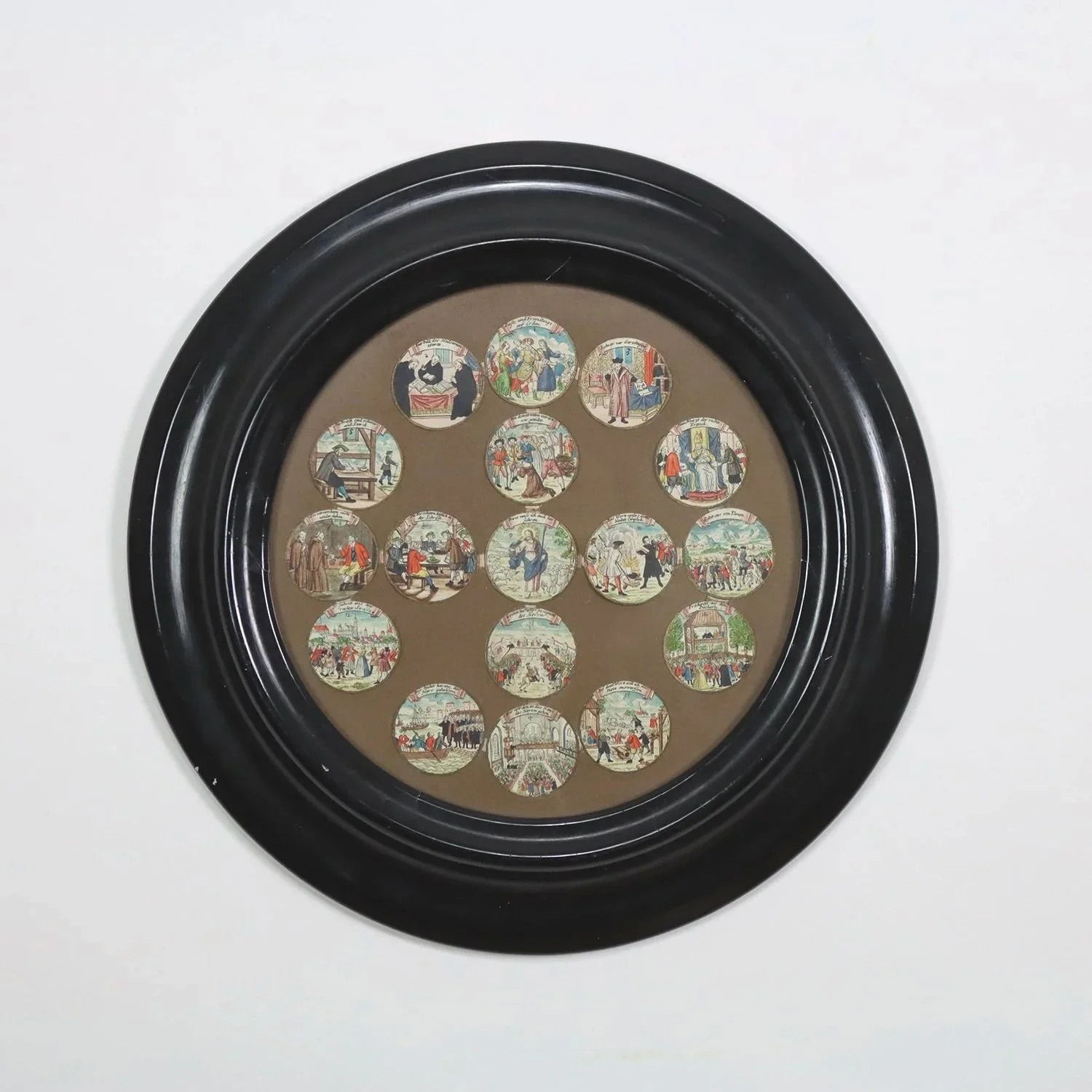
Seventeen connected, hand coloured copperplate engraved roundels by Abraham Remshard
Printed in Augsburg circa 1732, each depicting a scene from Protestant history, together in a 19th century circular ebonized frame.…(read more)
Size in inches: 13.25 h 13.25 w x 1.5d
J21032
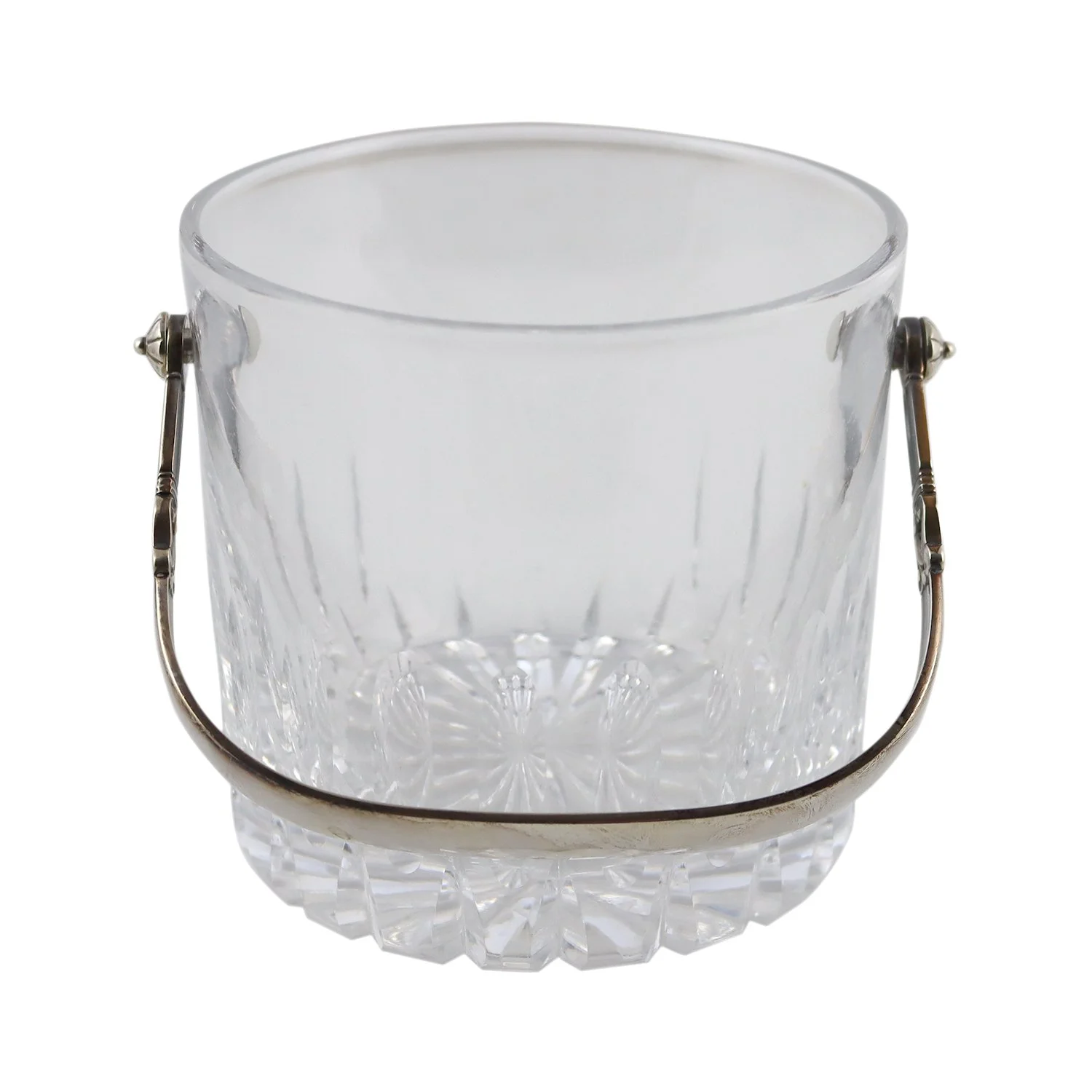
Georg Jensen Crystal and Silver Acorn Ice Bucket 1137
Cut glass spherical ice bucket with sterling silver Georg Jensen handle in the Acorn pattern, designed by Johan Rohde (1856-1935) in 1915...(read more)
Size in inches: 4.75 h x 6 w (7.5 with handle)
C20333
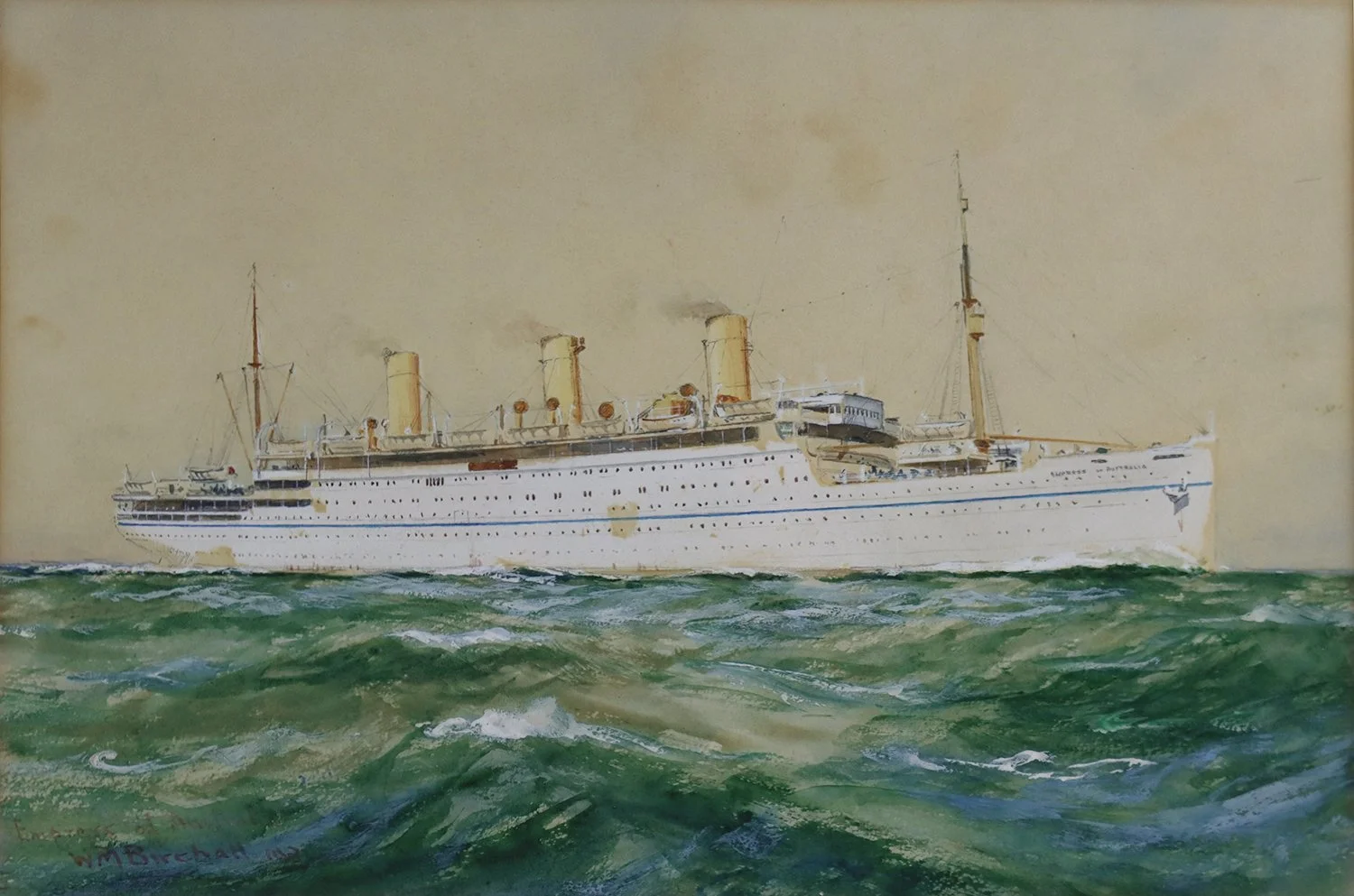
Empress of Australia by William Minshall Birchall (British 1884-1941) watercolour, signed, inscribed and dated lower left "Empress of Australia W M Birchall 1931" Size in inches: 8 h x 12 w (with frame 12.25 h x 16.25 w in) J21819
This 21,860-ton vessel was purchased by the Canadian Pacific Railway in 1921 and renamed Empress of China. She had originally been launched in 1913 from Stettin, Germany, as the SS Tirpitz for the Hamburg-America Line (HAPAG). In 1922, after a refitting in Clydebank, the ship was once again renamed, this time as Empress of Australia. She was scrapped in 1952.
The trans-Pacific services of Canadian Pacific Railway (CPR) and its later steamship subsidiary the Canadian Pacific Steamship Company (CPSC) were begun by the Canadian-American builder of the railroad network in 1887. During the early years, three ships were chartered and managed by Adamson, Bell and Company to transport passengers. Once the route proved to be profitable, the CPR chose to manage the lines independently.
Between 1889-1891 the CPR and the British government signed a contract for subsidized mail service between Britain and Hong Kong via Canada. The contract called for Canadian Pacific to deliver mail from Halifax to Vancouver by rail, and Japan and China by ship, reaching Hong Kong in 684 hours from April to November and 732 hours for the rest of the year. Canadian Pacific received £60,000 annually, £15,000 of that was paid by the Canadian government. The Admiralty was granted the right to hire the ships employed on the route at any time and to have troops carried at cost. Fulfillment of the contract required three ships, built to the Admiralty's specifications for armed merchant cruisers, capable of 16 knots for regular service, and 17.5 knots in emergencies- the RMS Empress of China, the RMS Empress of India and the RMS Empress of Japan. All three were built by Naval Construction & Armament Co. of Barrow. Each of these "Empress" steamships sailed regularly in the period from 1891 through 1912. Empress of India would continue in service through 1914. The RMS Empress of Japan sailed regularly from 1891 through 1922. These three ships and the others which comprised the "Empress fleet" carried mail, passengers, and freight speedily across the Pacific for over half a century.
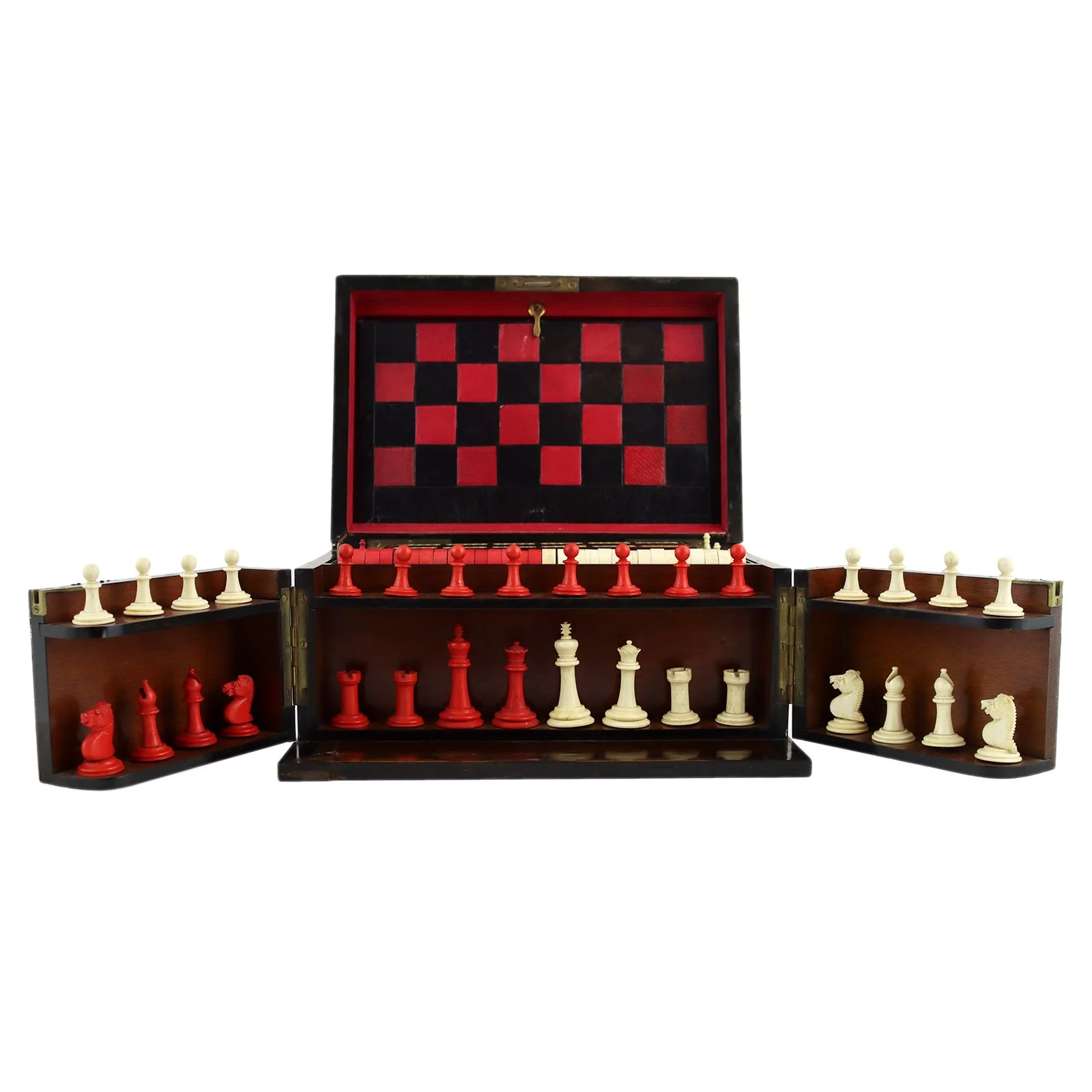
Unusual and rare English ebony strung burl walnut Games Compendium, late 19th century, from S. Woodward, Glasgow…(read more)
Size in inches: 7 h x 13 w x 8.75 d
M20323
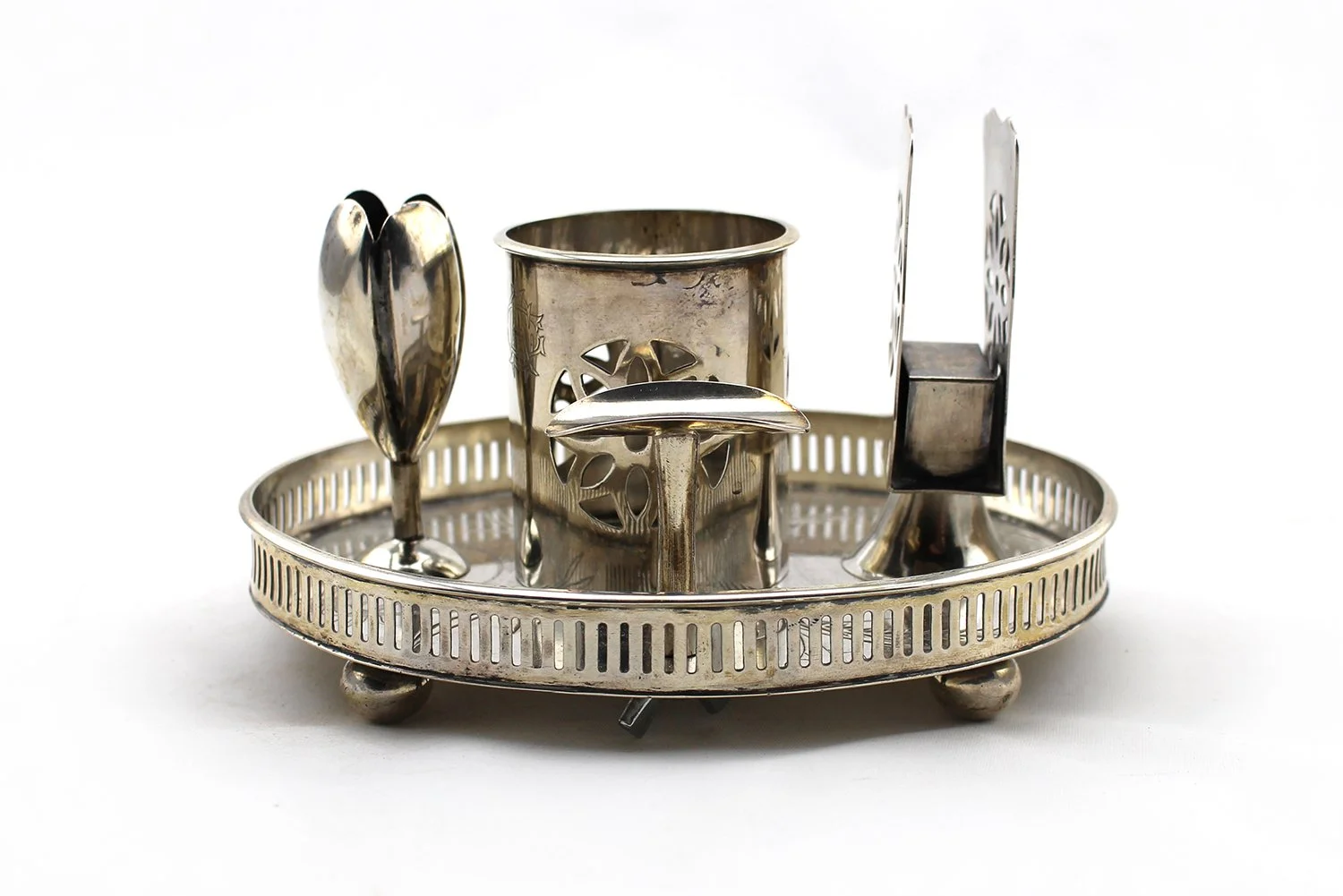
Chinese Export silver cigarette stand, with cigarette holder, snuffer, stand and matchbox holder, 19th century.
Size in inches: 3 h x 5.5 w x 4.5 d
C18814
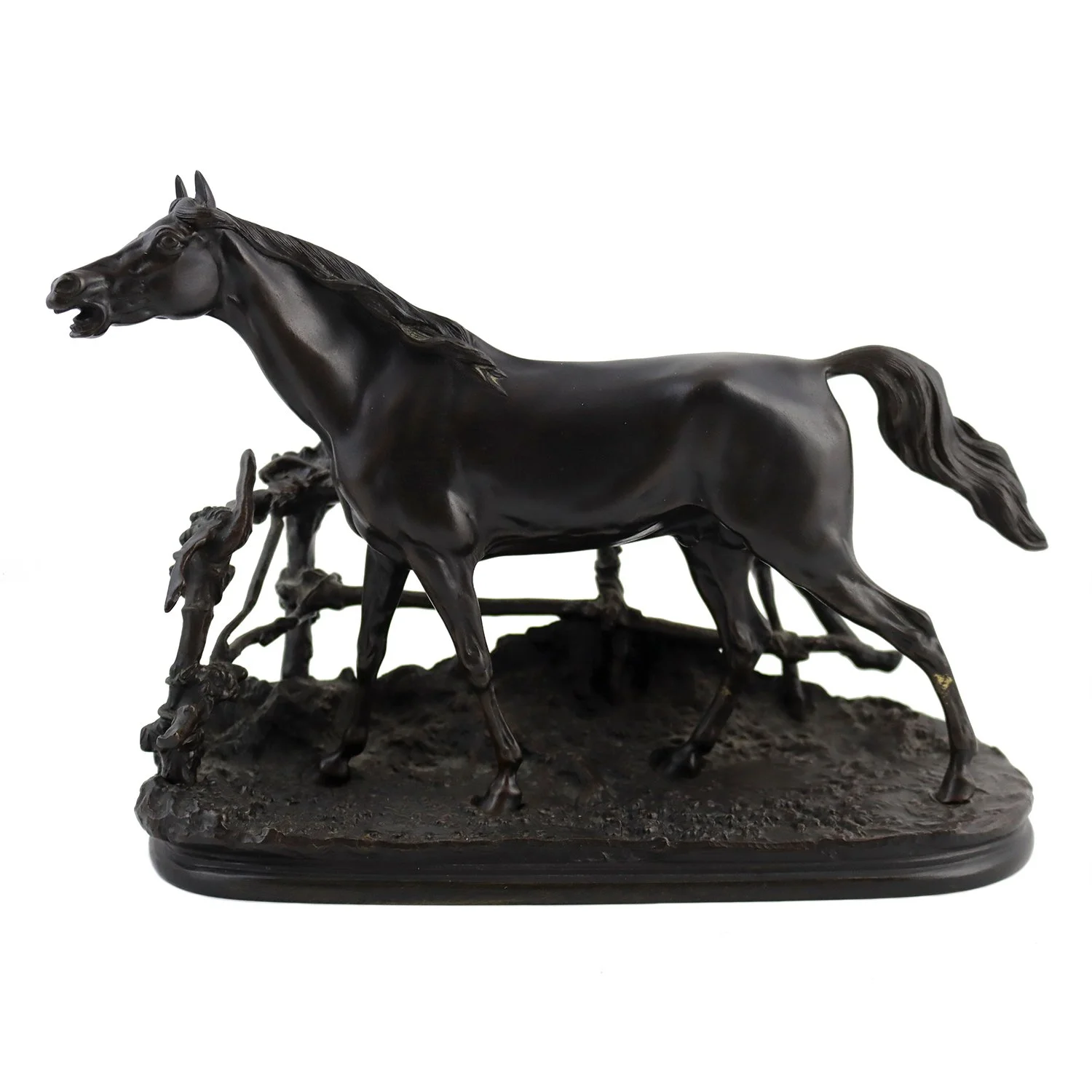
Horse and Fence
bronze, signed lower left "P.J. Mene"
Read more.
Size in inches: 7.5 h x 10 w x 4d
G20303
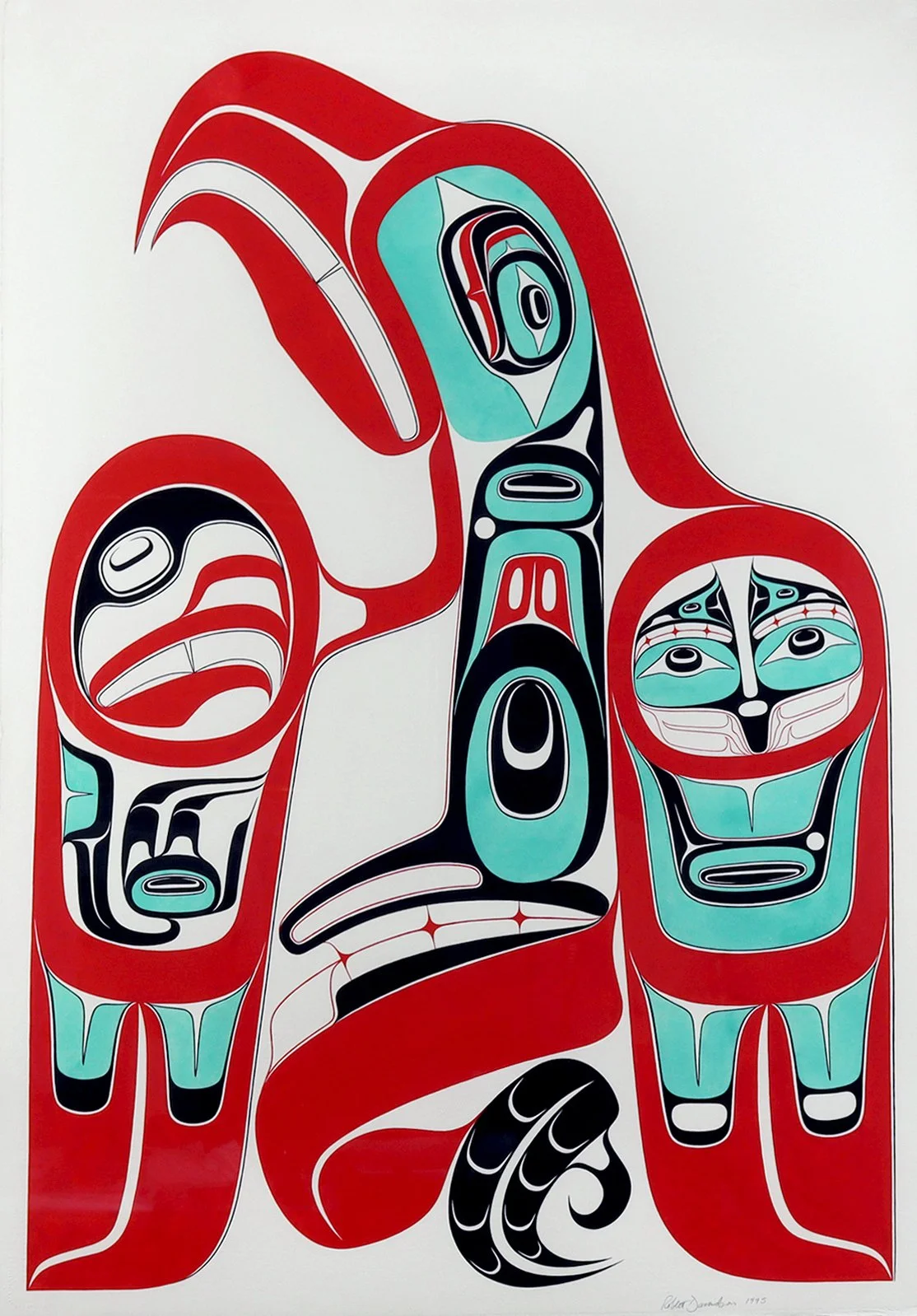
Getting Ready to Take Flight by Robert Charles Davidson (Haida/Canadian born 1946). Original painting, in black, green and red, signed on lower right "Robert Davidson 1995", this is the painting reference for the serigraph "Getting Ready to Take Flight " 1995, edition of 72 (print not included)
Accompanied by a personal letter from the artist: "Phil Nuyton: For your continued interest in my work. I am happy you got the painting and blankets. The painting is the beginning of the next part of my life. Sincerely, Robert Davidson". Size in inches: 42 h x 29.5 w (with frame 25.5 h x 40 w in) J20737
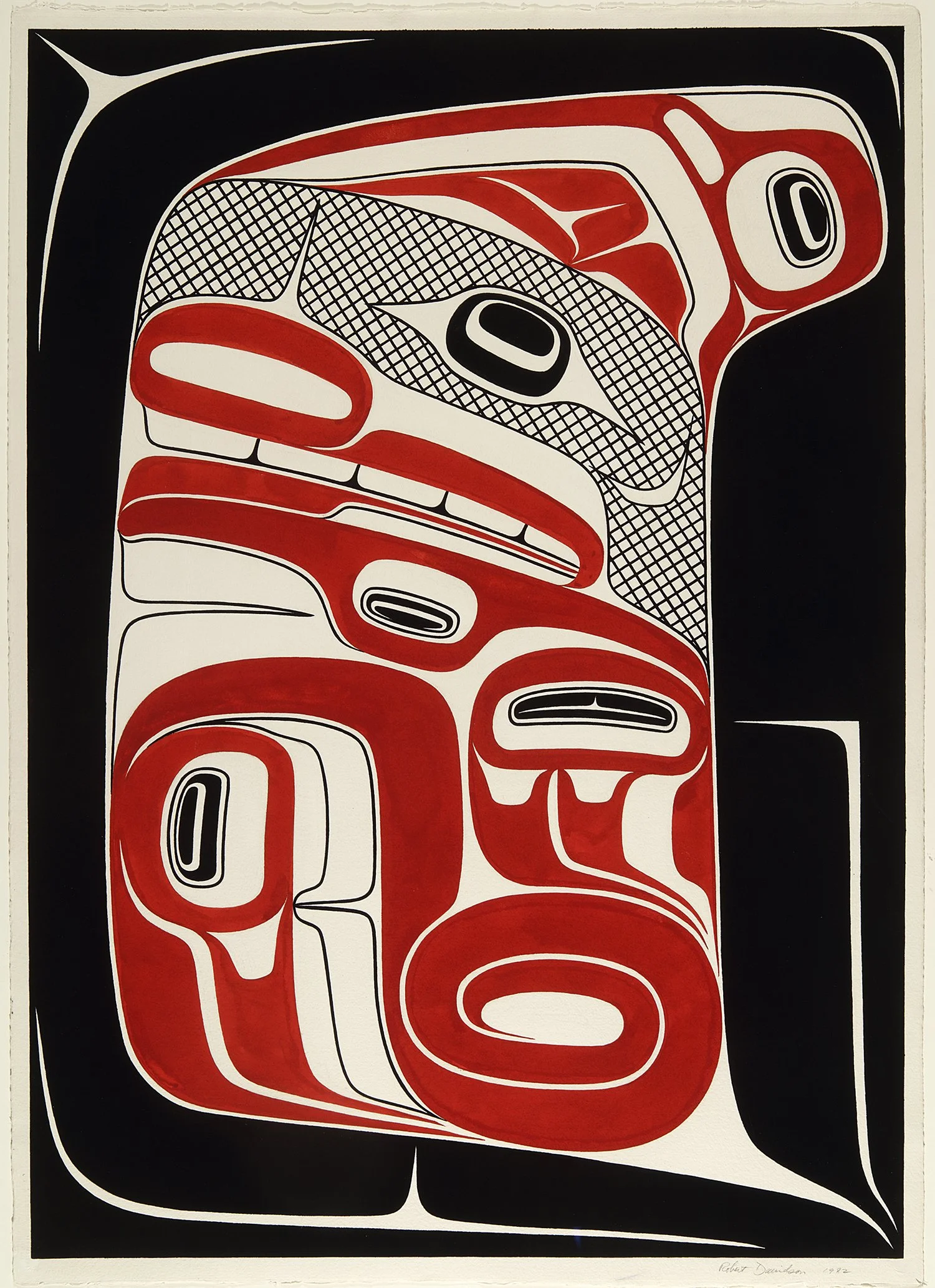
Seawolf Inside Its Own Dorsal Fin 1982 by Robert Charles Davidson (Haida/Canadian born 1946) watercolour and gouache on arches, signed and dated lower right "Robert Davidson 1982", titled on label on reverse, together with framed double sided drawing and serigraph signed and dated lower right "Robert Davidson '83" and numbered lower left "6/99" Size: 42.125 h x 29.75 w J20698
Robert Charles Davidson (G̲uud San Glans) (Haida/Canadian born 1946)
"For the two years after the potlatch Children of the Good People, I was looking at my previous work and rehashing designs, learning the forms, but I was ready to move on. One of my teachers was a bentwood dish in the collection of the Glenbow Museum and in Robert Inverarity's book Art of the Northwest Coast Indians. The same artist (sometimes called "the Master of the Black Field") created the box featured in the Arts of the Raven exhibition and I was in the background listening to the heated discussion between Wilson Duff, Bill Reid and Bill Holm, who were mesmerized by the design. They were deeply analyzing the formline and I would shout from the background, 'There is no formline!' but I don't think they heard me. It would be years before I would understand what they were seeking. What I saw in this artist was the confidence to step outside of his comfort zone, with the skill and knowledge to do so. The artist would contain a shape like a box and he would introduce a new shape with in the shape. I realized that the art could go beyond the established conventions. I was inspired to experiment." Echos of the Supernatural page 103.
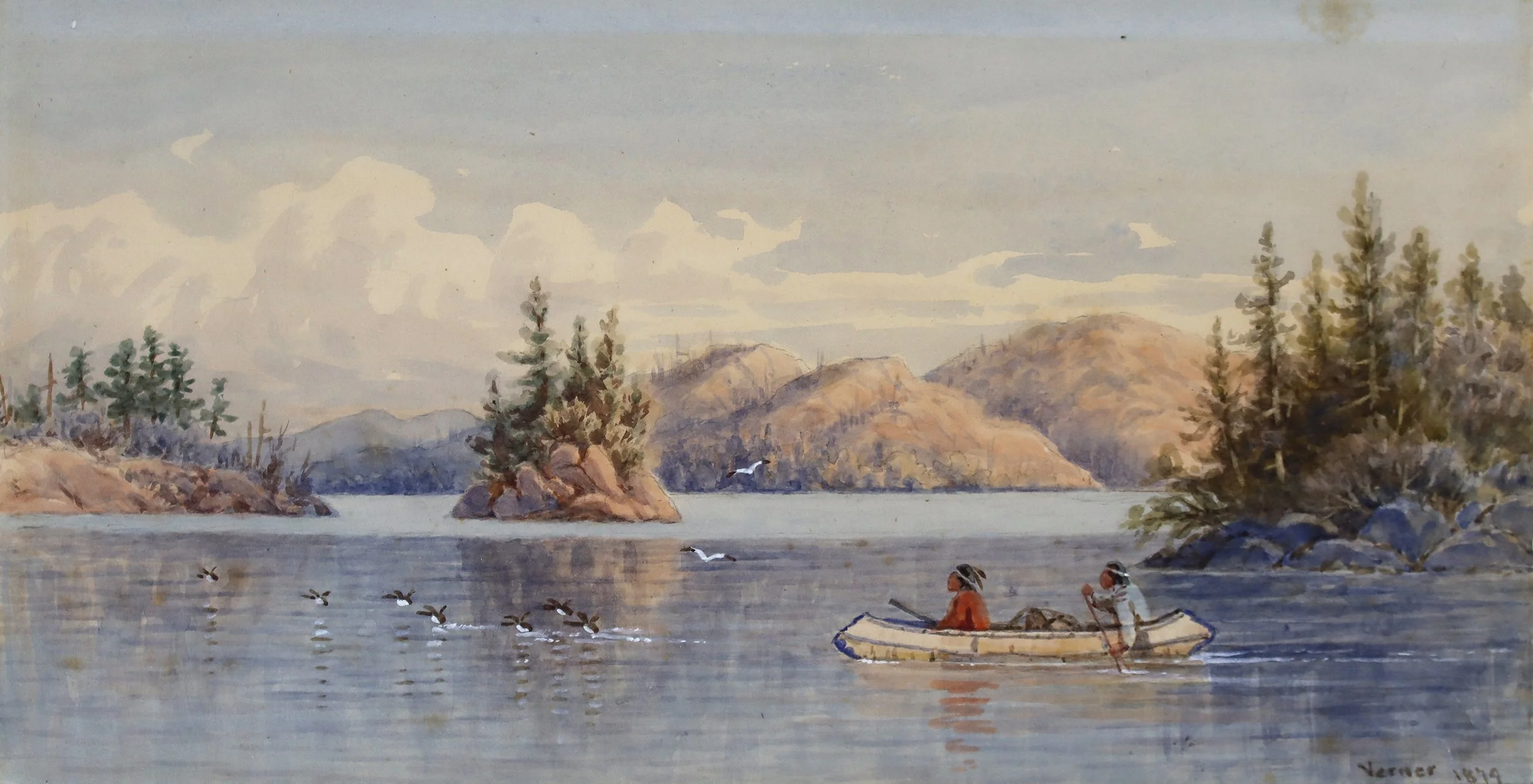
Two Paddlers in a Birchbark Canoe by Frederick Arthur Verner (Canadian 1836-1928) watercolour, signed and dated lower right "Verner 1879". Read more…
Size in inches: 5.87 h
J20311
Frederick Arthur Verner (Canadian 1836-1928)
Frederick Verner was born in Ontario in 1836 and studied in London from 1856-60 before serving in the British armed forces. He returned to Canada in 1862 and took a studio in Toronto, for a time working as a photographer in William Notman’s photographic studio. He travelled extensively across Canada and back and forth to England, often alongside friend and fellow artist Paul Kane in Kane’s later years. Verner exhibited extensively with the RCA in 1880-1927, and he was one of the founding members of the Ontario Society of Artists. He also holds the honour of being the first Canadian member of the Royal British Colonial Society of Artists. His work focuses primarily on landscapes, wildlife, life on the Prairies and early pioneer life, painted in a soft and romantic style. He worked mostly in watercolour and pencil but also in oil.
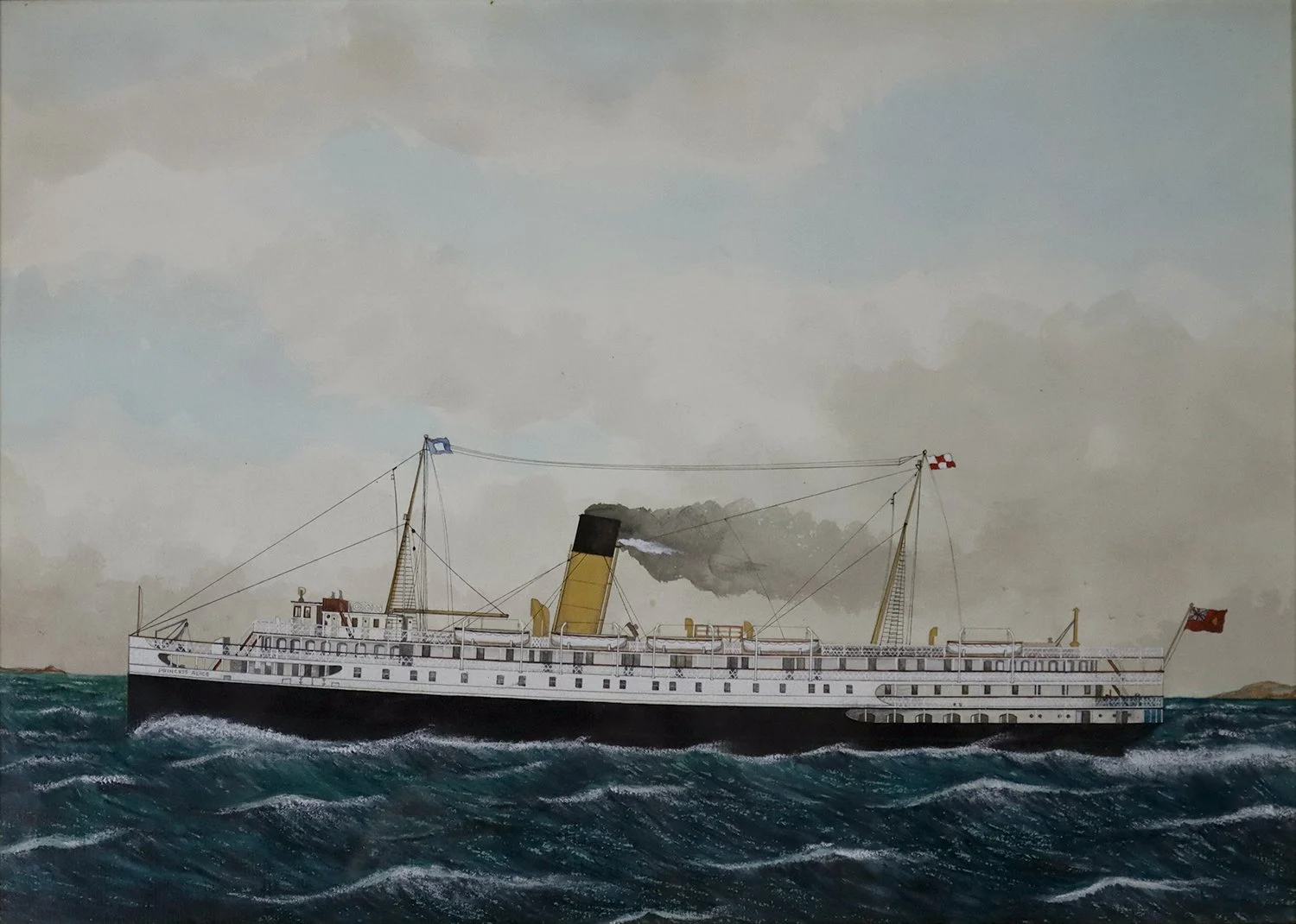
Princess Alice by Jack W. Hardcastle (Canadian 1881-1973) Watercolour. Size in inches: 13.5 h x 19.5 w (with frame 18.125 h x 24 w in) J21412
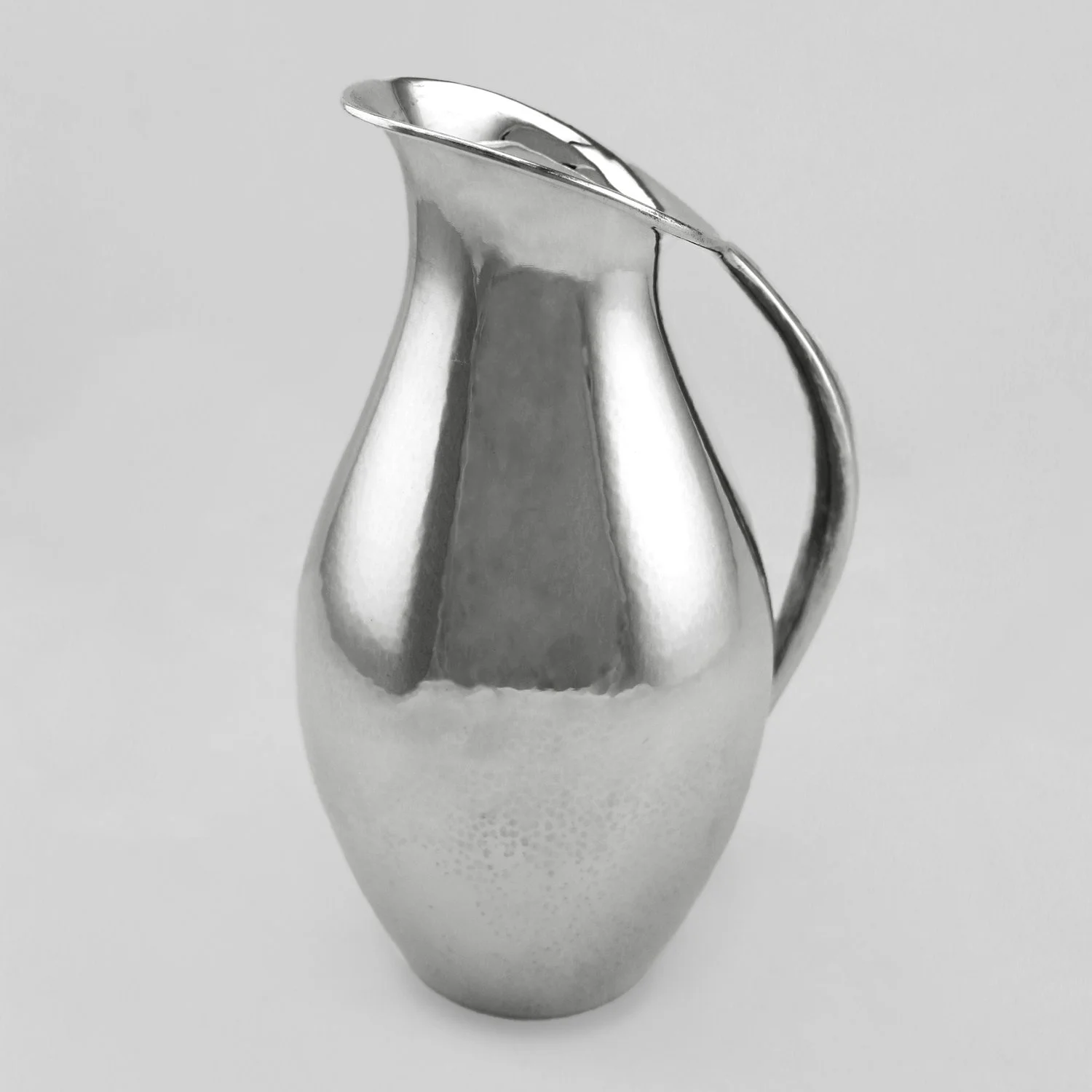
Sterling Pitcher 432A
Sterling silver pitcher 432A, designed by Johanne Rohde in 1920…(read more)
Size in inches: 9 h x 5.5 w x 4 d
C20670
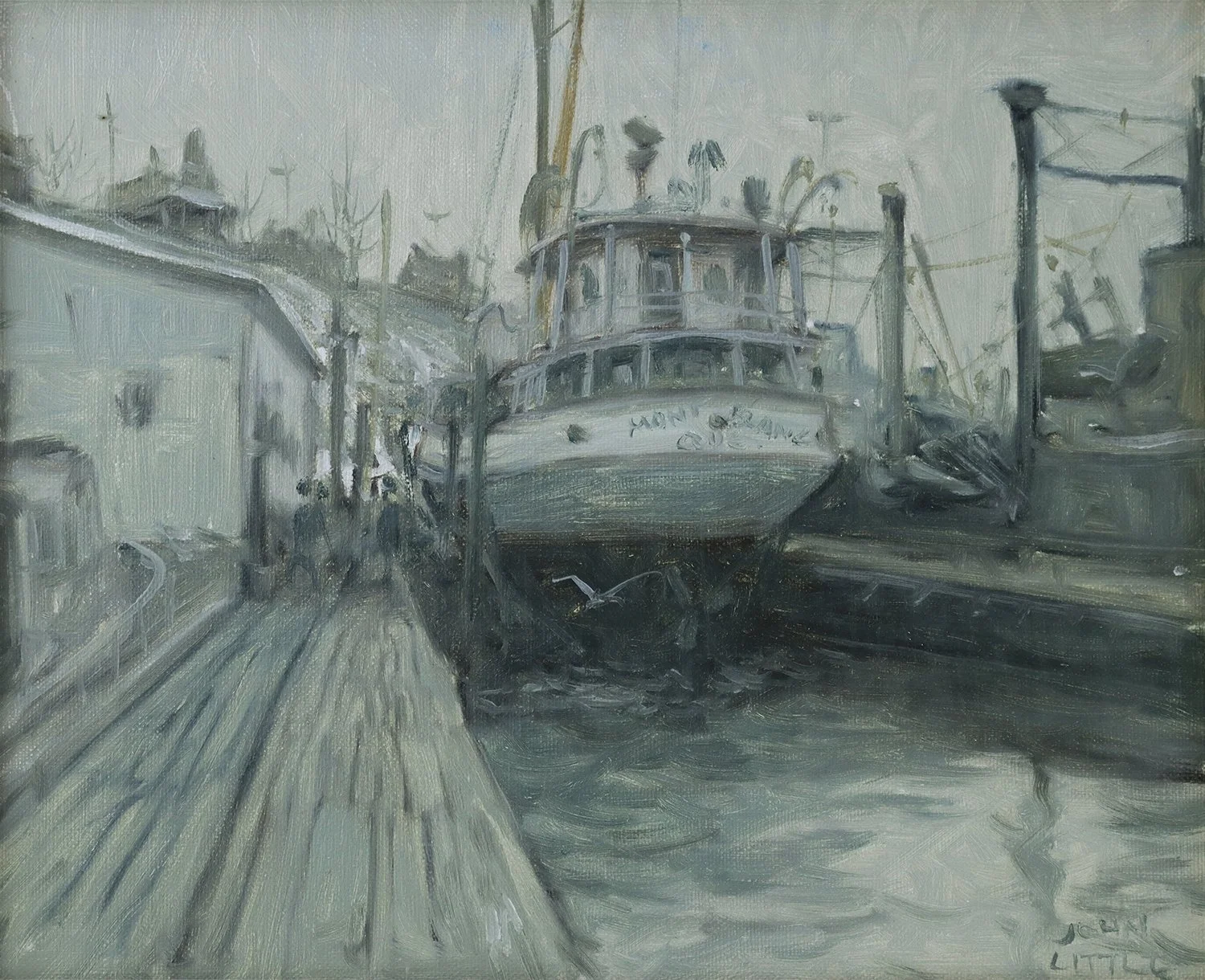
Spring Launching Davie Bros - Levis Que.by John Geoffrey Caruthers Little (Canadian 1928-2024)
Oil on canvas, inscribed on back "Spring Launching Davie Bros. - Levis Que.", "John Little 70", and "C-184 10-30-70 Reproduction Rights"
Size in inches: 8.7 h x 10.6 w (with frame 16 h x 18 w in)
J20994
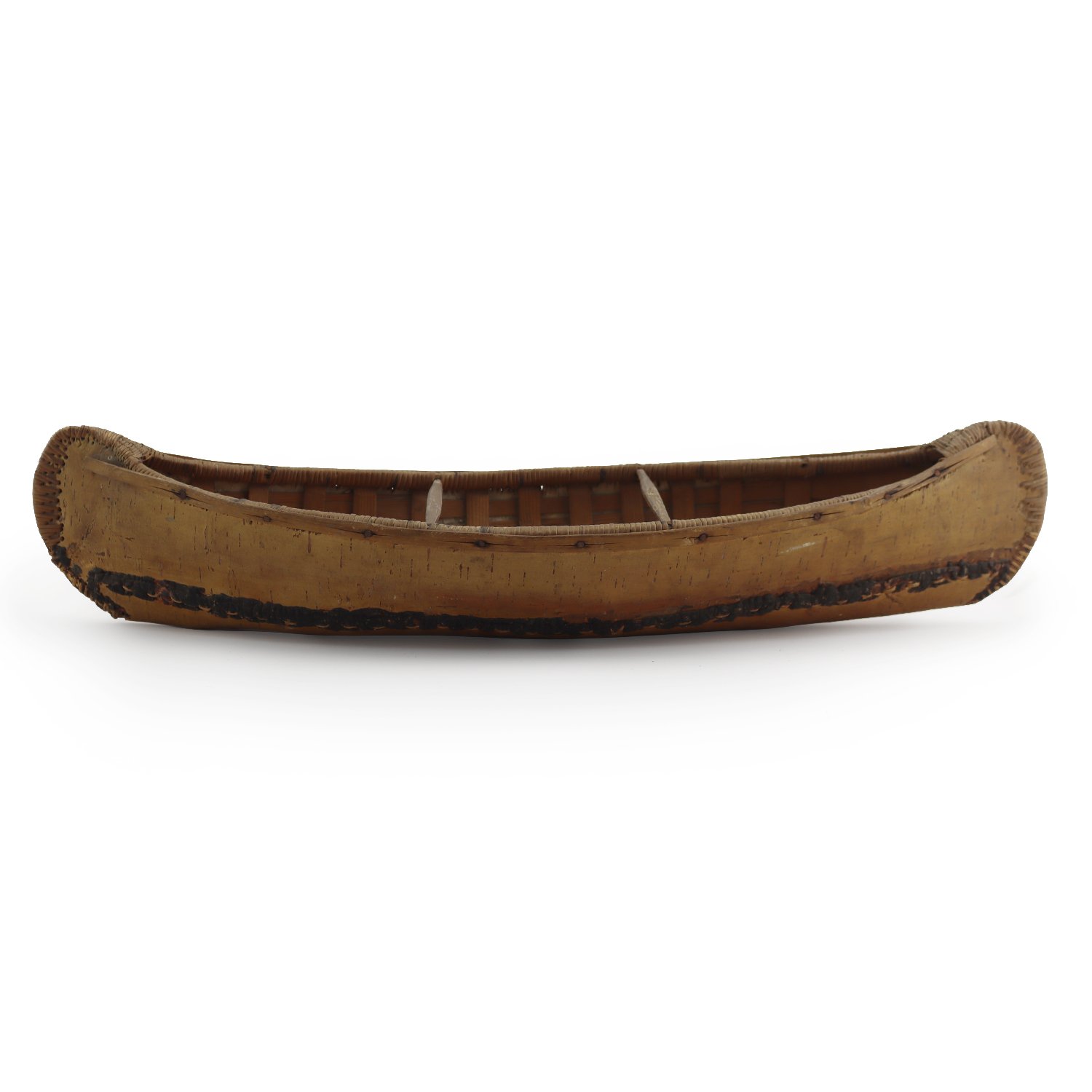
Eastern birchbark canoe model, birchbark stretched over wooden frame and stitched along the top and around the ends and bottom, with wooden rails and 2 seats, circa 1900-1920
Size in inches: 2.75 h x 25 w x 6.37 d
P21687
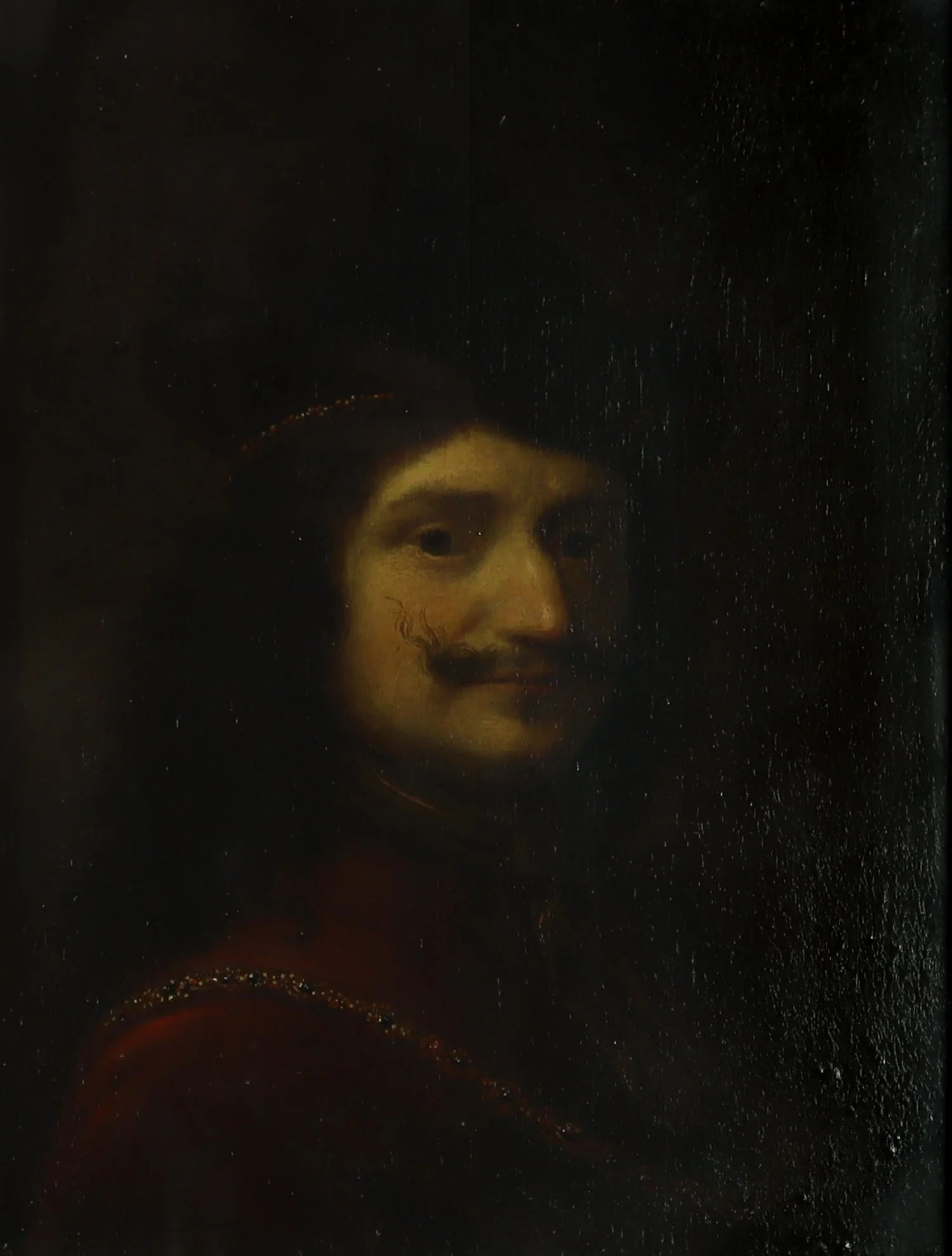
Bust Portrait of Man. Oil on panel, unsigned, 19th century copy of Rembrandt School, with label on reverse "N P Wentworth Brady Esq/Bust Portrait of a Man/Rembrandt/June 1912 LB.59" Size in inches: 10.62 h x 8.12 w (with frame 17.375 h x 14.875 w in) J20629
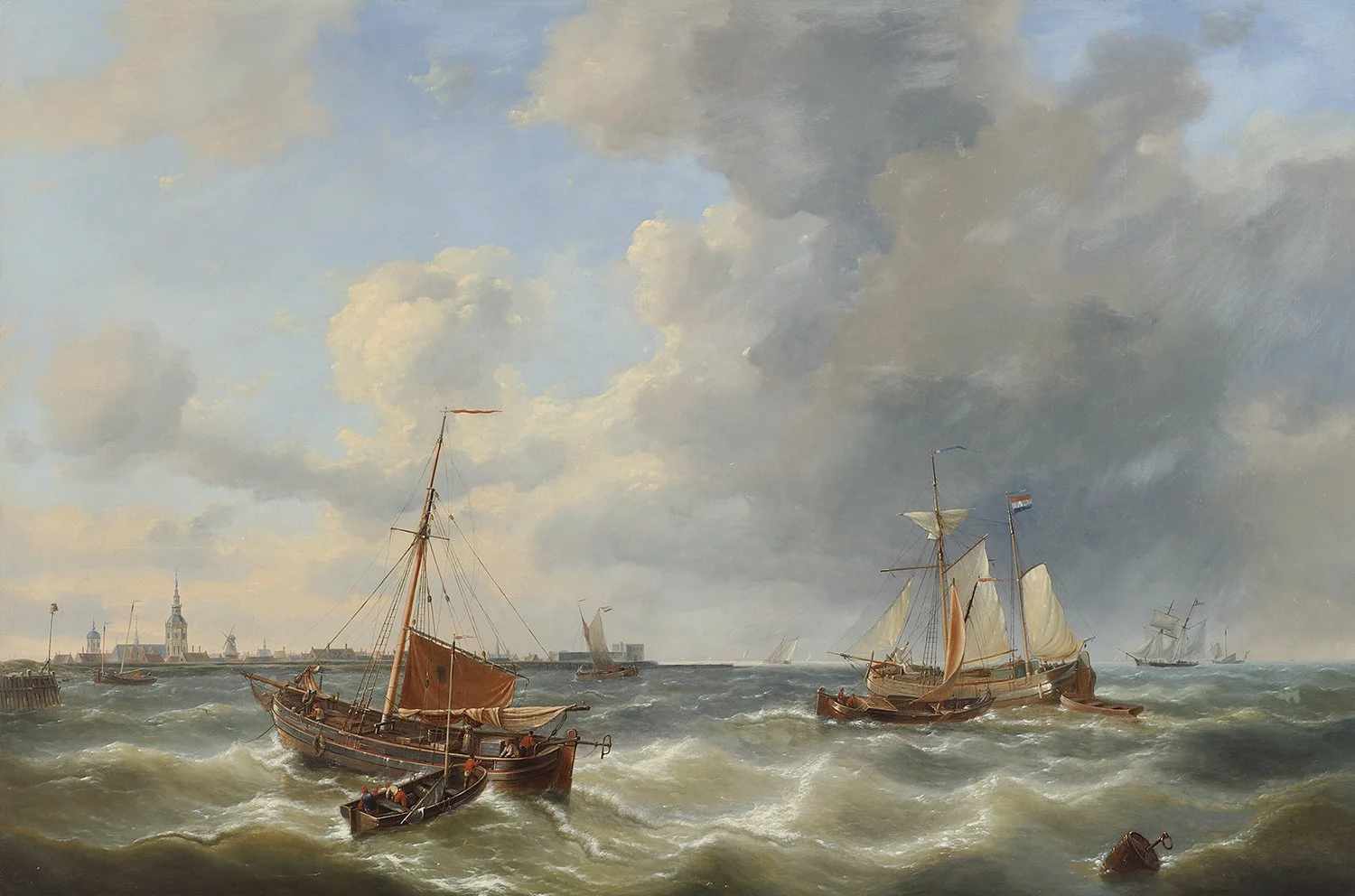
Shipping off the Coast of Vlissingen, The Netherlands by Louis Verboeckhoven (Belgian 1802-1889) Oil on vanvas, signed lower left “Louis Verboeckhoven” Provenance: Frost and Reed, London #22525 Size: 31 h x 46 w (with frame 37 h x 52 w in) J20632
The Belgian marine artist Louis Verboeckhoven trained under his father Barthélemy, a sculptor, and his older brother, Eugène, a celebrated animal painter. Studying under Frans Balthasar Solvyns in Ghent, Louis developed an interest in marine painting and his work was highly regarded. He travelled and painted the coasts of the Netherlands, France and England, documenting many of the small harbours along the Scheldt which have since disappeared or been built up. He became a member of the Rijksakademie in Amsterdam and the Salon in Paris, and his work can be found in institutions throughout Europe.
This exceptional example by Louis Verboeckhoven depicts shipping off the town of Vlissingen on the Southern Dutch coast. To the left is the historic Lampsinshuis, built by Zeeland merchant Cornelis Lampsins in 1641 in the then new style of Dutch Classicism, and is now the home of the Maritime Museum (MuZEEum). In the center is St. James the Great Church on the Old Market, built 1308-28 and rebuilt after heavy damage by a fire in 1911. Oranjemolen Tower Mill on the right was built prior to 1699 and is the closest mill to the sea in the Netherlands. It is a historic monument owned by the City of Vlissingen and is still in use today.
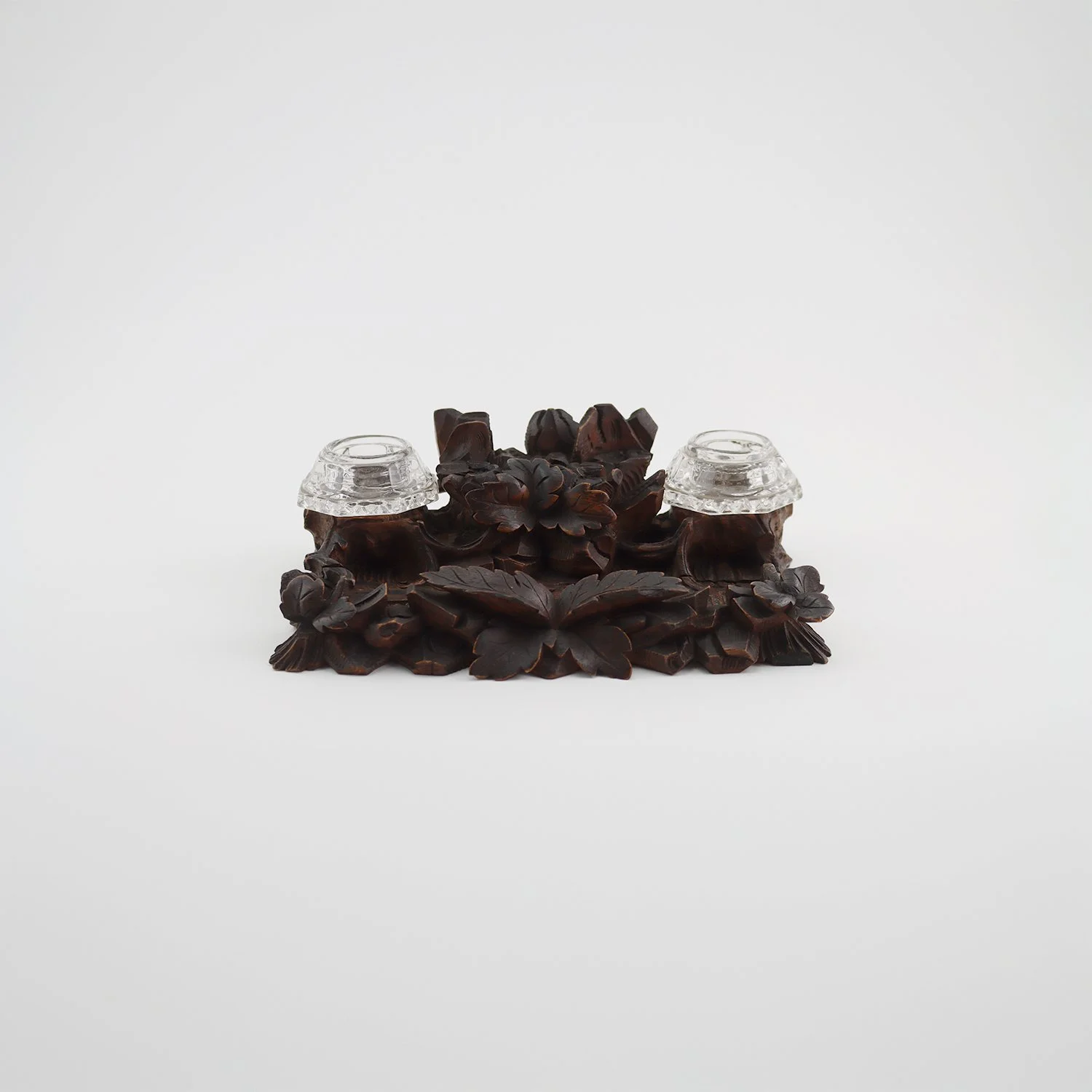
Black Forest inkwell, carved with foliage including oak leaves, the two lobed glass ink inserts enclosed in root balls, the front with place to lay pen, German or Swiss circa 1900.
Size in inches: 2.5 h x 8 w x 5 d M21408
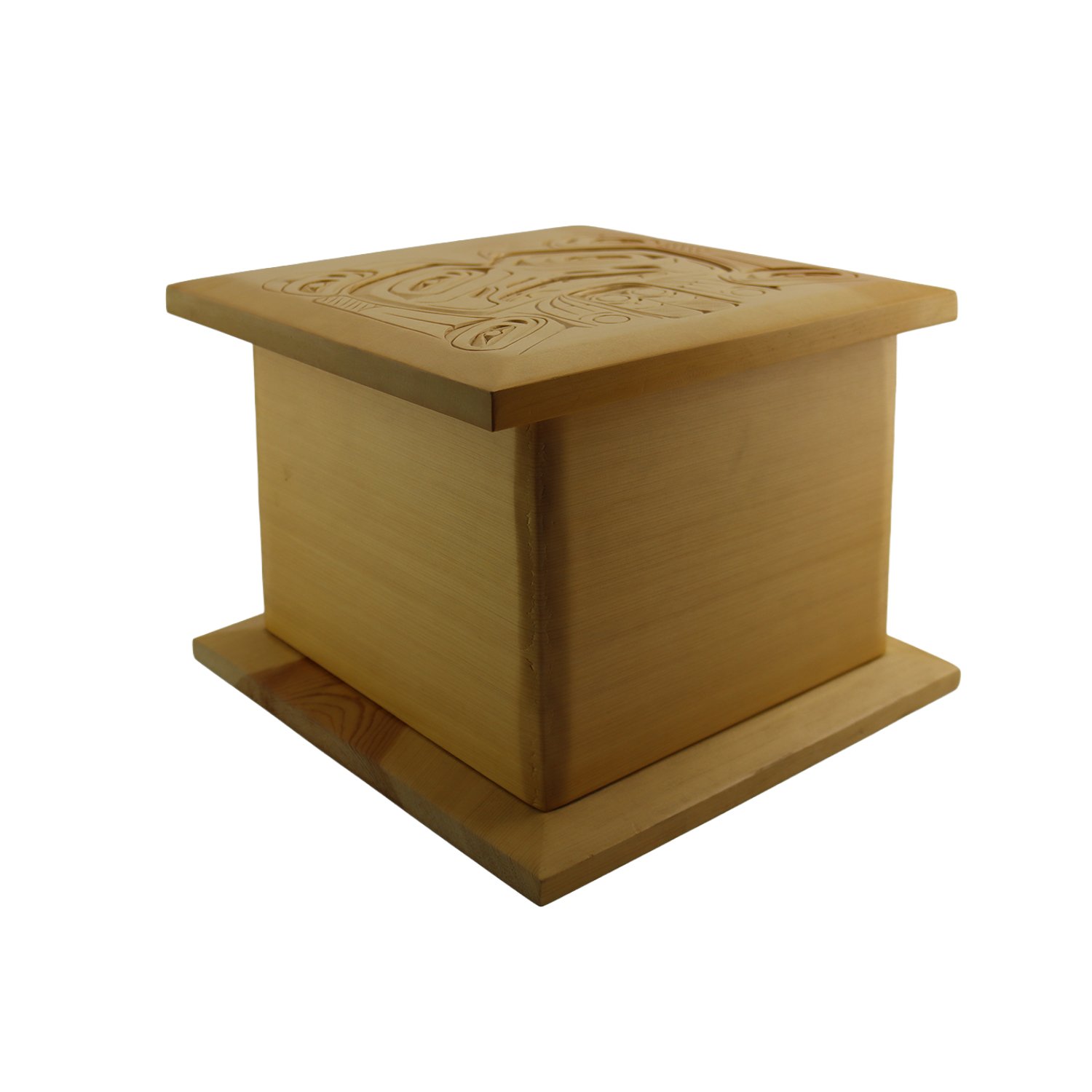
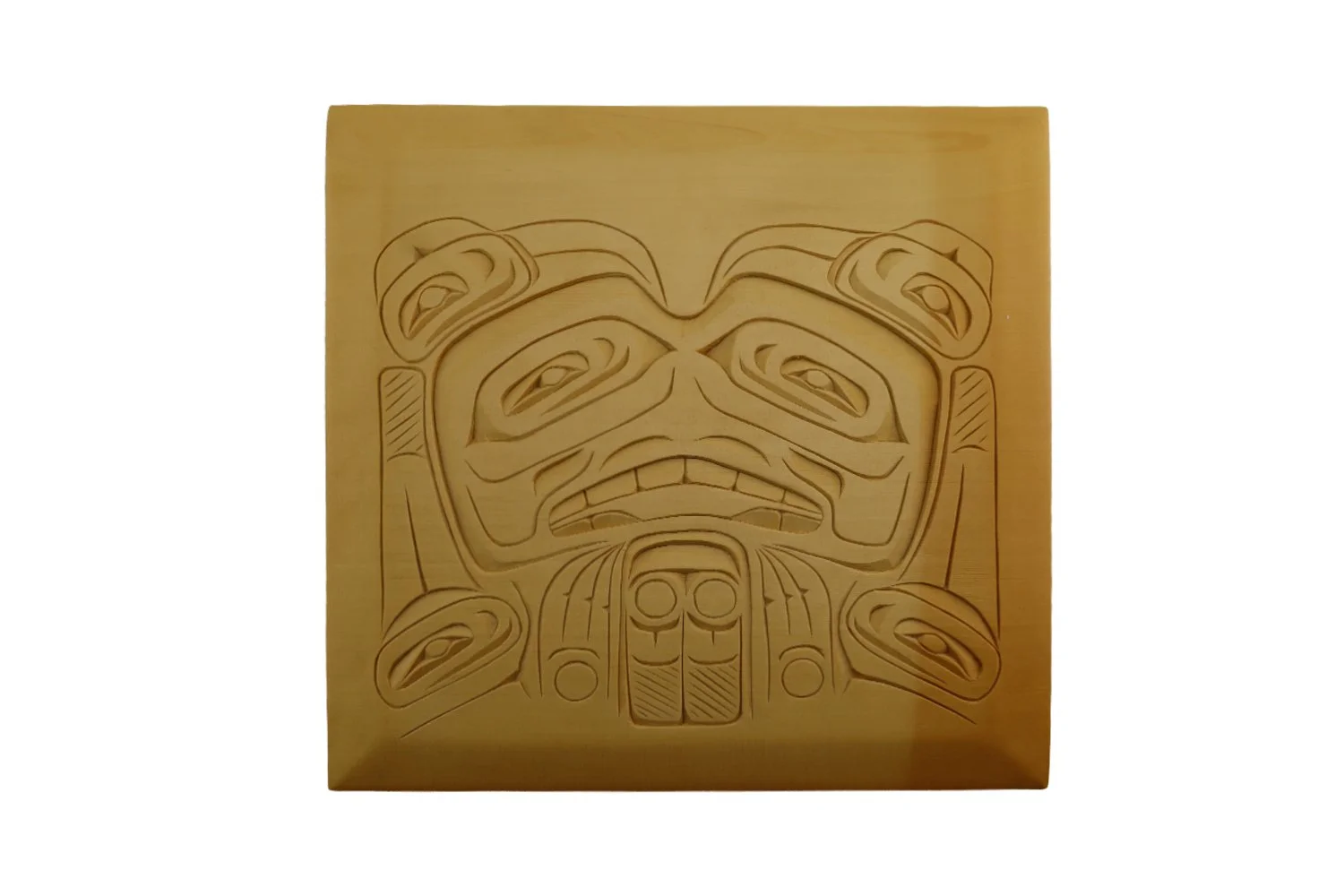
Bentwood box by Sampson Robertson of the Kwakwakaw’wakw First Nations. He passed away in 2014. Size in inches: 8.5 h x 11.25 w x 11.25 d
P21832
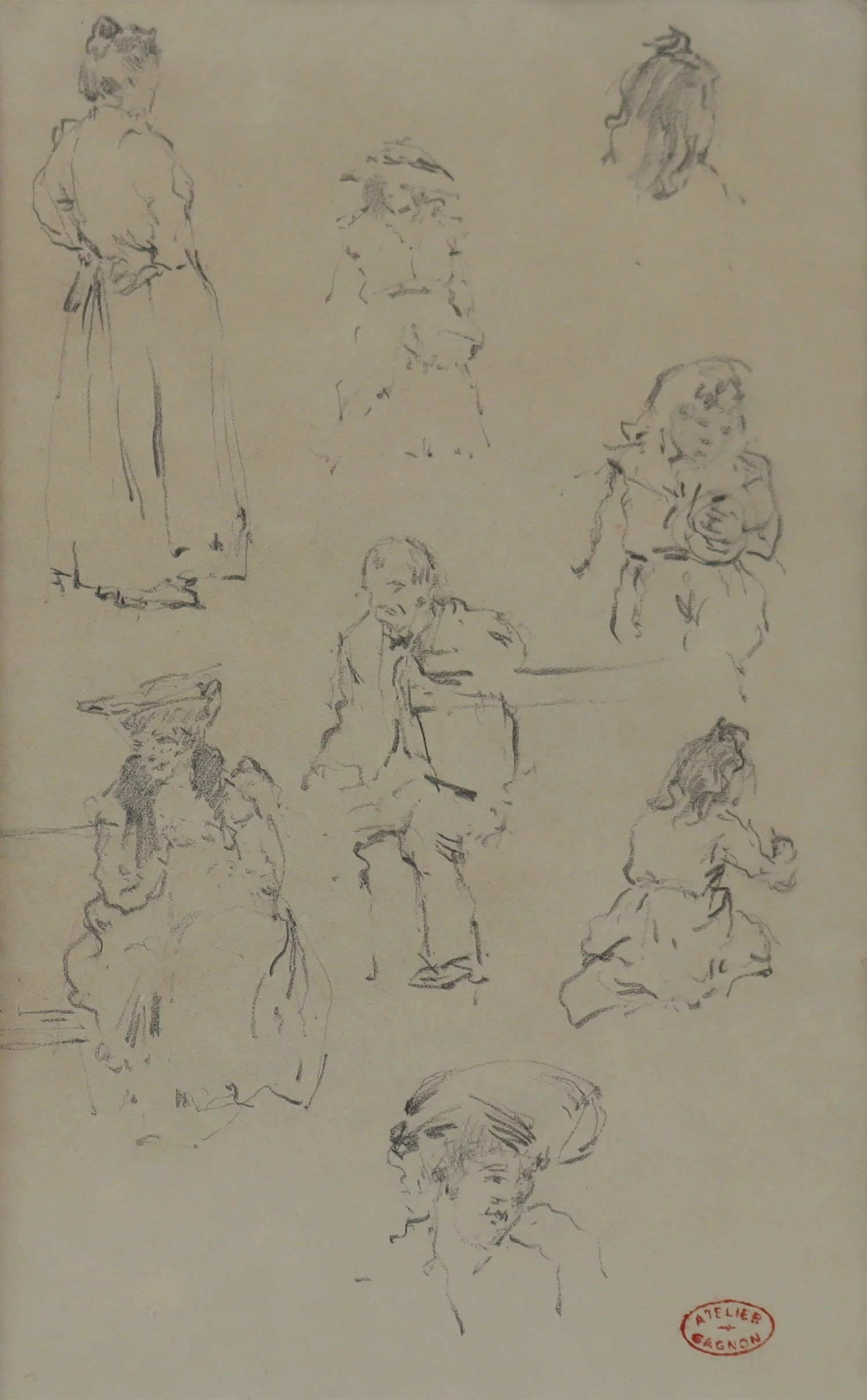
Figure Studies by Clarence A. Gagnon (Canadian 1881-1942) pencil on paper, signed lower right with stamp, with label on back Walter Klinkhoff Gallery J21717
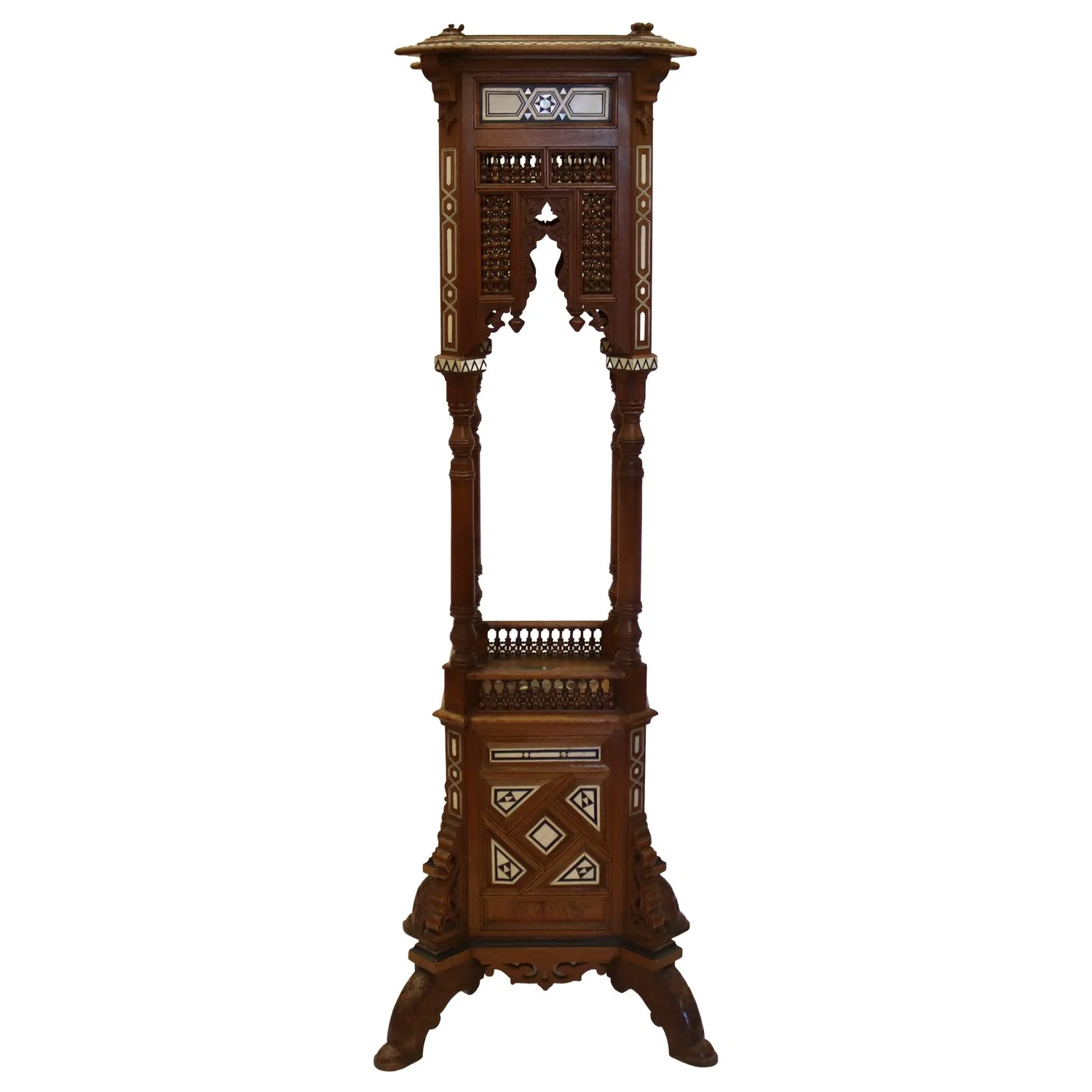
Anglo-Indian sadeli inlaid square pedestal, the top with stepped platform, the whole overall decorated with openwork, stellar and geometric ornament, late 19th century. Size in inches: 52 h x 17 w x 14.5 d A21815
Anglo-Indian Sadeli work often referred to as “Bombay work” is a technique thought to have been introduced to Bombay (Mumbai), India from Iran through Sindh, Pakistan. It has had a long history in India and the Middle East with early examples dating back to the 16th century. This technique of micro mosaic marquetry uses thin pieces of ivory, bone, wood and metal that are bound together, cut and applied to furniture to creat elaborate geometric patterns. It became increasingly popular during British colonial period as decoration on colonial furniture.
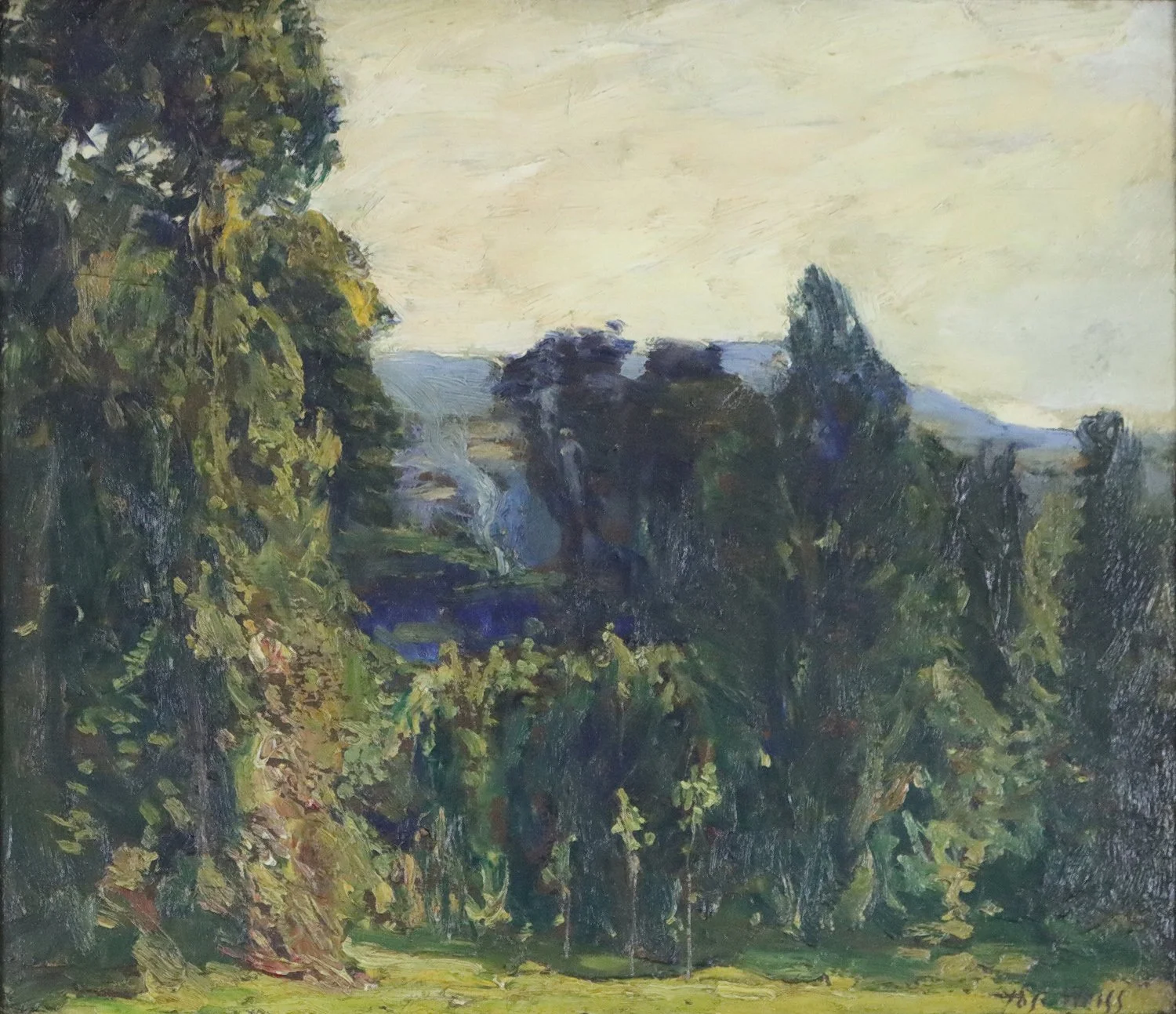
Landscape with Forest by Jose Weiss (British 1859-1919) oil on panel, signed lower right "Jose Weiss" Size in inches: 12 h x 14 w (with frame 19.75 h x 21.75 w in) J21732
Jose Weiss was born to English parents in Paris and originally worked in the wine business, a job that required travel from France to England regularly. Little is known of the formal training that Weiss received except from that of the well known French Barbizon School landscape painter Henri-Joseph Harpignies. He spent his youth sketching and painting, and his training in Barbizon techniques had a profound and continued influence on his work that is evident in his depictions of the Sussex landscape. He exhibited regularly at the British Royal Academy and the Royal Society of British Artists, as well as in Paris Exhibitions. He was a celebrated landscape painter during his lifetime, his work being particularly popular with American audiences. He is represented in collections and private institutions in Canada, The United States, South America, Africa and throughout the United Kingdom. Interestingly, Jose Weiss is also remembered as a great pioneer of aviation and a glider enthusiast.
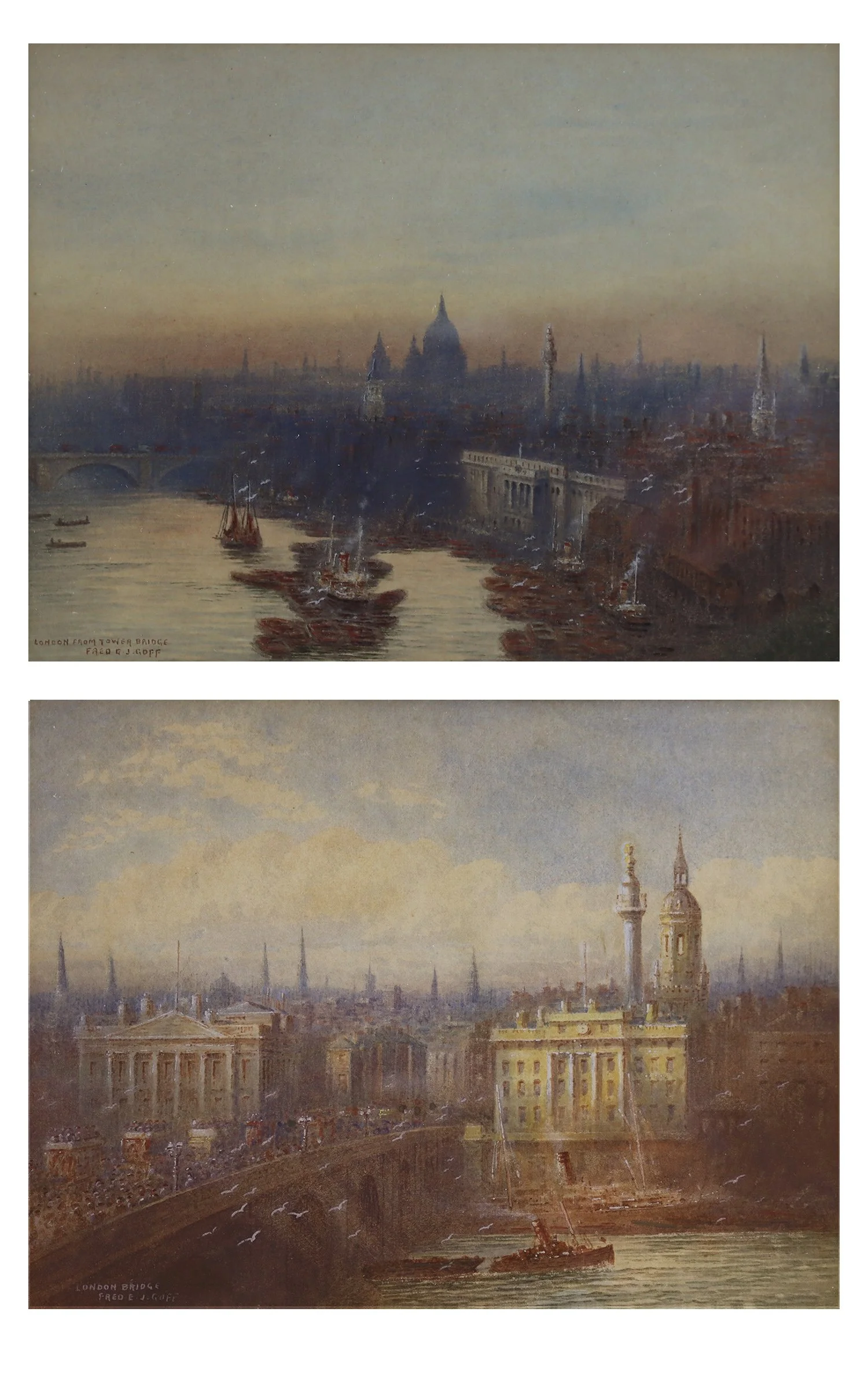
London from Tower Bridge and London Bridge by Frederick Edward Joseph Goff (British 1866-1933). Pair of watercolours, signed and inscribed lower left "London from Tower Bridge Fred E. J. Goff", and "London Bridge Fred E.J. Goff" with label on back "No. 3 London Bridge from S. Fred E.J. Goff" Size in inches: 4.5 h x 6 w (with frame 8.5 h x 9.75 w in) J21807